Kahmandu is capital of Nepal has 218 square miles (360 square kilometers) of land with three historic, artistic and cultural towns namely Kathmandu, Patan and Bhaktapur together form known as ‘Kathmandu Valley’. The word Kathmandu is derived from ‘Kasthmandap’ (literally “Wood-Covered Shelter”) in Sanskrit, a pagoda-style temple .Measuring 24 km east-west and 19 km north-south, the Kathmandu valley has are seven UNESCO world heritage sites in the valley. Acronym of Kathmandu is ‘KTM’. Kathmandu valley is the hub of Nepal’s political, commercial and traditional culture and arts. Kathmandu valley is an exotic and fascinating showcase of a very rich culture, art, and tradition. Kathmandu, the capital of Nepal is the place for rest, relaxation and easy-day sightseeing of historic and artistic temples and monuments, and mountain views.
The Kathmandu Valley consists of three historic cities: Kathmandu, Patan and Bhaktapur. The cities of the Kathmandu valley are filled with medieval temples and palaces. The Kathmandu Valley was known as the Nepal Valley during Malla Period. After the unification of Kathmandu in 1825, Prithivi Narayan Shah made Kathmandu the capital of unified kingdom.
The history of the Valley begins with the Buddhist saint Manjushree who slashed a passage through the surrounding hills to drain out the primordial waters and make it inhabitable. Over the centuries, a refined urban civilization emerged, built on a unique synthesis of Hinduism and Buddhism.
Dynasties came and went. Trade and the arts flourished. Its deeply religious Newar inhabitants built fabulous cities and artistic temples that attracted devout pilgrims and modern tourist .Kathmandu is situated at an altitude of 1,300m.
- KATHMANDU Population (2011 Census)
- Kathmandu Distric: 1, 740,977
- Lalitpur District: 466,784
- Bhaktapur Distric:303,027
- Kathmandu agglomeration 2,510,788
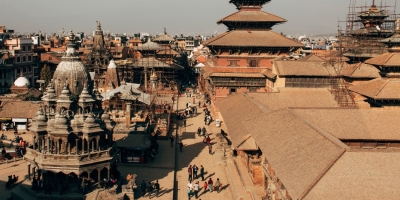
Kathmandu Durbar Square. This complex of palaces, courtyards and temples like Hanumandhoka Palace, Kumari Ghar (Abode of the Living Goddess), Taleju temple, built between the 12th and 18th centuries, used to be the seat of the ancient Malla Kings of Kathmandu. An intriguing piece here is the 17h -century stone inscription set into the wall of the palace with writings in 15 languages. The Durbar Square, protected as a UNESCO World Heritage Site, is the social, religious and urban focal point of the city. Even to date, all the major state and social ceremonies, including the solemnization of coronations are performed in one of the courtyards in this complex. There are also museums inside the palace building. Your ticket to the Square entitles you to visit all the museums.
Note: After earthquake in 2015, mostly such a beautiful things destroyed and now some of them processing for reconstruction.
Swayambhu Stupa watches over the Valley from the top of a hillock on its western side just three kilometers west of the city center. The stupa is one of the holiest Buddhist sites in Nepal and its establishment is linked to the creation of the Kathmandu Valley out of a primordial lake. Swayambhu is also known as Samhengu and is listed as a World Heritage Site. It is also one of the oldest and glorious Buddhist shrines in the world which is said to be two thousand years. The four sides of the stupa is painted with the eyes of Lord Buddha and the temple is also known as the watchful eyes of Buddha. Entrance fee required to all tourist.
Note: Its also effected the earthquake of 2015.
Lunch break around 12.00 for one hrs. Evening back to your Hotel and short brief for next day programs and your are free evening.
Bouddhanath Stupa lies about 6 km east of downtown Kathmandu and is the largest stupa in the Valley and one of the largest in the world. It looms 36 meters high and presents one of the most fascinating specimens of stupa design with hundreds of prayer wheels and 108 small images of Buddha all around. Just like the Swayambhunath, the stupa here is too has four sides with the watchful eyes of Lord Buddha. All the Buddhist throng to this stupa to take part in the sacred rituals during the Buddhist festivals.
Bouddhanath, a World Heritage Site is also known as Khasti. There are more than 45 Buddhist monasteries in the area. Many have schools that teach young monks like those pictured here. The entry fee required to all tourist .
Note: Completely rebuild after the earthquake of 2015.
Pashupatinath Temple. One of the most sacred Hindu shrines in the world, Pashupatinath lies 5 km east from the city center. The richly-ornamented pagoda houses the sacred linga, or phallic symbol, of Lord Shiva as well as the noteworthy gold plated roofs and silver coated doors. This is the abode of God Shiva and is the holiest of all the Shiva shrines.
Religious pilgrims and sadhus, like the one pictured here, travel all the way from the remote areas of India to visit this sacred sight, especially during Shivaratri (the night of Shiva) that falls between February/March. Even though these devotees have denounced worldly possessions, each carries a Sadhu ID (identifications card) to freely cross over the border between India and Nepal.
Chronicles indicate Pashupatinath’s existence prior to 400 AD. Devotees can be seen taking ritual dips in the holy Bagmati river flowing beside the temple, also a World Heritage Site. The crematorium is just outside the temple and it is a dream of almost every Hindu to be cremated by the side of Pashupati Aryaghat after their death. Entry fee required .
Bhaktapur Durbar Square. As you walk in, you cannot but be overcome by a feeling of inner harmony. Such is the art and architecture and the special layout here. The Palace of 55 Windows built during the period of King Bhupatindra Malla in 1754 situated to the left as you enter through the city gate, inspires admiration. The National Art Gallery is also housed inside. The palace entrance, the Golden Gate known as Sunko Dhoka in Nepali is a masterpiece in repousse art. In front of the palace building is a medley of temples of various designs. Amongst the three Durbar Squares in the Valley, the Durbar Square in Bhaktapur is the best preserved one. There is an entrance fee of Rs. 30 for SAARC nationals and Rs. 500 for other foreign visitors.
Taumadhi Square lies to the east of Durbar Square reached by a narrow brick-paved lane. The towering five-roofed Nyatapol temple presides over the square. The monument gracefully soars into the sky atop a five-story plinth. The stairway leading up to the temple is flanked by stone figures of deities and mythical beasts, each 10 times more powerful than the one immediately below.
Dattatreya Square takes its name from the Dattatreya temple dedicated to a three-headed combination of the Hindu deities Brahma, Bishnu and Shiva. If you want to experience the feel of the traditional urban layout of Bhaktapur, Dattatreya Square is it. Set in a maze of streets lined with richly ornamented houses, the square is famed for its many ornate Hindu monasteries known as Math. The National Woodworking Museum is also housed here and the Brass and Bronze Museum is across the street. The oldest structure in Bhaktapur was raised during the reign of the last Malla King, Yaksha Malla who ruled the Valley before it was divided into three Kingdoms amongst his three heirs.
Potter’s Square. A two-minute walk south of Durbar Square brings you to Bolachhen, also known as Potter’s Square because of the many potters seen here moulding wet clay into different kinds of earthen ware. It has a display of fresh pottery left out to dry in the open square. This place can be approached from Taumadhi Square. The elephant-headed Lord Ganesh is the patron of potters, thus the Jeth Ganesh temple in the square.
Siddha Pukhu, a pond dating back to the Lichhavi period, is better known as Ta-Pukhu, meaning big pond. Though situated right at the bus stop, it provides a serene atmosphere with its sashaying fish and the stone images of different Hindu and Buddhist Gods.
Changu Narayan Temple is situated on a ridge overlooking the Valley, about 12 km to the east of the city. It is dedicated to the Hindu God Bishnu – the Preserver. One of the finest and oldest specimens of pagoda architecture, the temple is embellished with exquisite wood and stone carvings and is said to be the oldest pagoda style temple in Nepal built sometime back in 323 A.D. The sacred complex is a World Heritage Site and offers a panoramic view of the surrounding at 125 meters.
Surya Binayak is one of Kathmandu’s most popular pilgrimage spots, 12 kilometers east of the center. It has been positioned in such a way to catch the first rays of the sun in the morning. Situated in a thick forest to the south of Bhaktapur, it is a 20-minute walk from the trolley bus terminal. The temple, dedicated to the Hindu deity Ganesh (the Elephant headed God) is crowded with devotees especially on Tuesdays and Saturdays. It is also one of the favorite picnic spots offering elegant views of Bhaktapur and other attractive landscapes.
Panauti is a farming town situated 8 km east of Kathmandu on the way to Bhaktapur. Exquisite temples and other religious shrines dot its streets. It is known for its artistic masks and earthen pots, often seen spread out on the streets to dry in the sun. It can be called a traditional pottery locality with almost 80% of the population still involved in pottery. Handspun cotton cloth is another Thimi specialty.
Suggested Half-Day Itineraries
Sight-seeing can be done on foot in the city core areas; for outlying spots, hire a car or take the bus. Amazing Nepal Journey in Kathmandu offer a variety of half-day and full-day guided tours. The following combinations of tourist sites make for a pleasant half-day of sight-seeing:
Patan Durbar Square, like its counterpart in Kathmandu, is an enchanting mélange of palace buildings, artistic courtyards and graceful pagoda temples. Listed as a World Heritage Site, the former royal palace complex is the center of Patan’s religious and social life, and houses a museum containing an array of bronze statues and religious objects. There is an entrance fee of Rs. 200 per foreign visitor. One remarkable monument here is a 17th century temple dedicated to the Hindu God Krishna – Krishna Mandir built entirely of stone with rare stone carvings on its walls depicting the epic wars from Ramayana and Mahabharata.
Iba Bahi is situated about a two-minute walk south of Durbar Square. It is one of the oldest Buddhist monasteries in Kathmandu Valley and reflects the sophisticated architecture of the Malla period. A two-step platform leads to the courtyard with a hall called Dalan. There is a shrine dedicated to Shakyamuni right across the entrance.
Kwa Bahal, also known as the Golden Temple, is a Buddhist monastery courtyard dating to the 12th century. It is a five-minute walk west and north from the northern end of Durbar Square. The monastery building is embellished with exceptionally fine wood-carvings and repousse work. Artistic images are scattered around the courtyard, and devotees can be seen offering worship at the many shrines here.
Mahabouddha can be reached by walking east from the southern end of Durbar Square and then turning right at the sunken water taps. This Buddhist monument is an excellent example of terra cotta art form which points to the skill of Patan’s ancient craftsmen with a variety of building styles. The 14th century monument’s obelisk-like design is also unusual in a city of pagoda roofs.
Oku Bahal is situated a few steps past Mahabouddha and is one of the best known Buddhist places of worship in Patan. The stone-paved courtyard is enclosed by a two-story building with gilded roofs. The wood-carvings on the roof struts are especially attractive. The place is peppered with sacred images and other small shrines.
The Central Zoo in Jawalakhel is a pleasant diversion after a tour of the cultural sights. The only zoo in Nepal, was first established in 1932 by a Rana Prime Minister as a private zoo and later opened to public in 1956. It houses about 106 species of birds and over 665 different animals and has 14 of the 38 endangered animals of Nepal. There is also a pond where you can go boating. The zoo is open daily except Mondays from 10 am to 5 pm.
Tibetan Refugee Camp was set up in 1960 under the initiative of International Red Cross and the Swiss Development Corporation (SDC), known as Swiss Association for Technical Assistance (SATA) then, in cooperation with His Majesty’s Government of Nepal. Its main objective is to enable the Tibetan refugees to do something productive and support themselves. The carpet industry of Nepal is almost run by the Tibetan refugee families and the carpet factories have been a great source of employment for them to become self reliant economically. Apart from the carpet industry, Tibetan refugees are also engaged into handicrafts and there are many handicraft centers providing work opportunities to the families of the refugees with its profits going for the education, sanitation, healthcare of the Tibetans in the Refugee Camps including the physically handicapped and senior Tibetans.








 (0)
(0)