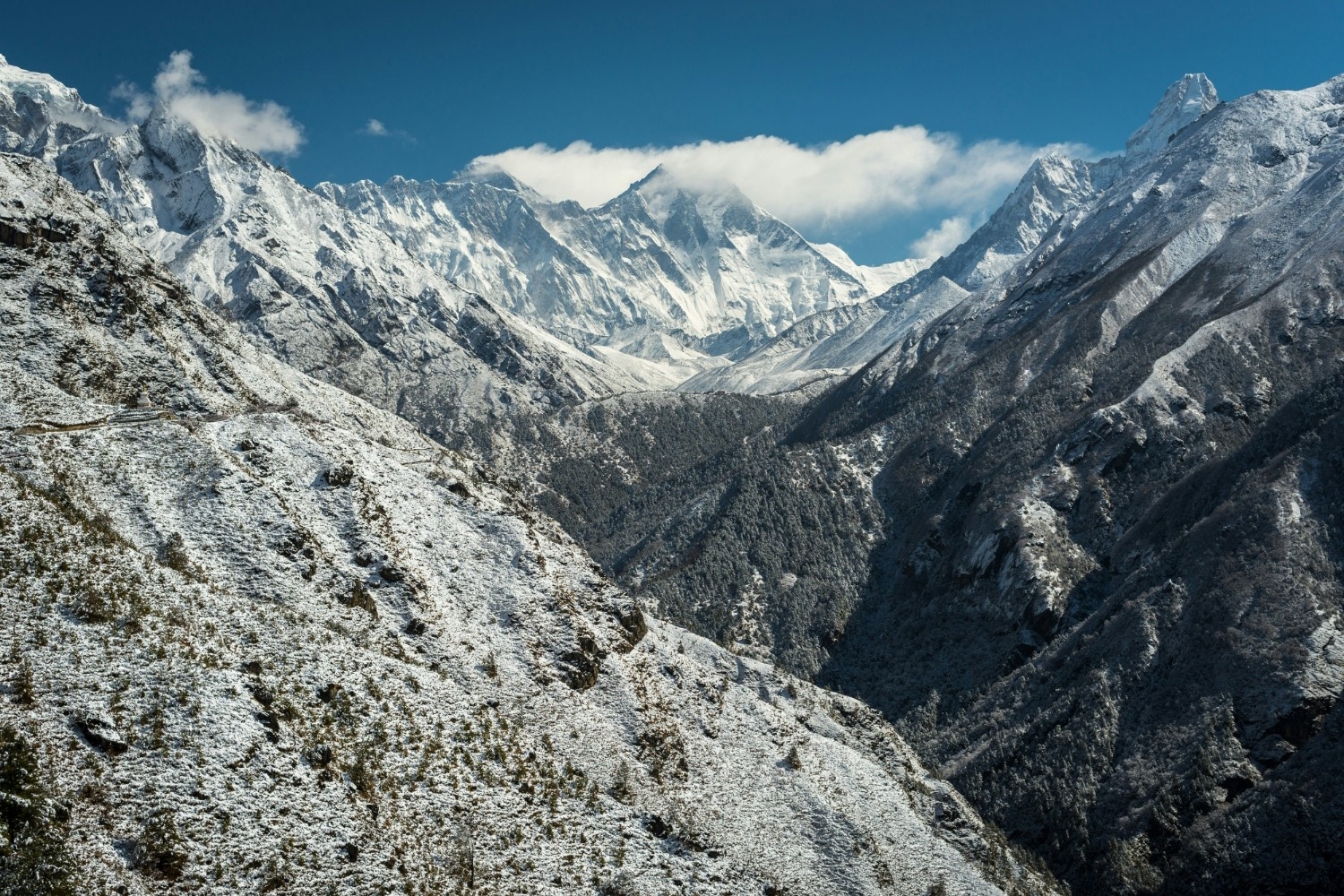
The Three Passes Trek in the Everest Region is widely regarded as one of the most thrilling and challenging treks in Nepal. Also known as the Everest High Passes Trek, it combines the grandeur of Everest Base Camp with the raw, untamed wilderness of the Khumbu Valley, making it an exceptional choice for true adventure seekers. This trek takes you on a journey through some of the highest and most rugged mountain passes in the world: Kongma La (5,535m), Cho La (5,420m), and Renjo La (5,340m). These passes link diverse landscapes, offering trekkers an immersive experience that goes beyond the classic Everest Base Camp route.
Along the way, you will follow in the footsteps of legendary mountaineers like Sir Edmund Hillary and Tenzing Norgay while passing through vibrant Sherpa villages such as Namche Bazaar, Khumjung, and Thame. The trek also includes a visit to the spectacular Gokyo Valley, home to pristine turquoise lakes and Nepal’s largest glacier. This route provides stunning panoramic views of Everest, Lhotse, Makalu, and Cho Oyu from multiple vantage points including Kala Patthar (5,555m) and Gokyo Ri (5,360m). Trekking these ancient trails once used for trade between Nepal and Tibet, adventurers encounter a unique blend of cultural heritage and natural beauty that defines the Khumbu region.
Best Time for Three Passes Trek in Everest Region
The best times to undertake on the Three Passes Trek are during the spring (March to May) and autumn (late September to November) seasons. These periods offer stable weather, clear skies, and moderate temperatures, making the strenuous high-altitude crossing more manageable and enjoyable. In spring, the rhododendron forests bloom in brilliant reds and pinks, adding vibrant color to the mountainous landscape. Autumn is known for its crisp air and excellent visibility, allowing trekkers to fully appreciate the breathtaking mountain panoramas, including Everest and its neighboring giants.
Winter (December to February) is less popular due to harsh cold and snowfall at high passes, which may limit accessibility and increase risk. Monsoon season (June to early September) is not advisable due to heavy rains, slippery trails, and potential landslides. At Amazing Nepal Journey, we carefully plan the itinerary to avoid these challenging weather conditions and ensure your trek is safe and memorable. We also advise clients on proper gear and acclimatization to prepare them for the variable weather conditions often experienced at high altitudes.
Three Passes Trekking Difficulty
The Three Passes Trek is considered one of the most demanding treks in Nepal due to the high elevation and multiple steep passes that must be crossed. Each pass—Kongma La, Cho La, and Renjo La—requires good physical fitness, endurance, and a strong mental attitude, as you will be trekking at altitudes above 5,300 meters. The daily hiking duration ranges between 6 to 8 hours, often on rocky and sometimes slippery terrain, and the risk of altitude sickness is significant due to the rapid ascent profile.
However, the trek is achievable for those who maintain a steady pace, acclimatize properly, and have some previous trekking experience at high altitudes. The presence of experienced guides and support staff from Amazing Nepal Journey ensures that safety and health are prioritized throughout the journey. Our itineraries are thoughtfully designed with acclimatization days to reduce the risk of altitude sickness, and we provide pre-trek training advice to prepare trekkers physically and mentally for the challenges ahead. The breathtaking views and cultural richness make every challenging step worth the effort.
Why Choose Us – Amazing Nepal Journey for Three Passes Trek
With over two decades of experience in adventure tourism, Amazing Nepal Journey has earned a reputation for delivering exceptional trekking experiences in the Everest region. Since 1998, we have successfully organized the Three Passes Trek with 100% client satisfaction, emphasizing safety, comfort, and cultural authenticity. Our knowledgeable guides are locals with deep roots in the Sherpa community and extensive trekking expertise, ensuring you not only navigate the trails confidently but also gain insight into the rich traditions and history of the Khumbu region.
We pride ourselves on providing personalized service from the initial inquiry through to your safe return, handling all logistics including permits, accommodation, transportation, and meals. Our commitment to responsible tourism means we prioritize environmental sustainability and fair treatment of porters and local staff. Choosing Amazing Nepal Journey guarantees a seamless, immersive, and unforgettable trekking adventure, supported by a team that genuinely cares about your experience and wellbeing. Whether you are a seasoned trekker or taking on your first high-altitude adventure, we tailor our services to meet your needs and aspirations.
Useful Information
Experience & Fitness Required
This trip is a quite adventure . No previous trekking experienced is required but if you have, it is a great plus point. This trek is a non technical walk. The highest height you would reach on this trip is 5364m at Everest Base Camp & 5545m at Kalapathar from sea level. The walk involves a lots of ups and downs, takes you through local villages, farming lands, terraces, and river side , cross glaciers but as long as you have strength of walking for 4 to 8 hours a day, you are qualified for the trek however you should be having a moderate health and fitness.
We strongly suggest travelers to consult with your medical doctor before travelling and do the regular check up of your health would be nice . A part of the health and fitness, participant must be having a positive attitude and strong determination for the successful trip.
Passport & Visa Information
Nepal Visa is the easiest visa to obtain; you may buy your Nepal visa at your nearest Nepalese Embassy/ Consulate or Mission offices abroad, from online possible or buy this upon on arrival to Kathmandu international airport as per your convenient. You have to have 2 passport size photographs, Visa fees in US cash & valid passport at least for 6 months valid at the starting of the trip.
Because these hikes take you on the remote Himalayan region, it is very essential that you are accompanied with the very experienced and qualified & equipped leader for the safe and successful trip. We Advanced Adventure employee the local trek guide and stuff who are trained and qualified on the trip we worked on. Our guides are trained and licensed from Nepal Gov, certify from TAAN & Nepal Mountaineering Association. All of our leading Trekking and Climbing Guide are experience from last 8 to 15years. We have train them specially for your trip, to cater the flexible needs of our peoples in the group joining from different countries, this double assure you that your trip is at the right and professional hands., it would still works smoothly and there would not be any impact on our original trek plan. Also each two trekker would have one Sherpa helper for carrying your trekking bags.
Meals and Accommodations
While in Kathmandu, your accommodation is at 3-4 star deluxe hotel that has all the modern amenities to ensure you comfort stay and while in trek, your accommodation is at Mt. Lodge and Guest Houses. Mt. Lodges are clean and have comfortable beds. Our entire accommodation is at twin share unless stated but single supplement accommodation is also available on personal request at the additional cost of US$-..
In city, only breakfast is included on the offered trip itinerary but while in trek full board of meals is included (Breakfast, Lunch & Dinner, and Tea- Coffee). We provide you food from the local tea- house/ Mt. Lodge from a route. Breakfast and dinner is to be provided from the same tea- house/ guest house we would overnight but lunch would be en route in between.
Foods provided are depends on the availability of the lodges we would be staying but in general, you can have Nepalese foods (Dal Bhat), Tibetan fried bread, various soups, Momo’s (steamed dumplings), potatoes, pastas and even a version of pizza! So, over all you have a different choice of food on trek.
Trekking Seasons
We do have two best seasons to attempt this trek to Everest Base Camp. As this trip is a big trip to you, we always suggest you to come at the right time of the year as far as possible.
Spring: - (March, April, May) - Best warmest time to trek. Rhododendron flowers in bloom- excellent trails and clear skies, best visibility. Good Temperature, warmest weather of the year.
Autumn:- (September, October and November) - Excellent trails, clear blue skies, best visibility. Best Time to Trek
Winter Months: - (December, January and February) are also good, but it’s obviously colder. You have to be prepared for this. It is up to you to plan this trek at this cold time or not.
Summer: - Monsoon, so rain and visibility can be a big issue (from Mid June, July and August). We do not suggest you this time for the trek. Best trekking in Mustang and Dolpo would be suggestible
Acclimatization
There is no way to prepare for altitude other than to spend time at altitude. Being in very good physical condition will help ameliorate some of the exhaustion that people often feel, but it will not prevent altitude caused medical problems such as Acute Mountain Sickness. This itinerary is designed with a high degree of awareness of AMS (Acute Mountain Sickness) in mind and to ensure a comfortable and safe adventure trek in the Himalayas. Staying well hydrated and getting plenty of rest may help.
The maximum elevation of this trek will be reached Kalapatter (5550m) and at Everest Base Camp at 5364m above sea level. Obviously this altitude range is high, but as we would be e range of altitude, and we are hiking from the 820m to this altitude range with enough days of hiking en route, it is not considered a high risk zone for AMS. However, AMS could affect to the peoples indifferently. We will have enough acclimatize during the treks .
Travel Insurance & Vaccination
You must obtain personal travel insurance to join us for our Amazing Nepal Journey trips. You must be having a travel insurance which must cover helicopter evacuation, trip cancellation and medical expenses. And it is suggested that you buy your insurance policy from you homeland country before traveling as it is difficult buying local travel insurance policy for foreigners in Nepal.
Vaccination is required to plan to your trip to Nepal but it is not a must to have thing to come, but highly suggested. Your doctor will have the information of vaccination you would require to the country you will be traveling.
Caring Porter:
Our porter are fully equipped and insured for each trip they are undertaking with us. As you know that we are very sincere with the porter issues and their situation while on trek thus we make sure that our porter are fully prepared for the trip. We are closely working with International Porter Progress Association for the welfare and befit for the touristic porters. The maximum load carried by our porter is 20 to 25 KG maximum so be sure that your trekking bag so not load more than 12 KG.
Note: Our Itinerary is flexible so if you can’t pass or some pass skep during the trekking possible alternative option .if you want sightseeing by helicopter Himalayan Range possible with extra cost.
If you need some list of the trekking equipment please ask me .
Welcome to Kathmandu, the vibrant capital of Nepal and the gateway to the Himalayas. Upon arrival at Tribhuvan International Airport, your guide from Amazing Nepal Journey will meet you and escort you to your hotel in the heart of the city. Take the rest of the day to rest after your journey or stroll around the bustling streets of Thamel, filled with shops, cafes, and local culture. This is the perfect opportunity to soak in the sights, sounds, and flavors of Nepal before embarking on your epic trekking adventure. Overnight at your hotel.
Today is dedicated to exploring Kathmandu’s rich cultural heritage and preparing for your trek. Visit some of the city’s UNESCO World Heritage Sites such as Swayambhunath Stupa (Monkey Temple), Pashupatinath Temple, and Boudhanath Stupa. Your guide will also provide a detailed briefing on the Three Passes Trek, ensuring you understand the itinerary, packing essentials, and safety tips. Use the afternoon to finalize your gear and enjoy a traditional Nepali dinner. Overnight in Kathmandu, resting up for your early morning flight to Lukla.
After a scenic 40-minute flight from Kathmandu, you’ll land in Lukla, the gateway to the Everest region. Upon arrival, meet your trekking team and porters before beginning the trek. The trail is mostly downhill through pine forests and small Sherpa villages, following the Dudh Koshi River to Phakding. This is a gentle introduction to the trekking terrain, allowing your body to adjust to the altitude and get used to walking on mountain trails. Phakding is a peaceful village with welcoming teahouses where you’ll spend your first night in the Himalayas.
The trail today climbs steadily, crossing several suspension bridges over the Dudh Koshi River. You’ll pass through beautiful rhododendron and pine forests as you ascend to Namche Bazaar, the bustling Sherpa trading town. This lively village is the cultural and commercial hub of the Khumbu region, offering shops, cafes, and spectacular mountain views. The steep climb tests your endurance but rewards you with breathtaking vistas of Everest, Lhotse, and Ama Dablam. Enjoy exploring the vibrant streets of Namche and prepare for acclimatization tomorrow.
A vital day for acclimatization, allowing your body to adjust to the higher altitude. You can explore Namche Bazaar’s markets, visit the Sherpa Culture Museum, or hike up to the Everest View Hotel for stunning panoramic views of the Himalayas. Some trekkers opt for a short climb to Syangboche Airport or the nearby hills to aid acclimatization. This day helps reduce the risk of altitude sickness and prepares you for the challenging trek ahead. Enjoy the warm hospitality and mountain atmosphere before continuing your journey.
Today’s trek is filled with spectacular views and cultural highlights. Leaving Namche, the trail climbs gradually through pine forests to reach the famous Tengboche Monastery, the largest in the region. The monastery sits majestically against the backdrop of Everest, Ama Dablam, and other peaks. After visiting the monastery, continue trekking to the nearby village and lodge in Tengboche. The serene surroundings and spiritual atmosphere provide a peaceful setting for your overnight stay.
The trail leads you through alpine forests, gradually ascending to Dingboche, a picturesque village surrounded by towering peaks like Lhotse and Island Peak. The terrain becomes more rugged and the air thinner as you gain altitude. Dingboche is a great place for rest and acclimatization, featuring terraced fields and traditional stone houses. The village offers comfortable lodges and warm meals, ideal for preparing your body for the higher elevations and the demanding sections of the trek.
Spend this important day acclimatizing by taking a short hike to nearby viewpoints or resting in the village. Many trekkers climb Nangkartshang Peak (about 5,000m) for stunning vistas of Ama Dablam, Lhotse, and Makalu, helping the body adjust to the altitude gradually. Use this time to hydrate well, eat nourishing food, and rest your muscles. This acclimatization day is crucial for a safe and enjoyable continuation of your journey over the high passes ahead.
Trek to the charming village of Chhukung, located in a beautiful valley surrounded by towering peaks. After settling in, prepare for a challenging climb to Chhukung Ri, one of the best vantage points in the region. The ascent offers sweeping views of Ama Dablam, Lhotse, and Island Peak, rewarding your effort with unforgettable panoramas. Return to Chhukung for a restful evening, enjoying the peaceful mountain atmosphere and preparing for the next day’s high pass crossing.
Today you tackle your first major pass, Kongma La, at 5,535 meters. The climb is demanding but rewards you with awe-inspiring views of the Everest massif and surrounding peaks. Descend to Lobuche, a small settlement nestled near the Khumbu Glacier. The terrain here is rocky and rugged, and the altitude requires steady pacing. Lobuche is a base for many Everest climbers, and the teahouses provide a comfortable rest before the trek continues towards Everest Base Camp.
Trek from Lobuche to Gorak Shep, the last village before Everest Base Camp. After settling in Gorak Shep, embark on the iconic trek to Everest Base Camp itself. Witness the stunning Khumbu Icefall and the vast expanse of the Everest massif. This is the ultimate highlight of your trek, standing where only climbers and trekkers dare to go. Return to Gorak Shep for overnight rest amid high-altitude mountain scenery.
Wake before dawn to climb Kala Patthar, famous for its spectacular sunrise views of Everest, Lhotse, and Nuptse. This steep but short climb offers arguably the best panoramic view of the Himalayas. After descending, continue trekking to Dzongla, crossing through valleys and rugged terrain. Dzongla is a remote village offering a quiet and scenic resting point, preparing you for the next pass crossing.
Today’s trek includes crossing the challenging Cho La Pass, one of the three high passes on this route. The climb is steep and requires good fitness and determination, but the views of glaciers and mountain peaks are breathtaking. After descending from the pass, arrive at Gokyo, a picturesque village famous for its stunning turquoise lakes. Rest and soak in the beauty of this tranquil spot nestled in the Himalayas.
Early morning, climb Gokyo Ri for magnificent views over Everest, Cho Oyu, and the surrounding peaks. The summit is one of the best viewpoints in the region. After descending, explore the beautiful 4th and 5th Gokyo Lakes, known for their pristine turquoise waters. This day offers a combination of adventure and relaxation amid spectacular natural beauty. Return to your lodge in Gokyo for a restful night.
Cross Renjo La, the final and highest of the three passes, offering stunning vistas of Everest and Makalu. The trek is challenging but rewarding with spectacular panoramic views along the way. Descend to Marlung, a peaceful village surrounded by lush forests and mountain peaks. This day tests your stamina and determination, but the rewarding landscapes and sense of achievement make it worthwhile. Overnight in Marlung.
Descend from Marlung through rhododendron forests and traditional Sherpa villages to reach Namche Bazaar once again. This descent feels easier and gives you time to reflect on your remarkable journey across the three passes. Upon arrival, enjoy the bustling atmosphere and consider a warm meal and rest at one of the village’s many lodges. Overnight in Namche.
Your final trekking day takes you back through pine forests, crossing suspension bridges and passing quaint villages to reach Lukla. The trail is familiar now, and the descent is a rewarding conclusion to your trek. Celebrate your accomplishment and prepare for your flight back to Kathmandu. Overnight in Lukla or Kathmandu depending on flight timing.
Take an early morning flight back to Kathmandu, enjoying spectacular aerial views of the Himalayas and Everest massif. Upon arrival, transfer to your hotel and relax. You may spend the rest of the day shopping, sightseeing, or enjoying a massage to soothe tired muscles after your trek. Overnight in Kathmandu.
Explore the cultural treasures of Kathmandu Valley, visiting sites like Pashupatinath, Boudhanath, and Durbar Square with your guide from Amazing Nepal Journey. Experience the rich history, spirituality, and vibrant local life of Nepal’s capital city. In the evening, enjoy a farewell dinner featuring traditional Nepali cuisine and cultural performances. Overnight in Kathmandu.
After breakfast, your guide will transfer you to Tribhuvan International Airport for your departure flight. Take with you unforgettable memories of your extraordinary journey across the Everest region and the incredible Three Passes Trek with Amazing Nepal Journey. Safe travels and see you again in Nepal!
Your Start Date is the day you land in Nepal, and your End Date is when you fly home.
If the set Three Pass in Everest Region Trekking group dates don’t suit your schedule, we can offer alternative dates upon request.
The Three Passes Trek is a challenging and breathtaking journey through the Everest region, covering three high mountain passes: Kongma La, Cho La, and Renjo La. This trek offers trekkers an extraordinary opportunity to experience panoramic Himalayan vistas, remote Sherpa villages, and iconic sites like Everest Base Camp and Gokyo Lakes. With Amazing Nepal Journey, this comprehensive trek spans 20 days, starting and ending in Kathmandu, and combines cultural immersion with high-altitude adventure.
Your trek begins on Day 1 with your arrival in Kathmandu (1,300m), followed by a day of sightseeing and trek preparation on Day 2. On Day 3, you take a short 40-minute flight to Lukla and trek to Phakding. Over the following days, you ascend through Namche Bazaar and Tengboche, acclimatizing at key points. The itinerary includes crossing the challenging Kongma La Pass on Day 10, trekking to Everest Base Camp and Kala Patthar, and then crossing the Cho La Pass to reach the beautiful Gokyo Lakes. The trek continues over Renjo La Pass before returning to Namche Bazaar and finally Lukla for your flight back to Kathmandu. You have additional days for sightseeing and relaxation in Kathmandu before departure on Day 20.
This trek is considered highly challenging and suited for experienced trekkers with good physical fitness. The route involves multiple high passes, some above 5,300 meters, which require stamina, acclimatization, and mental preparedness. Daily trekking durations range from 3 to 8 hours, with steep ascents and descents. Acclimatization days are included to help your body adjust to the altitude and minimize the risk of altitude sickness.
Accommodation is primarily in teahouses and lodges, which offer basic but warm and welcoming facilities. Rooms typically have shared bathrooms, and heating may be limited at higher elevations. Meals consist of local Nepali and Tibetan cuisine such as dal bhat, noodles, soups, and momos. In Kathmandu, you will stay in comfortable hotels with modern amenities. Amazing Nepal Journey carefully selects accommodations that balance comfort with authentic local experiences.
The trek requires permits such as the Sagarmatha National Park Permit and the TIMS card (Trekkers’ Information Management System), both of which are necessary for conservation and trekking regulation purposes. These permits are included in the package with Amazing Nepal Journey, and we handle all the paperwork on your behalf for a seamless start to your trek.
The itinerary strategically includes rest and acclimatization days in Namche Bazaar and Dingboche, as well as moderate trekking days before and after the high passes. This careful pacing is essential for helping trekkers acclimatize safely and reduces the risk of altitude-related illness. Guides from Amazing Nepal Journey continuously monitor your health and can recommend adjustments as needed.
Given the wide range of altitudes and temperatures, packing smart is crucial. Essentials include layered clothing, a down jacket, waterproof outerwear, sturdy trekking boots, gloves, hats, sunglasses, and a sleeping bag. Trekking poles can be helpful for the steep ascents and descents. Amazing Nepal Journey provides a detailed packing list and can advise on gear rental or purchases in Kathmandu or Lukla.
Yes, the package includes the round-trip flight between Kathmandu and Lukla, weather permitting. The Lukla flight is a spectacular introduction and conclusion to your trek, offering breathtaking aerial views of the Himalayas. Should weather cause delays or cancellations, our team will assist with alternative arrangements to keep your schedule on track.
Both options are available. Solo trekkers are welcome and are supported by experienced guides and porters to ensure safety and camaraderie. Group departures foster a social atmosphere and can be a great way to share the experience with fellow adventurers. Amazing Nepal Journey is happy to customize your trek to fit your preferences.
Your safety is our top priority. All guides are highly experienced and trained in first aid and emergency response. We carry satellite phones and oxygen for emergencies. The trek is planned with acclimatization days and moderate daily distances to prevent altitude sickness. In emergencies, evacuation by helicopter is arranged promptly. We closely monitor weather and trail conditions throughout your trek.
Amazing Nepal Journey offers personalized service with a focus on authenticity, safety, and sustainable tourism. Our expert local guides provide rich cultural insights and unwavering support. We maintain small group sizes for a more intimate and flexible trekking experience. Our comprehensive service, from pre-trip preparation to post-trek celebrations, ensures you enjoy this challenging trek with confidence and comfort.




 (18)
(18)  100% recommend (0)
 (0)
(0)