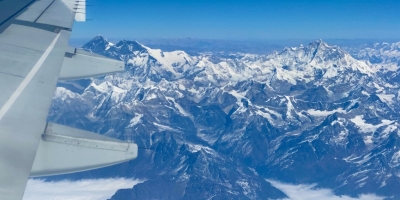
The Helicopter Day Tour to Everest Base Camp is a luxurious and time-efficient way to experience the grandeur of the world's highest mountain, Mount Everest (8,848.86m), all in just one incredible day. Operated by Amazing Nepal Journey Treks & Expedition, this adventure is perfect for travelers who want to enjoy the thrill and beauty of Everest without days of trekking. It combines Himalayan vistas, aerial sightseeing, and short landings at some of the most iconic places in the Khumbu region.Your day starts early with a hotel transfer to Kathmandu Domestic Airport, followed by a scenic flight to Lukla, the famous gateway to Everest. After a quick fuel stop, the helicopter continues over Namche Bazaar, the Sherpa capital, and flies directly to Everest Base Camp. As you soar above Khumbu Glacier and between the towering peaks of Lhotse, Nuptse, and Everest, you'll be treated to unmatched views of the world's most dramatic mountain terrain.The helicopter then lands at Kala Patthar (5,545m)—the best viewpoint of Everest—for around 5 minutes, giving you time for once-in-a-lifetime photos. Afterward, you'll fly to Syangboche where you'll enjoy breakfast at a hotel with panoramic views, before returning to Lukla for refueling and finally flying back to Kathmandu. This is a tour of elegance, adrenaline, and unforgettable scenery—made simple, safe, and seamless by the experts at Amazing Nepal Journey.Hotel to National airport in KathmanduKathmandu to LuklaLukla to Everest Base Camp (fly over)Everest Base Camp to Kala Patthar ( 5 minutes )Kala Patthar to Syangboche breakfast in Syangboche( 25 minutes)Syangboche to LuklaLukla to KathmanduHelicopter Landings – Base Camp, Kala Patthar, Syangboche, and LuklaThe helicopter day tour to Everest Base Camp involves multiple scenic landings, giving you a dynamic and immersive Himalayan experience. The first landing is at Lukla Airport (2,860m), where the helicopter refuels. Known for its short and sloped runway, this high-altitude airport offers an exciting glimpse into what trekkers and climbers experience as they begin their journey to Everest.From Lukla, the flight heads to Everest Base Camp (5,364m). While there is typically no landing at the base camp itself due to glacial instability, you'll have the chance to fly low over the camp, observing colorful tents and climbers during peak seasons (spring and fall). The next and most important stop is Kala Patthar (5,545m), the iconic viewpoint for close-up photos of Everest. Due to high altitude, helicopters only stay here for 5 minutes, but it’s enough to capture jaw-dropping shots of the Everest massif.After Kala Patthar, the flight descends to Syangboche (3,780m), where you'll enjoy a relaxing breakfast at the famous Hotel Everest View, overlooking Everest and Ama Dablam. Finally, a short refueling stop is made in Lukla before returning to Kathmandu. These carefully chosen stops ensure that you experience the thrill of high-altitude landings, scenic views, and local hospitality—all in one unforgettable day.Best Time for Helicopter Day Tour to Everest Base CampThe best time for a helicopter day tour to Everest Base Camp is during the spring (March–May) and autumn (September–November) seasons. These months offer the most stable weather, clear skies, and excellent mountain visibility, ensuring your helicopter flight goes smoothly and that you get the best panoramic views of Everest, Lhotse, Nuptse, Ama Dablam, and the Khumbu Icefall.During spring, the air is fresh, the mountains still carry winter snow, and the landscapes are dotted with blooming rhododendrons. Autumn provides equally impressive scenery, with crisp skies following the summer monsoon and less chance of cloud cover. These two windows are ideal not just for sightseeing but also for flight safety and comfortable landings at high altitudes.While winter (December–February) can also be suitable due to low tourist traffic and clear air, temperatures are very cold, especially at Kala Patthar. Monsoon season (June–August) is generally avoided for helicopter flights due to unpredictable weather, reduced visibility, and frequent delays. At Amazing Nepal Journey, we closely monitor real-time weather reports and provide flexible scheduling to give you the safest and most spectacular experience possible. Early morning flights (around 6:30–7:00 AM) are recommended for the best lighting and stable flying conditions.Helicopter Day Tour to Everest Base Camp – Difficulty LevelThe Everest Helicopter Day Tour is designed to be accessible to everyone, regardless of trekking experience or physical fitness. This is what makes it such a popular choice for people with limited time, older travelers, or those who cannot commit to the physically demanding Everest Base Camp Trek. Since the tour includes hotel transfers, flight assistance, and professional ground handling, you don’t need any technical knowledge or mountain travel experience to participate.The main challenge on this tour is the altitude. Landing at Kala Patthar (5,545m) exposes you briefly to a high-elevation environment, where oxygen levels are low. However, the short landing duration of 5 minutes minimizes the risk of acute mountain sickness (AMS). Passengers are advised to stay calm, move slowly, and hydrate before the flight. The helicopter is pressurized during flight, and oxygen support is available upon request.Overall, this helicopter trip is rated as easy in terms of physical effort but high in reward. With Amazing Nepal Journey, you’ll receive clear safety briefings, professional care, and attention to detail throughout the journey. If you’ve always dreamed of seeing Everest but couldn’t manage the trek, this is the perfect way to experience its majesty.Why Choose Amazing Nepal Journey for Helicopter Tour to Everest Base Camp?Amazing Nepal Journey Treks & Expedition has been delivering high-quality Himalayan adventures for over 25 years, and our Helicopter Day Tour to Everest Base Camp reflects that experience, expertise, and care. We prioritize safety, comfort, and satisfaction, offering full logistical support from your hotel in Kathmandu to your final return from Everest.What sets us apart is our commitment to personalized service. We only partner with reliable helicopter operators, and our pilots are seasoned professionals who specialize in high-altitude aviation. From ground handling in Kathmandu and Lukla to coordination at Kala Patthar and Syangboche, our team ensures a seamless, stress-free journey.We also offer custom departure times, private and group bookings, and expert consultation on weather windows and flight planning. Our prices are transparent, and we don’t compromise on quality or safety. Whether you're a solo adventurer, a couple celebrating a special occasion, or a group of friends on a dream trip, we make sure your helicopter journey is thrilling, safe, and memorable.Choose Amazing Nepal Journey—where your Everest dream becomes reality, effortlessly and elegantly.

The Helicopter Tour to Annapurna Base Camp (ABC) from Pokhara is the fastest, most convenient, and luxurious way to witness the grandeur of the Annapurna Himalayas without the time or physical demands of a traditional trek. Organized by Amazing Nepal Journey Treks & Expedition, this aerial adventure gives you an incredible Himalayan experience in just under 2 hours, perfect for those with limited time or those looking for a once-in-a-lifetime panoramic experience.Taking off from Pokhara, a beautiful lakeside city already surrounded by mountains, your journey begins with stunning aerial views of the Pokhara Valley, Phewa Lake, and nearby terraced farmlands. As the flight gains altitude, the true Himalayan giants reveal themselves. Within minutes, you’ll be flying alongside some of the most iconic peaks in Nepal—Machhapuchhre (Mt. Fishtail), Annapurna I, Annapurna South, Hiunchuli, and even distant views of Dhaulagiri and Manaslu. After about 25 minutes, you land directly at Annapurna Base Camp (4,130m), surrounded by a magnificent 360-degree panorama of the Annapurna Sanctuary.At ABC, you’ll have 15–20 minutes to enjoy the scenery, breathe the high mountain air, and sip tea or coffee at one of the local lodges. Then you board the helicopter for your return to Pokhara, descending through the clouds and valleys. This incredible tour allows you to experience in two hours what typically takes a week or more on foot, without compromising on the stunning views and immersive feeling of being in the heart of the Himalayas.Helicopter Landing at Annapurna Base CampLanding at Annapurna Base Camp by helicopter is an unforgettable moment—something only a few lucky travelers experience. As you descend into the natural amphitheater surrounded by towering peaks over 7,000 and 8,000 meters high, the views become increasingly surreal. The rotors slow, the snow crunches beneath the skids, and you find yourself standing at 4,130 meters in the heart of the Annapurna Sanctuary.The landing zone at ABC offers a safe and spacious area for short-term visits. The helicopter remains on the ground for about 15–20 minutes, which is enough time to take in the remarkable surroundings, capture amazing photos, and enjoy a warm beverage at the tea lodge nearby. This brief stop is also important to minimize the risk of altitude sickness, as the human body needs more time to acclimatize properly to such high elevations. The fresh mountain air, peaceful silence, and mighty peaks around you create a once-in-a-lifetime feeling of awe and serenity.This is not just a sightseeing tour—it’s a deeply moving experience, a rare chance to be so close to iconic Himalayan peaks like Annapurna I (8,091m) and Machhapuchhre (6,993m) without days of strenuous hiking. At Amazing Nepal Journey, we make sure every moment on the ground is safe, comfortable, and unforgettable. Our experienced pilots and ground staff ensure smooth logistics and provide insight into the region’s culture, geography, and significance.Best Time for Helicopter Tour to Annapurna Base CampThe best times to embark on a Helicopter Tour to Annapurna Base Camp are during spring (March to May) and autumn (September to November). These seasons offer stable weather conditions, clear blue skies, and exceptional visibility for panoramic mountain views. In spring, the lower regions are dotted with blooming rhododendrons, and the skies are usually clear in the early morning—ideal for scenic helicopter flights. Autumn follows the monsoon, leaving the air crisp and clean, enhancing long-distance visibility across the Himalayan range.Early mornings are generally the best time of day for the helicopter flight, as wind speeds are lower and visibility is best. Flights may still operate in winter (December to February) if the weather is stable, and snow-covered peaks make for a particularly dramatic view. However, flights in monsoon season (June to August) are less recommended due to frequent cloud cover, rain, and the risk of flight delays or cancellations.Amazing Nepal Journey monitors real-time weather forecasts, seasonal patterns, and flight windows to ensure every guest has the safest and most scenic flight experience possible. With flexible scheduling and expert guidance, we help you choose the perfect time for your dream journey to the heart of the Himalayas.Helicopter Tour to Annapurna Base Camp – DifficultyOne of the greatest advantages of the Annapurna Base Camp Helicopter Tour is its accessibility. It’s not physically demanding, making it suitable for people of all ages and fitness levels—including families with children, seniors, or travelers with limited time. There is no trekking or hiking required, as the helicopter takes you directly from Pokhara to ABC and back within two hours.However, altitude remains a factor. ABC sits at 4,130 meters (13,550 ft), and while you're only there for 15–20 minutes, it’s essential to take precautions. Spending a short time at high altitude helps prevent acute mountain sickness (AMS), and our pilots are trained to monitor for any signs of discomfort. We also advise passengers to stay hydrated, avoid sudden movements, and enjoy the experience calmly.Flying with Amazing Nepal Journey Treks & Expedition ensures that you're in safe hands. Our helicopters are well-maintained, and our experienced pilots are trained to handle both high-altitude landings and emergency procedures. With us, your ABC heli tour is more than a luxury—it’s a carefully managed, smooth, and secure mountain experience.Why Choose Amazing Nepal Journey for Helicopter Tour to Annapurna Base Camp?When it comes to unforgettable Himalayan experiences, Amazing Nepal Journey Treks & Expedition is the name you can trust. With over 25 years of expertise in mountain tourism, we offer professionally organized helicopter tours that blend adventure, comfort, and safety. Our Annapurna Base Camp Heli Tour is operated in partnership with licensed aviation companies and experienced pilots who specialize in high-altitude flying.What sets us apart is our attention to detail and personalized service. We assist you with everything—from flight scheduling and hotel transfers in Pokhara, to providing safety briefings and guiding you through the landing process at Annapurna Base Camp. We understand how valuable your time is, which is why we ensure a hassle-free, efficient, and memorable adventure.We also take pride in offering fair pricing with no hidden costs, and our staff is available 24/7 for customer support. Whether you're a solo traveler, a couple on a honeymoon, or a group of friends or family, we tailor the tour to meet your needs. With Amazing Nepal Journey, your helicopter trip to ABC isn’t just a flight—it’s a luxury Himalayan experience that stays with you for a lifetime.
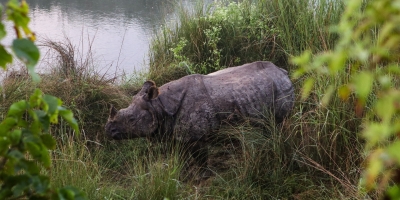
Chitwan National park Tour is best known for its culture and wildlife activities. Chitwan means "heart of the jungle", because of its dense forests and wild animals. Chitwan national park is located in central south of Nepal, just 165 km far from Kathmandu and 150 km from Pokhara, which offers you many jungle as well as cultural activities. Such as Elephant back safari, canoeing trip, jungle walk, visit to ethnic local people house, culture dance perform by local tribe people, visit to sunset point, jeep drive and so on.The people who have at least 2 nights and 3 days time to visit Chitwan national park, We Amazing Nepal Journey Treks & Expedition can offer them quiet relax and luxuries program, which will allow them to know about Chitwan national park, jungle activities and local people, their daily life. In 2 nights and 3 days package you can experience most of the adventurous program in Chitwan, such as elephant back safari, canoe trip, jungle walk, elephant breeding center visit, visit to local village, visit to sunset point and culture dance program.

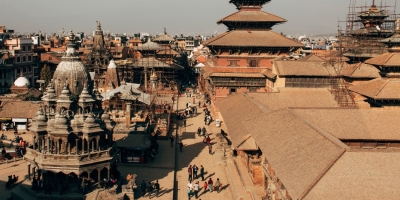
Kahmandu is capital of Nepal has 218 square miles (360 square kilometers) of land with three historic, artistic and cultural towns namely Kathmandu, Patan and Bhaktapur together form known as ‘Kathmandu Valley’. The word Kathmandu is derived from ‘Kasthmandap’ (literally “Wood-Covered Shelter”) in Sanskrit, a pagoda-style temple .Measuring 24 km east-west and 19 km north-south, the Kathmandu valley has are seven UNESCO world heritage sites in the valley. Acronym of Kathmandu is ‘KTM’. Kathmandu valley is the hub of Nepal’s political, commercial and traditional culture and arts. Kathmandu valley is an exotic and fascinating showcase of a very rich culture, art, and tradition. Kathmandu, the capital of Nepal is the place for rest, relaxation and easy-day sightseeing of historic and artistic temples and monuments, and mountain views.The Kathmandu Valley consists of three historic cities: Kathmandu, Patan and Bhaktapur. The cities of the Kathmandu valley are filled with medieval temples and palaces. The Kathmandu Valley was known as the Nepal Valley during Malla Period. After the unification of Kathmandu in 1825, Prithivi Narayan Shah made Kathmandu the capital of unified kingdom.The history of the Valley begins with the Buddhist saint Manjushree who slashed a passage through the surrounding hills to drain out the primordial waters and make it inhabitable. Over the centuries, a refined urban civilization emerged, built on a unique synthesis of Hinduism and Buddhism.Dynasties came and went. Trade and the arts flourished. Its deeply religious Newar inhabitants built fabulous cities and artistic temples that attracted devout pilgrims and modern tourist .Kathmandu is situated at an altitude of 1,300m.KATHMANDU Population (2011 Census)Kathmandu Distric: 1, 740,977Lalitpur District: 466,784Bhaktapur Distric:303,027Kathmandu agglomeration 2,510,788Kathmandu Durbar Square. This complex of palaces, courtyards and temples like Hanumandhoka Palace, Kumari Ghar (Abode of the Living Goddess), Taleju temple, built between the 12th and 18th centuries, used to be the seat of the ancient Malla Kings of Kathmandu. An intriguing piece here is the 17h -century stone inscription set into the wall of the palace with writings in 15 languages. The Durbar Square, protected as a UNESCO World Heritage Site, is the social, religious and urban focal point of the city. Even to date, all the major state and social ceremonies, including the solemnization of coronations are performed in one of the courtyards in this complex. There are also museums inside the palace building. Your ticket to the Square entitles you to visit all the museums.Note: After earthquake in 2015, mostly such a beautiful things destroyed and now some of them processing for reconstruction.Swayambhu Stupa watches over the Valley from the top of a hillock on its western side just three kilometers west of the city center. The stupa is one of the holiest Buddhist sites in Nepal and its establishment is linked to the creation of the Kathmandu Valley out of a primordial lake. Swayambhu is also known as Samhengu and is listed as a World Heritage Site. It is also one of the oldest and glorious Buddhist shrines in the world which is said to be two thousand years. The four sides of the stupa is painted with the eyes of Lord Buddha and the temple is also known as the watchful eyes of Buddha. Entrance fee required to all tourist.Note: Its also effected the earthquake of 2015.Lunch break around 12.00 for one hrs. Evening back to your Hotel and short brief for next day programs and your are free evening.Bouddhanath Stupa lies about 6 km east of downtown Kathmandu and is the largest stupa in the Valley and one of the largest in the world. It looms 36 meters high and presents one of the most fascinating specimens of stupa design with hundreds of prayer wheels and 108 small images of Buddha all around. Just like the Swayambhunath, the stupa here is too has four sides with the watchful eyes of Lord Buddha. All the Buddhist throng to this stupa to take part in the sacred rituals during the Buddhist festivals.Bouddhanath, a World Heritage Site is also known as Khasti. There are more than 45 Buddhist monasteries in the area. Many have schools that teach young monks like those pictured here. The entry fee required to all tourist .Note: Completely rebuild after the earthquake of 2015.Pashupatinath Temple. One of the most sacred Hindu shrines in the world, Pashupatinath lies 5 km east from the city center. The richly-ornamented pagoda houses the sacred linga, or phallic symbol, of Lord Shiva as well as the noteworthy gold plated roofs and silver coated doors. This is the abode of God Shiva and is the holiest of all the Shiva shrines.Religious pilgrims and sadhus, like the one pictured here, travel all the way from the remote areas of India to visit this sacred sight, especially during Shivaratri (the night of Shiva) that falls between February/March. Even though these devotees have denounced worldly possessions, each carries a Sadhu ID (identifications card) to freely cross over the border between India and Nepal.Chronicles indicate Pashupatinath’s existence prior to 400 AD. Devotees can be seen taking ritual dips in the holy Bagmati river flowing beside the temple, also a World Heritage Site. The crematorium is just outside the temple and it is a dream of almost every Hindu to be cremated by the side of Pashupati Aryaghat after their death. Entry fee required .Bhaktapur Durbar Square. As you walk in, you cannot but be overcome by a feeling of inner harmony. Such is the art and architecture and the special layout here. The Palace of 55 Windows built during the period of King Bhupatindra Malla in 1754 situated to the left as you enter through the city gate, inspires admiration. The National Art Gallery is also housed inside. The palace entrance, the Golden Gate known as Sunko Dhoka in Nepali is a masterpiece in repousse art. In front of the palace building is a medley of temples of various designs. Amongst the three Durbar Squares in the Valley, the Durbar Square in Bhaktapur is the best preserved one. There is an entrance fee of Rs. 30 for SAARC nationals and Rs. 500 for other foreign visitors.Taumadhi Square lies to the east of Durbar Square reached by a narrow brick-paved lane. The towering five-roofed Nyatapol temple presides over the square. The monument gracefully soars into the sky atop a five-story plinth. The stairway leading up to the temple is flanked by stone figures of deities and mythical beasts, each 10 times more powerful than the one immediately below.Dattatreya Square takes its name from the Dattatreya temple dedicated to a three-headed combination of the Hindu deities Brahma, Bishnu and Shiva. If you want to experience the feel of the traditional urban layout of Bhaktapur, Dattatreya Square is it. Set in a maze of streets lined with richly ornamented houses, the square is famed for its many ornate Hindu monasteries known as Math. The National Woodworking Museum is also housed here and the Brass and Bronze Museum is across the street. The oldest structure in Bhaktapur was raised during the reign of the last Malla King, Yaksha Malla who ruled the Valley before it was divided into three Kingdoms amongst his three heirs.Potter’s Square. A two-minute walk south of Durbar Square brings you to Bolachhen, also known as Potter’s Square because of the many potters seen here moulding wet clay into different kinds of earthen ware. It has a display of fresh pottery left out to dry in the open square. This place can be approached from Taumadhi Square. The elephant-headed Lord Ganesh is the patron of potters, thus the Jeth Ganesh temple in the square.Siddha Pukhu, a pond dating back to the Lichhavi period, is better known as Ta-Pukhu, meaning big pond. Though situated right at the bus stop, it provides a serene atmosphere with its sashaying fish and the stone images of different Hindu and Buddhist Gods.Changu Narayan Temple is situated on a ridge overlooking the Valley, about 12 km to the east of the city. It is dedicated to the Hindu God Bishnu – the Preserver. One of the finest and oldest specimens of pagoda architecture, the temple is embellished with exquisite wood and stone carvings and is said to be the oldest pagoda style temple in Nepal built sometime back in 323 A.D. The sacred complex is a World Heritage Site and offers a panoramic view of the surrounding at 125 meters.Surya Binayak is one of Kathmandu’s most popular pilgrimage spots, 12 kilometers east of the center. It has been positioned in such a way to catch the first rays of the sun in the morning. Situated in a thick forest to the south of Bhaktapur, it is a 20-minute walk from the trolley bus terminal. The temple, dedicated to the Hindu deity Ganesh (the Elephant headed God) is crowded with devotees especially on Tuesdays and Saturdays. It is also one of the favorite picnic spots offering elegant views of Bhaktapur and other attractive landscapes.Panauti is a farming town situated 8 km east of Kathmandu on the way to Bhaktapur. Exquisite temples and other religious shrines dot its streets. It is known for its artistic masks and earthen pots, often seen spread out on the streets to dry in the sun. It can be called a traditional pottery locality with almost 80% of the population still involved in pottery. Handspun cotton cloth is another Thimi specialty.Suggested Half-Day ItinerariesSight-seeing can be done on foot in the city core areas; for outlying spots, hire a car or take the bus. Amazing Nepal Journey in Kathmandu offer a variety of half-day and full-day guided tours. The following combinations of tourist sites make for a pleasant half-day of sight-seeing:Patan Durbar Square, like its counterpart in Kathmandu, is an enchanting mélange of palace buildings, artistic courtyards and graceful pagoda temples. Listed as a World Heritage Site, the former royal palace complex is the center of Patan’s religious and social life, and houses a museum containing an array of bronze statues and religious objects. There is an entrance fee of Rs. 200 per foreign visitor. One remarkable monument here is a 17th century temple dedicated to the Hindu God Krishna – Krishna Mandir built entirely of stone with rare stone carvings on its walls depicting the epic wars from Ramayana and Mahabharata. Iba Bahi is situated about a two-minute walk south of Durbar Square. It is one of the oldest Buddhist monasteries in Kathmandu Valley and reflects the sophisticated architecture of the Malla period. A two-step platform leads to the courtyard with a hall called Dalan. There is a shrine dedicated to Shakyamuni right across the entrance.Kwa Bahal, also known as the Golden Temple, is a Buddhist monastery courtyard dating to the 12th century. It is a five-minute walk west and north from the northern end of Durbar Square. The monastery building is embellished with exceptionally fine wood-carvings and repousse work. Artistic images are scattered around the courtyard, and devotees can be seen offering worship at the many shrines here.Mahabouddha can be reached by walking east from the southern end of Durbar Square and then turning right at the sunken water taps. This Buddhist monument is an excellent example of terra cotta art form which points to the skill of Patan’s ancient craftsmen with a variety of building styles. The 14th century monument’s obelisk-like design is also unusual in a city of pagoda roofs.Oku Bahal is situated a few steps past Mahabouddha and is one of the best known Buddhist places of worship in Patan. The stone-paved courtyard is enclosed by a two-story building with gilded roofs. The wood-carvings on the roof struts are especially attractive. The place is peppered with sacred images and other small shrines.The Central Zoo in Jawalakhel is a pleasant diversion after a tour of the cultural sights. The only zoo in Nepal, was first established in 1932 by a Rana Prime Minister as a private zoo and later opened to public in 1956. It houses about 106 species of birds and over 665 different animals and has 14 of the 38 endangered animals of Nepal. There is also a pond where you can go boating. The zoo is open daily except Mondays from 10 am to 5 pm.Tibetan Refugee Camp was set up in 1960 under the initiative of International Red Cross and the Swiss Development Corporation (SDC), known as Swiss Association for Technical Assistance (SATA) then, in cooperation with His Majesty’s Government of Nepal. Its main objective is to enable the Tibetan refugees to do something productive and support themselves. The carpet industry of Nepal is almost run by the Tibetan refugee families and the carpet factories have been a great source of employment for them to become self reliant economically. Apart from the carpet industry, Tibetan refugees are also engaged into handicrafts and there are many handicraft centers providing work opportunities to the families of the refugees with its profits going for the education, sanitation, healthcare of the Tibetans in the Refugee Camps including the physically handicapped and senior Tibetans.

Pokhara is one of the best second biggest city of Nepal, in term of natural beauties. There are no such enough words to describe, better to be there once in life time.. City of lakes is the synonym of Pokhara with major Fewa Lake & Begnas Lake on the lap of Annaurna and Manasalu Himalayas range . A couple of caves, sunrise and sunset viewpoint for snow cap tremendous mountain located at ridges of Pokhara. Apart from Kathmandu Pokhara Tour is one of the most famous tours in Nepal. Probably the best way to spend your holidays in Nepal with a couple of night stays in Pokhara Nepal due clean, hygienic continental food, beauty of nature , multi cultural phenomena etc. Such a reason not only for foreigner Pokhara is equally famous for Nepali domestic tourist. Whenever there comes a topic for weekend or tour everybody spells what about Pokhara. Normally two to three-night stay in Pokhara is more than enough to enjoy the beauty of nature.Amazing Nepal Journey Treks & Expedition (P) Ltd. organize such a amazing tour to Pokhara for enthusiastic clients. We provide two different option of transport to pokhara, i.e. either by flight or by private car & jeep depending on the choice . Depending on the customer preference Amazing Nepal Journey organize accommodation at the resort,economic hotel, three stars, four start & five-star hotel in Pokhara within B/B plan.What Activities to do in Pokharadrive / flight to get pokharaLaksideDavid FallsGupteswor Cave & TempleMountaineering MuseumSeti GorgeMahendra CaveBat CaveBindhayabasini TempleBarahi Temple middle of the lakeSarangkot View Point for sun set and sun rise ,for mountainsPeace Pagoda for landscapeOld Market PlacesSo this is the major places to be explored during Pokhara Tour, apart from that someone who loves extra adventure there are many things which can be done additionally done during a tour in Pokhara Nepal, list of adventure activities which are available in Pokhara are as followsParaglidingZip FlyerSky Diving (Only during November)Ultralights flightBoating in Fewa LakeCyclingHikingWe are professional tour operator in Nepal offering Pokhara Tour, on the basis of two night three days and three night four days. Hereby we will like to purpose one general itinerary for Pokhara Tour, just in case you need some customization idea for your time, span and budgets, as well as a preference .Please let's us know: [email protected]
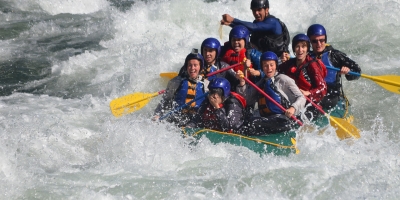
Trisuli River is very famous for Rafting in Nepal. Originating from the Langtang Himal, a trip on the Trisuli River enjoys scenic valleys, terraced rice fields, and impressive gorges with exciting and fun, but not overly challenging whitewater. With pool and drop rapids, there is plenty of time in between the excitement to enjoy swimming, cliff jumping and simply soaking up the beautiful scenery. Trekking , Climbing adventure outdoor activities however on of the best out door sport is Rafting in Nepal. Therefore , why not once a time during the stay in Nepal. Conveniently running from just outside Kathmandu towards Chitwan and Pokhara, the Trisuli is one of Nepal’s most popular rivers, providing an exhilarating and refreshing alternative to the tourist bus towards some of Nepal’s most popular adventure travel destinations.

Island Peak(6165m)Island Peak , or Imja Tse, is the most popular trekking peak in Nepal. It lies in the Mahalangur Himal range in the Khumbu region. From Dingboche, the mountain appears as an island rising from the depths of the surrounding icy desert, hence its name, Inselberg, coined by Eric Shipton. It was renamed Imja Tse in 1983, but is still commonly referred to as Island Peak.The first ascent was made in 1956 by a Swiss mountaineering team as training for their ascents of Mount Everest and Lhotse. The mountain's southwestern subsidiary peak was first reached in 1953 by Charles Evans, Alf Gregory, Charles Wylie, and Tenzing Norgay.The summit is interesting and attractive, with a heavily glaciated west face rising from the Lhotse Glacier. The mountain itself is an extension of the south ridge of Lhotse Shar and is separated from it only by a small col. The ridge ascends southward from this col and leads to the summit of Island Peak. The continuation of this southwest-descending ridge is part of the normal ascent route and leads to the south summit.Imja Tse offers not only a pleasant climb but also some of the most spectacular landscapes in the Himalayas, particularly in the Khumbu region. From its summit, you can see the towering peaks of Lhotse (8,501 m), Nuptse (7,879 m), Lhotse Middle Peak (8,410 m), and Lhotse Shar (8,383 m), which form a semicircle to the north. The views of Makalu (8,475 m) to the east, and Ama Dablam (6,812 m) and Baruntse (7,129 m) to the south will remain etched in your memory forever. Southeast flank and southwest ridge: Island Peak Base Camp is located on Paresho Gyab at 5080 m, between Imja Tse and the lateral moraine of the Imja Glacier. It should be noted that the site may be exposed to avalanches in the event of heavy snowfall. From base camp, a well-acclimated trekker can, under good conditions, make the summit ascent and return to base camp in a single day. However, most climbers prefer a high camp, Attack Camp, at 5600 m, which facilitates a safer ascent. From base camp, the route leads southeast to the base of Imja Tse and then ascends steep, grassy slopes and small rocky steps. You climb an open gully that leads between two ridges to the high camp on the ridge below to the left. To the right is a small hanging glacier (5280 m). From high camp, you climb the left ridge via a wide, open gully. After crossing the ridge, a steep, approximately 100-meter-long snow and ice ramp leads up to the summit. The ascent near the summit is somewhat more difficult due to the steepness.North Ridge: North of the main summit, the ridge continues to a col at 5700 m. The route first ascends the ridge crest, then reaches the right bank of the Imja Glacier and later the moraines on the right bank of the Lhotse Sar Glacier. From there, it continues northwest over snow-covered slopes to this col. A high camp is established at the col during the initial ascent. From the col, the scenic snow ridge is followed southwards, leading up to the summit pyramid. It is a long ridge that can be difficult to traverse in soft snow conditions. The final ascent to the summit is slightly more challenging than the standard route. Lobuche East(6119m):Lobuche East is a popular climbing peak destination and is still considered a trekking peak in Nepal (a climbing peak of category "B"), although the summit includes steep ice and snow sections in its final section. Most climbers do not ascend the actual east summit, but rather the so-called "false summit" to the south. Its difficulty is comparable to Island Peak, and a permit is required for the ascent. The base camp is located on the southwest flank at an altitude of 4950 m.Lobuche East Peak is an attractive summit offering a variety of ascent routes, some already climbed and others still possible. Viewed from close up at Pheriche, the dark triangle of its rocky east face rises above the moraines of the Khumbu Glacier to an icy silhouette. This view reveals the south ridge, where the east face intersects with the glaciated ascent route. This route continues northwest from the top of the east face, over several small peaks, to the summit ridge leading to the East Peak. Lobuche East Peak presents no climbing difficulties; however, the summit area contains steep sections of ice and snow, requiring scrambling along the ridge and crossing some crevasses.The first recorded ascent of Lobuche East was made by Laurence Nielson and Sherpa Ang Gyalzen on April 25, 1984. Since then, there have been numerous ascents of the summit by climbers from all over the world. After descending into a distinct notch and ascending steep snow and ice fields, you reach the prominent true East Summit. This actual summit is rarely climbed and is often mistakenly considered Lobuche West. Most climbers only ascend the summit ridge as far as the lower snow peak before the depression, the "false" East Summit, located southeast of the true summit.


 (18)
(18)  100% recommend (0)
 (0)
(0)