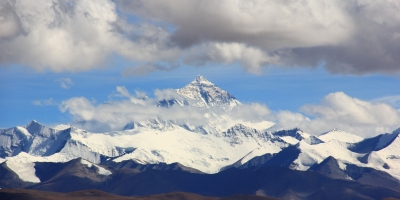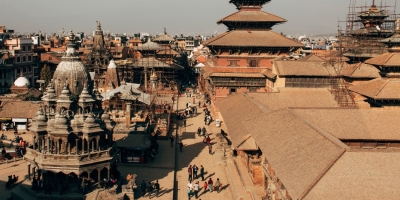

The Annapurna Base Camp (ABC) Trek is one of the most iconic and rewarding trekking adventures in the Himalayas of Nepal. Standing at an elevation of 4,130 meters, the ABC trek offers a perfect blend of awe-inspiring mountain scenery, rich cultural heritage, and diverse natural beauty. The journey takes you through charming villages inhabited by Gurung and Magar communities, providing an authentic insight into the traditional mountain life of Nepal. As you ascend through bamboo groves and rhododendron forests, the mighty peaks of Annapurna I (8,091m), Machhapuchhre (Fishtail), Hiunchuli, and other snow-capped giants gradually come into full view.This trek is more than just a hike – it’s a holistic Himalayan experience. Along the trail, trekkers are treated to panoramic vistas from various viewpoints including the famed Poon Hill. The route also passes by the serene Modi Khola River and stunning alpine meadows before culminating at the base camp, where the majestic amphitheater of mountains provides a breathtaking 360-degree panorama. With every step, the Annapurna Base Camp Trek becomes an unforgettable journey of both body and spirit – truly a lifetime adventure curated by Amazing Nepal Journey.Best Time for Annapurna Base Camp TrekChoosing the right season for the Annapurna Base Camp Trek is essential to make the most of your experience. The best time to embark on this trek is during the pre-monsoon (spring) season from March to May, and the post-monsoon (autumn) season from September to November. These months offer clear skies, excellent visibility, and pleasant temperatures ideal for trekking. In spring, the trails come alive with blooming rhododendrons and other alpine flora, while the post-monsoon months provide crisp mountain views and vibrant village life after the summer rains.While winter (December to February) is also possible for those seeking solitude and snowy landscapes, temperatures can drop significantly, especially at higher elevations. Monsoon season (June to August) is generally not recommended due to heavy rainfall, slippery trails, and obstructed views. At Amazing Nepal Journey, we carefully plan each trek according to seasonal conditions, ensuring your safety and maximizing the scenic and cultural richness of the journey.Annapurna Base Camp Trekking DifficultyThe Annapurna Base Camp Trek is considered a moderate trek, suitable for both experienced trekkers and enthusiastic beginners with a reasonable level of fitness. The trek involves daily walking of 5–7 hours across diverse terrains, including stone steps, forest trails, and occasional steep ascents. While there are no technical climbing sections, the continuous elevation gain and high altitude (reaching up to 4,130 meters) can pose challenges like altitude sickness if not properly acclimatized.Preparation is key to making the trek enjoyable and safe. Cardiovascular fitness, stamina, and prior hiking experience will significantly enhance your comfort. Rest days and proper hydration are built into the itinerary by Amazing Nepal Journey to support a smooth acclimatization process. Our professional guides are trained to handle altitude-related concerns, ensuring your health and well-being throughout the journey.Why Choose Us – Amazing Nepal Journey for Annapurna Base Camp TrekChoosing the right trekking company is vital for a fulfilling and secure trekking experience. At Amazing Nepal Journey, we specialize in personalized, well-organized trekking adventures with a focus on safety, comfort, and cultural immersion. Our local guides are not only experienced and licensed professionals, but also warm hosts who bring local traditions, languages, and landscapes to life. We ensure every detail of your journey is handled, from permits and accommodations to meals and transportation.What sets us apart is our commitment to responsible travel and genuine hospitality. Whether you're traveling solo, with friends, or family, our flexible itineraries and small group sizes allow for a more intimate experience. We also pride ourselves on fair treatment of porters and eco-friendly practices. From the moment you land in Nepal to the final farewell in Pokhara or Kathmandu, Amazing Nepal Journey ensures that your trek to Annapurna Base Camp is a seamless, unforgettable adventure.

The Everest Base Camp (EBC) Trek is a legendary journey that takes you into the heart of the Khumbu region, offering an awe-inspiring experience amid the highest mountains on earth. At an elevation of 5,364 meters, the trek leads adventurers to the very foothills of Mount Everest (8,848.86m), the world’s tallest peak. This incredible route not only provides dramatic Himalayan scenery but also immerses trekkers in the rich Sherpa culture, traditional Buddhist heritage, and remarkable alpine landscapes. Along the way, you’ll explore the famous Namche Bazaar, visit the spiritual Tengboche Monastery (the highest in the region), and walk through Sagarmatha National Park, a UNESCO World Heritage Site.Trekkers are also rewarded with stunning views of four of the six highest peaks in the world: Everest, Lhotse, Makalu, and Cho-Oyu. The highlight for many is the climb up to Kalapatthar (5,545m) – the ultimate viewpoint to see Everest in its full glory. The journey begins with an adventurous flight from Kathmandu to Lukla, after which you’ll hike through beautiful villages, suspension bridges, and glacier-fed rivers. Amazing Nepal Journey has been organizing this life-changing adventure since 1998, delivering successful and safe trips with 100% client satisfaction. Whether you're a seasoned trekker or taking on your first high-altitude journey, this trek promises an unforgettable experience into the majestic Himalayas.Best Time for Everest Base Camp TrekTiming is crucial for making the most of your Everest Base Camp Trek. The best seasons for this adventure are spring (March to May) and autumn (September to November). During spring, the trails are alive with blooming rhododendrons, and the skies are generally clear, offering spectacular views of Everest and neighboring peaks. This season is also warmer and less prone to flight delays, making it a preferred time for trekkers. Autumn brings post-monsoon clarity and stable weather, ensuring excellent mountain visibility and crisp, cool air – ideal for photography and comfortable trekking conditions.While winter (December to February) offers stunning snow-covered landscapes and fewer crowds, temperatures can drop dramatically, especially at higher elevations, and some lodges may be closed. Monsoon season (June to August) is less favorable due to heavy rains, slippery trails, and frequent flight cancellations. At Amazing Nepal Journey, we advise our clients based on current weather trends and always prepare alternate plans to ensure your safety and convenience. Our goal is to give you the best possible trekking experience at the right time of year.Everest Base Camp Trekking DifficultyThe Everest Base Camp Trek is classified as a moderate to challenging trek, suitable for those in good health with a decent level of physical fitness. While it doesn’t require technical climbing, it involves long daily hikes (5–8 hours), steep ascents and descents, and most importantly, high-altitude exposure. The trek reaches a maximum elevation of 5,545 meters at Kalapatthar, where the reduced oxygen levels can be demanding, especially for first-time trekkers. However, proper acclimatization days, hydration, and a steady pace can help most individuals complete the trek successfully.First-time trekkers who are reasonably fit and mentally prepared can absolutely take on this adventure. Our 14-day itinerary is designed with gradual altitude gain and rest days in places like Namche Bazaar and Dingboche, which support acclimatization. With the guidance of experienced and trained trekking leaders from Amazing Nepal Journey, you’ll be well-supported throughout your journey. We provide pre-trek briefings, essential gear advice, and emergency protocols to ensure your safety and success. Thousands of our satisfied clients have completed this trek confidently with our professional support.Why Choose Us – Everest Base Camp Trek with Amazing Nepal JourneyWith over two decades of experience, Amazing Nepal Journey has become a trusted name in Nepal’s adventure tourism sector. Since 1998, we’ve guided countless trekkers to Everest Base Camp with a 100% success rate and glowing client satisfaction. Our locally owned company offers authentic Himalayan experiences rooted in safety, professionalism, and cultural respect. Our guides are not only licensed and experienced but also passionate about sharing their knowledge of Sherpa culture, mountain ecology, and Buddhist traditions.What truly sets us apart is our personalized service. We tailor each trek to suit your fitness level, time frame, and travel goals. From airport pickup to permits, accommodation, meals, and guiding – we handle everything seamlessly. Our commitment to responsible trekking includes ethical porter policies, environmentally conscious practices, and support for local communities. Whether you're a solo traveler or part of a group, we make sure your journey to Everest Base Camp is smooth, enriching, and unforgettable. Choose Amazing Nepal Journey, and embark on the adventure of a lifetime with a team that genuinely cares about your experience.
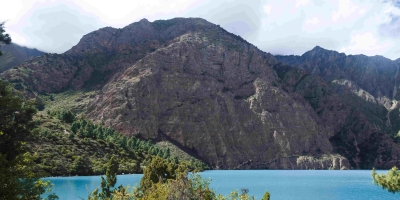
Amazing Nepal Journey Treks is organizing the Dolpo Botanical Trip since a long time . Dolpo is very remote and famous in Himalya and is situated in the western part of Nepal. Dolpo is generally two pars Lower Dolpo and Upper Dolpo . Shey Poksundo National Park is one of the biggest national park of Nepal and inhabiting the area of 3555sq km, enriched with diversity of flora and fauna which was established in 1984. Dolpo Botanical Trek is specially offered for the Himalayan Flowers lover who wants to research flora and fauna of Nepal. Nepal has 5 climatic zones, generally corresponding to the altitudes. The tropical and subtropical zones lie, below 1,200 meters the temperate zone 1,201 to 2,100 meters the cold zone 2,101 to 3,350 meters the subarctic zone 3,351 to 5000 meters and the arctic zone above 5000 meters. The Dolpo botanical trekking starts from Kathmandu to Nepalgunj and to jhupal by airplane then start the real trekking from Jhupla . The route passes through forest and isolated village to high passes such as Numa La Baga La soyou can see wonderful view of towering mountain with stoning views and also get an opportunity to knowledge of Tibetan culture and their lifestyl kin. Around the Numa La Baga La pass you get very different kinds of himlyan plants and flowers for reachers. Along the way , we can set up the camp nearby beautiful Shey Phoksundo Lake (3600m) which is the second largest lake of Nepal with many stunning hill will found close and above the lake area. The main fascination of this botanical trek is flora and fauna and you can research different types of flowers like different types pine trees, wild rose, juniper, alpines flowers, plants , Himalayan herbs.You will be also visiting very old Budhist and Bonpo monasteries during the trip.Regarding Dolpo treks you required compulsory especial permit, for the lower dolpo per person US $10.00 or equivalent foreign currency and Upper Dolpo per person for the 10 days US $500 .00 or equivalent foreign currency, After 10 days US $50.00per day per 1 persons and national park fee per person US $34.00 . The main season is August - October would be best season for the botanical Trek.
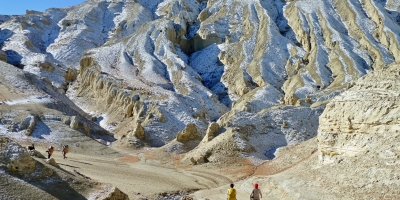
Offers a spectacular trekking into the remote Trans-Himalayan mountain area with Tibetan influence culture. The high desert region of the Tibetan influence, Kaligandaki, from the Tibetan border south to Kagbeni is generally referred to as Upper Mustang. Explore the thousand years of old monastery, caves, local tribes and scenic beauties of the different landscapes. Make an adventure starting from world's deepest gorge Kaligandaki Region into world's highest regions of Lo-Mangthang Valley that passes through an almost tree-less barren landscape, a steep rocky trail up and down hill and panoramic views of Nilgiri, Annapurna, Dhaulagiri and several other peaks. The trek passes through high peaks, passes, glaciers, and alpine valleys. The thousands years of isolation has kept the culture, lifestyle and heritage remain unchanged for centuries and to this date. The houses in Mustang are mostly made from stone and sun baked mud bricks. The city wall and the four storey palace in Lo-Manthang are soMustang Kingdom is one of the best destinations for modern travelers.There are Lower and Upper Mustang trek, which me of the beautiful architectures of Mustang region. Another attraction in the Mustang region is the Tiji Festival influenced by Tibetan Buddhism, which is timed to coincide with the end of the dry season (late winter/spring). The Mustagi people have their own way of family life, which is quite surprising for many outsiders. All the brothers in the family are married to a single girl, what you may call a practice of polyandry.The Transhimalayan Mustang Region is also known as the Last Forbidden Kingdom, since the region was restricted for outsiders until Nepal Government announced the opening of the restricted areas in October 1991. The Mustangis or the people of Mustang call themselves Lobas, and they have their own King or Tribe-leader, JigmePalbarBista. After Nepal was declared a republic in 2007, the Nepal Government took back the official recognition of the Bista as the Mustangi King. However, the people there still respect him as their King or tribe-leader. Bista also grants audience the visitor upon request. There is also strict control in obtaining a special permit from the department of immigration to protect their tradition from outside influence as well as to protect their environment. The Upper Mustang trek starts from Jomsom to Kagbeni, the entry point of upper Mustang Region. Follow the banks of Kaligandaki River upstream to get to Lo-Mangthang, the capital of the upper Mustang.Amazing Nepal Journey Treks & Expedition is organizing such beautiful adventure trip in Nepal since 1998 up to now with 100% achievement with fully satisfaction of the all clients.
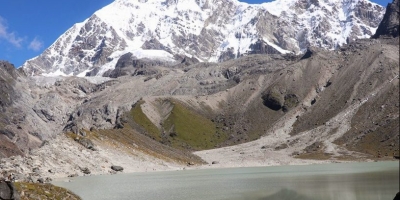
The Pikey Peak and Dudhakunda Trek is one of the most rewarding yet accessible trekking adventures in Nepal’s Solukhumbu region, the gateway to the Everest area. Unlike the more crowded Everest Base Camp trails, this trek offers a peaceful escape into the natural and cultural richness of the region. Pikey Peak, often referred to as the tallest “hill” in the southern Khumbu Valley, provides panoramic views of towering Himalayan giants including Mount Everest, Makalu, and Annapurna. The name “Pikey” is derived from a revered Sherpa clan deity, and the area is culturally rich, blending authentic Sherpa villages with ancient Buddhist monasteries such as the Thupten Chholing Monastery. The trail offers a deep dive into Sherpa culture, with chances to witness local traditions, festivals, and ceremonies, particularly in July and August when clan worship and cleansing rituals at sacred lakes take place.The trek also includes a visit to Dudhakunda Lake, a holy glacial lake situated at an impressive altitude of 4,561 meters. This sacred lake is surrounded by colorful rhododendron forests in spring, adding vibrant hues to the serene Himalayan landscape. Trekking to Dudhakunda provides a spiritual and tranquil experience, with spectacular mountain views and an opportunity to connect with the natural world in a pristine environment. The route passes through diverse terrain—from lush forests and traditional Sherpa villages to high alpine meadows—making it a well-rounded adventure that blends natural beauty, cultural immersion, and moderate physical challenge.Best Time for Pikey Peak and Dudhakunda TreksThe best time to undertake the Pikey Peak and Dudhakunda Treks is during the spring (March to May) and autumn (late September to early December) seasons. These periods offer the most stable weather, clear skies, and pleasant temperatures that enhance the trekking experience and the breathtaking views of the Himalayan panorama. Spring is particularly favored for the blooming rhododendrons that paint the forests with brilliant reds, pinks, and whites, creating a spectacular natural carpet along the trails.Autumn, following the monsoon season, features fresh air and crisp skies that allow for incredible visibility of peaks like Everest, Makalu, and Lhotse. Additionally, these seasons coincide with important local festivals, where trekkers may witness Sherpa cultural ceremonies and celebrations, especially near Pikey Peak and sacred lakes. The monsoon season (June to August) is less ideal due to heavy rains, slippery trails, and limited mountain visibility, while winter (December to February) brings cold temperatures and snowfall, making trekking more challenging but still possible for those prepared for high-altitude cold conditions. Amazing Nepal Journey ensures that your trek is timed perfectly, prioritizing safety and the best weather conditions for an unforgettable journey.Pikey Peak and Dudhakunda Trekking DifficultyThe Pikey Peak and Dudhakunda Trek is classified as a moderate trek suitable for trekkers with a reasonable level of fitness but no specialized mountaineering experience required. The trails involve steady ascents and descents, with the highest point being the Pikey Base Camp (3,585m) and the sacred Dudhakunda Lake (4,561m). While not technically difficult, the altitude gain demands proper acclimatization and pacing to prevent altitude sickness. The trek covers a variety of terrains including forested paths, alpine meadows, and rocky ridges, which may require careful footing but are well-traveled and clearly marked.Because the trek goes through less commercialized and quieter regions of Solukhumbu, trekkers enjoy a sense of remoteness and authentic mountain atmosphere. The trail involves several multi-hour hiking days ranging from 4 to 7 hours, with options to rest in traditional Sherpa lodges that provide warm hospitality and basic amenities. This trek is perfect for travelers seeking an off-the-beaten-path adventure that combines natural beauty with cultural richness without the physical demand of higher altitude expeditions like Everest Base Camp. With Amazing Nepal Journey, you will have expert guides who manage pacing, acclimatization, and safety, making this trek both challenging enough to be rewarding and manageable for most healthy trekkers.Why Choose Amazing Nepal Journey for Pikey Peak and Dudhakunda Treks?Choosing Amazing Nepal Journey Treks & Expedition for your Pikey Peak and Dudhakunda adventure guarantees a professional, safe, and culturally immersive experience. With over 25 years of expertise operating in Nepal’s trekking regions, our company specializes in delivering personalized service, knowledgeable guides, and seamless logistics. We provide comprehensive support from your arrival in Kathmandu to your final departure, including comfortable transportation to and from trailheads such as Dhap Bazaar and Jiri, and high-quality accommodations along the route.Our guides are not only experienced trekkers but also cultural ambassadors who enrich your journey with local stories, history, and insights into Sherpa traditions and Himalayan spirituality. We prioritize your safety by ensuring proper acclimatization schedules, emergency preparedness, and excellent communication throughout the trek. Additionally, we offer flexibility in itineraries, group sizes, and services to match your preferences and fitness levels.With Amazing Nepal Journey, you are not just booking a trek—you are joining a family dedicated to showing you the best of Nepal’s natural beauty and cultural heritage. Our competitive pricing and commitment to responsible tourism ensure that your trip positively impacts local communities and preserves the fragile mountain environment. Whether you are a first-time trekker or an experienced traveler, trust us to make your Pikey Peak and Dudhakunda trek an unforgettable Himalayan journey.
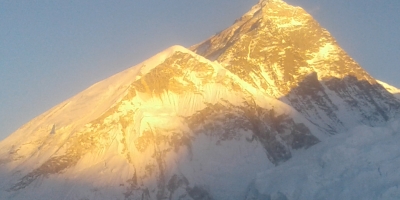
Rapchha Trip via Pike Peak is one of the best forever in Nepal due to all thing possible short high king and adventure with real fresh natural phenomena introducing to you during the trip such as organic hand working production agricultural things and multicultural social status in frond of amazing high lofty mountains. Rapcha and Pikey Peak Trek is one of the best and easy trekking destinations in Solukhumbu Region for Mt.Everest View. Pikey peak is a one of the tallest" Hills" in the Shouth part of Khumbu Valley for amazing view of snow mountain. The name Pikey is derived from the name of a Sherpa Clan deity. During the month of July the locals hold different celebrations to worship their clan god. This peak offers a majestic view of the Everest Himalayan Range and Numbur Chuli. The trail passes through beautiful settlements and you can visit the ancient Buddhist Monastery of Thupten Chholing and enjoy the unique Sherpa culture. During the festival season in August cleansing rituals at the sacred lakes are performed with several important Shamans. The Pikey Danda is most popular for its sunrise and sunset views and one can enjoy the glorious sight of the peaks beyond the Kathmandu Vally. Everest, Makalu and Annapurna etc. Ratnagi Danda is another best view point for outstanding Himalayas.In Spring full of Rhododendrons multy colors blooming whole in Rapcha forest under the mountains. Rapcha is main origin birth place of Kirat Khaling Rai and historical lace. Still untouched by European any culture its very fresh…… The access to Rapcha and Pike Peak trip both way possible by plane and drive . There are different starting point and ending point, like from Kathmandu to Dhap by bus or jeep and from Kathmandu to Jiri by bus or flight to Phaplu by plane. Amazing Nepal Journey Treks and expedition organize with very successfully.

Kanchenjunga (8,586m), ‘The Five Great Treasure Houses of Snow’, is the world’s third-highest mountain and is situated in the Kanchenjunga Conservation Area, an area that comprises pristine forests, alpine meadows and high altitude wetlands alongside this magnificent and spectacular Himalayan massif. The mountain forms Nepal’s eastern border with Sikkim and this region is one of the least populated in Nepal. You will trek up through lush, green, semi-tropical Rai and Limbu villages in the mid-hills, and remote Tibetan villages higher up in the semi-arid plateaus at the foot of the mountain. This remote, stunningly beautiful and ecologically diverse conservation area is jointly managed by local communities and the WWF and is home to the endangered and secretive snow leopard and red panda, as well as the vulnerable Himalayan black bear, clouded leopard, and Assamese macaque. This circular trek takes you up through lush valleys full of seasonal flowers that receive the heaviest monsoon rains throughout the Himalayan range, north into spectacular high alpine landscapes full of woodlands and mountain streams. You will then trek up over high passes to both Kanchenjunga Base Camp and Ramche Yalung Base Camp, before heading back down again to lower elevations and returning to the trek’s start point at Taplejung. Amazing Nepal Journey Organizing the trip with full experience sine a long time with all guest Satisfaction.
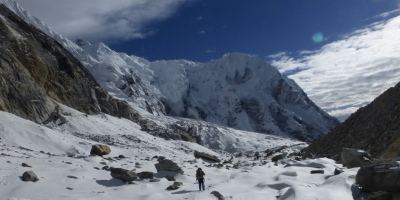
Rolwaling -Tashi Lapcha Pass -Khumbu Valley Trek is a journey that sums up the beauty of both Rolwaling valley and Khumbu region same time . This amazing and inspiring trek leads you to a faraway location and lets you acknowledge the lovely views of the Himalayas with the difficulties of crossing the high-mountain pass of Tashi Lapcha (5755m). Rolwaling- Tashi Lapcha Pass Trek is an amazing mixture of the quiet and quaint paths of the remote Rolwaling region with the bustling trails of the Khumbu region. Rolwaling -Tashi Lapcha Pass Trek involves steep climbing, lots of patience, and rock climbing, ice, sleeping glacier thus, is a thrilling and adventurous journey in the Himalayas.Rolwaling Valley is one of the hidden gorges, which is burrowed in between picturesque and grandiose mountains. Rolwaling -Tashi Lapcha Pass Trek begins with a drive to Gonggar/ Chhetchhet via Charikot from Kathmandu where we pass villages such as Simigaon, Bedding, and Na Gaon with an amazing view of Mount Gaurishankar( Holy Mountain) (7134m). In Na Gaon, we explore the Yalung Glacier and climb on the training peak Yalung Ri(5630m). Leaving Na Gaon, we climb uphill to Tsho Rolpa Lake (4540m), the largest glacial Lake in Himalaya. Then, waking on Trakarding Glaciers, the trail reaches Tashi Lapcha Pass (5755m), which separates the Rolwaling region from the Khumbu region and the Gaurishankar Conservation Area from the Sagarmatha National Park. The trail then joins the trekking trails of the Everest Region which is ever bustling with tourists from inside and outside the country. Enjoying the view of Everest (8848m) top of the world and other so many snow himalays of the Khumbu region, the trail heads down to the bustling Sherpa town of Namche Bazaar via Thame and leads to Lukla, from where a flight back to Kathmandu is taken. Rolwaling -Tashi Lapcha Pass Trek is an amazing opportunity to observe the different facets of the Himalayan lifestyle as it goes from a remote to a rather urban route of the Himalayas with Amazing Nepal Journey.
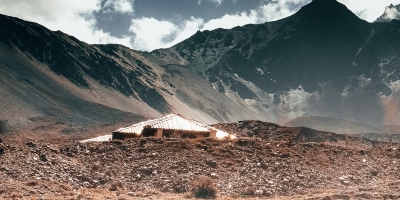
Upper Mustang with Luri Gumba is one of the most popular trekking destinations, known as forbidden kingdom of Nepal with ancient monasteries, historical caves, amazing landscape and unique culture. Mustang is lies northern central part of Nepal, beyond the Annapurna and Dhaulagiri Big Mountains. An amazing land formation, majestic Himalayan scenery, ancient’s walled city, and cave civilization has existence here as former Tibetan tradition.Mustang is in Restricted Area; due to its culture influence sensitive from outsider, geological structure and politically issue of Tibet border, it was opened for trekkers since 1992 for the Trekkers. There is strictly controlled for mass trekkers to preserve the culture and biology. Mustang is isolated from the outsider culture and untouched by modernization. So, it is able to preserve its uniqueness. There is remaining a Sky Burial funeral ritual in Upper Mustang and Nepal High Himalaya region. The Monk (Lama) decides in which funeral ritual is going to be using looking dead person date of birth and death time. There are not enough words to describe its beauty and artistic treeless barren landscapes. Mustang is nearby Tibet border, people of here are following Tibetan Bon Buddhism. They have the true Tibetan life style handover from centuries. This is full of mysterious land with ancient Silk Road civilization and manmade cave’s city. There are in-numbers unexplored Caves and villages remain centuries old monastery and Stupas.Ame Pal was founder of Mustang, who established himself as King of Tibetan territory,.. it was become territory of Nepal around 1800. The former Raja (King) Jigme Parwal Bista is 25th generation of Ame Pal dynasty. The mud built huge Royal Palace is still remaining in Lo-Manthang, where you can visit Royal family. Countless remarkable historical shrines such as manmade caves, Buddhist Chorten, Monastery, Mane wall, people culture, tradition and belief which are survival for new generation. They are preserving their indigenous knowledge, which was hand over from their ancestor. It is very important role to conserve the culture and eco system in this time as well. The traditional cultivation methods, herbal medicine, nomadic animal husbandry, religious faith and fast and festivals are another attraction for every trekker. Tiji, Chhongo (Losar), Gyang Khorto, Degyap, Dhayang, Tharpi Tharchang, Yartung, Folgyang, Mane Rimdu etc. many festivals are celebrate here.The artistic barren landscape, rugged mountains along with the enchanting view of Mount Nilgiri, Annapurna, Dhaulagiri and other panoramic mountains. People of here are practicing polyandry marriage system as their authentic tradition and to avoid farm fragmentation. To look around just Lo Manthang is not enough even for whole one day, there are several Gumba, houses, fort, caves. The five stories, forty four rooms Jhong Cave at Choser village but remind you about Silk Road civilization. More than thousands years old monasteries such as Choser Gumpa, Namgyal Gumba, Tiger monastery, Ghar Gumba and Luri Gumpa proved you about it’s significant. The Upper Mustang trekking is magical and isolated area fascinates and inspires every visitor.Normally, you will get in Jomsom by 15 to 25 minutes scenic flights from Pokhara, from where your trip begins. But now a day there is road access to the Jomsom along the Kaligandaki River Bank with amazing mountains scenery. Even you can drive to the Lo Manthang (South Plane Aspirations) called walled city. Mostly the trail goes through the Kaligandaki Valley following the riverbed with traditional villages. Kagbeni is the gateway of Upper Mustang; where you need you check in and out your special permit. The sacred Lake Damodar Kunda is origin of Kaligandaki which is famous for Shaligram (fossils); the Hindus and Buddhist believe that it is incretion of God Vishnu. You need to cross Kaligandaki river times to again in a same day. You will visit various villages; Chhusang, Chele, Samar (Red Clay), Ghami, Dhakmar (Red Rock) and Tsarang /Charang (Cock’s Crest) with incredible landscape and unbelievable live hood. There are several passes on this trip; Mui La an elevation of (4,270 m) is one of the highest pass.We cross the Kaligandaki valley and follow the Damodar Kunda trail to the Dhi, Yara and Gara village, from where you will day hike for the Luri Gompa. Then we trek through the Tangge and meet the trail at Chhusang. In this part is very basic tea houses facilities and need to stay local house also. After lifetime experience about Mustang you will return to Jomsom and fly back to Pokhara and Kathmandu for your destination. We Amazing Nepal Journey glad to organize Trip to Upper Mustang by expert local Guide and porters for your ultimate satisfaction. As Mustang is in rain shadow area, monsoon season also best time for this trek. We can to do trekking in July , August , September.

The Three Passes Trek in the Everest Region is widely regarded as one of the most thrilling and challenging treks in Nepal. Also known as the Everest High Passes Trek, it combines the grandeur of Everest Base Camp with the raw, untamed wilderness of the Khumbu Valley, making it an exceptional choice for true adventure seekers. This trek takes you on a journey through some of the highest and most rugged mountain passes in the world: Kongma La (5,535m), Cho La (5,420m), and Renjo La (5,340m). These passes link diverse landscapes, offering trekkers an immersive experience that goes beyond the classic Everest Base Camp route.Along the way, you will follow in the footsteps of legendary mountaineers like Sir Edmund Hillary and Tenzing Norgay while passing through vibrant Sherpa villages such as Namche Bazaar, Khumjung, and Thame. The trek also includes a visit to the spectacular Gokyo Valley, home to pristine turquoise lakes and Nepal’s largest glacier. This route provides stunning panoramic views of Everest, Lhotse, Makalu, and Cho Oyu from multiple vantage points including Kala Patthar (5,555m) and Gokyo Ri (5,360m). Trekking these ancient trails once used for trade between Nepal and Tibet, adventurers encounter a unique blend of cultural heritage and natural beauty that defines the Khumbu region.Best Time for Three Passes Trek in Everest RegionThe best times to undertake on the Three Passes Trek are during the spring (March to May) and autumn (late September to November) seasons. These periods offer stable weather, clear skies, and moderate temperatures, making the strenuous high-altitude crossing more manageable and enjoyable. In spring, the rhododendron forests bloom in brilliant reds and pinks, adding vibrant color to the mountainous landscape. Autumn is known for its crisp air and excellent visibility, allowing trekkers to fully appreciate the breathtaking mountain panoramas, including Everest and its neighboring giants.Winter (December to February) is less popular due to harsh cold and snowfall at high passes, which may limit accessibility and increase risk. Monsoon season (June to early September) is not advisable due to heavy rains, slippery trails, and potential landslides. At Amazing Nepal Journey, we carefully plan the itinerary to avoid these challenging weather conditions and ensure your trek is safe and memorable. We also advise clients on proper gear and acclimatization to prepare them for the variable weather conditions often experienced at high altitudes.Three Passes Trekking DifficultyThe Three Passes Trek is considered one of the most demanding treks in Nepal due to the high elevation and multiple steep passes that must be crossed. Each pass—Kongma La, Cho La, and Renjo La—requires good physical fitness, endurance, and a strong mental attitude, as you will be trekking at altitudes above 5,300 meters. The daily hiking duration ranges between 6 to 8 hours, often on rocky and sometimes slippery terrain, and the risk of altitude sickness is significant due to the rapid ascent profile.However, the trek is achievable for those who maintain a steady pace, acclimatize properly, and have some previous trekking experience at high altitudes. The presence of experienced guides and support staff from Amazing Nepal Journey ensures that safety and health are prioritized throughout the journey. Our itineraries are thoughtfully designed with acclimatization days to reduce the risk of altitude sickness, and we provide pre-trek training advice to prepare trekkers physically and mentally for the challenges ahead. The breathtaking views and cultural richness make every challenging step worth the effort.Why Choose Us – Amazing Nepal Journey for Three Passes TrekWith over two decades of experience in adventure tourism, Amazing Nepal Journey has earned a reputation for delivering exceptional trekking experiences in the Everest region. Since 1998, we have successfully organized the Three Passes Trek with 100% client satisfaction, emphasizing safety, comfort, and cultural authenticity. Our knowledgeable guides are locals with deep roots in the Sherpa community and extensive trekking expertise, ensuring you not only navigate the trails confidently but also gain insight into the rich traditions and history of the Khumbu region.We pride ourselves on providing personalized service from the initial inquiry through to your safe return, handling all logistics including permits, accommodation, transportation, and meals. Our commitment to responsible tourism means we prioritize environmental sustainability and fair treatment of porters and local staff. Choosing Amazing Nepal Journey guarantees a seamless, immersive, and unforgettable trekking adventure, supported by a team that genuinely cares about your experience and wellbeing. Whether you are a seasoned trekker or taking on your first high-altitude adventure, we tailor our services to meet your needs and aspirations.

The Annapurna Circuit Trek is regarded as one of the most iconic and diverse trekking routes in the world. Known for its breathtaking scenery, cultural richness, and wide variety of landscapes, it offers an unforgettable experience for nature lovers and adventure seekers. The trek circles the majestic Annapurna Massif, home to Annapurna I (8,091m), the 10th highest mountain in the world and the first 8000-meter peak to be summited. Along this route, trekkers pass through lush subtropical forests, picturesque rice terraces, alpine meadows, arid high mountain passes, and deep river valleys, witnessing dramatic changes in geography, climate, and culture.The journey traditionally begins with an overland drive to Bhulbhule in the Marshyangdi Valley and gradually ascends toward the high Himalayan desert near Manang, before crossing the famed Thorong-La Pass (5,416m). From there, the trail descends to Muktinath, a sacred site for both Hindus and Buddhists, before heading toward Jomsom or Beni depending on your chosen itinerary. At Amazing Nepal Journey Treks, we’ve been organizing this classic route for over two decades, offering both the full circuit and customized options for those with limited time. Whether you finish your trek in Jomsom with a short flight or continue further to Tatopani and Poon Hill, we ensure every traveler gets the best out of the Annapurna experience with safety, comfort, and expert guidance.Cultural Diversity and Natural Beauty on the TrailOne of the most enriching aspects of the Annapurna Circuit Trek is its incredible cultural diversity. As trekkers ascend through the valleys, they pass through a variety of ethnic settlements, including Gurung, Magar, Thakali, and Tibetan-influenced communities. Each village has its own distinct customs, architecture, language, and festivals, making the trek not just a physical adventure, but a deep cultural journey. In Manang, you’ll encounter Tibetan Buddhist influence with intricately carved prayer wheels and ancient monasteries perched on the hillsides. Further down in the lower region, Gurung and Magar villages showcase vibrant traditions and welcoming hospitality.The natural surroundings are equally impressive. From the tropical forests and cascading waterfalls of the lower trail to the arid, windswept plateaus of the Mustang region, the ever-changing landscape keeps the trek visually stimulating. Trekkers also walk alongside massive glaciers and beneath towering peaks such as Annapurna II, Gangapurna, Tilicho Peak, and Dhaulagiri. The diversity of terrain means every day presents new sights and challenges, making the Annapurna Circuit suitable for those who truly want to experience the breadth of Nepal’s Himalayan beauty. Amazing Nepal Journey carefully selects teahouses, rest points, and acclimatization spots to allow you to enjoy both nature and culture at the perfect pace.Best Time for Annapurna Circuit TrekThe ideal seasons to embark on the Annapurna Circuit Trek are spring (March to May) and autumn (September to November). These periods offer the most favorable weather—clear skies, stable temperatures, and excellent visibility of the mountains. During spring, the trails are adorned with blooming rhododendrons and vibrant wildflowers, while autumn provides crisp air and vibrant landscapes after the monsoon rains have cleansed the valleys. Both seasons also offer better trail conditions and reduced risks of landslides or snow blockages at higher altitudes.Trekking in winter (December to February) is possible for those well-prepared for cold conditions, but the Thorong-La Pass may be closed due to snow. Similarly, monsoon season (June to August) brings heavy rains, muddy trails, and leeches in the lower regions, along with poor mountain visibility. However, in rain-shadow areas like Mustang and Upper Manang, monsoon treks are still feasible. At Amazing Nepal Journey Treks, we monitor weather forecasts regularly and assist clients in selecting the best time based on their availability and preferences, ensuring safety and a rich trekking experience throughout the year.Annapurna Circuit Trekking DifficultyThe Annapurna Circuit Trek is considered moderate to challenging, depending on your fitness level and the duration of your itinerary. The main challenge comes from the altitude—especially when crossing Thorong-La Pass at 5,416 meters. However, with proper acclimatization and pacing, the trek is achievable for most people in good physical condition. The average walking duration is 5 to 7 hours a day, with some longer days during the high pass crossing. Rest days in Manang and Lower Pisang are built into the itinerary to help trekkers adapt to the thinning air.The well-maintained trails, availability of teahouses, and the support of experienced guides and porters make the Annapurna Circuit much more accessible today than in the past. That said, the trek still demands mental resilience, good health, and a spirit of adventure. Amazing Nepal Journey Treks provides pre-trek training advice, customizable pacing, and expert guidance every step of the way, ensuring that trekkers can conquer the circuit safely while enjoying every aspect of the Himalayan wilderness and local hospitality.Why Choose Amazing Nepal Journey for the Annapurna Circuit Trek?For over 25 years, Amazing Nepal Journey Treks & Expedition has been a trusted name in Himalayan trekking, offering personalized and safe experiences in Nepal’s most breathtaking regions. Our deep local knowledge, experienced guides, and strong logistical network ensure a smooth and memorable journey for every traveler. We pride ourselves on client satisfaction, with flexible itineraries that accommodate all types of trekkers—from solo adventurers and families to seasoned hikers seeking deeper exploration.What sets us apart is our commitment to responsible travel and local partnerships. We hire local guides, use community-based lodges, and actively contribute to the sustainable development of trekking regions. With our team handling permits, transportation, accommodation, and health precautions, you can focus entirely on enjoying the landscape, culture, and the physical challenge of the Annapurna Circuit. For many, this trek becomes a life-changing experience—a perfect balance of mountain adventure and cultural discovery. With Amazing Nepal Journey, you’re not just a client—you’re a part of our Himalayan family.

The Khumbu region, also known as the Sagarmatha region, is one of the most sought-after trekking destinations in the world, renowned for its pristine landscapes and panoramic mountain views. Nestled in northeastern Nepal, this region is part of the Sagarmatha National Park – a UNESCO World Heritage Site that protects rare flora, fauna, and some of the world’s most iconic Himalayan peaks, including Mount Everest (8,848m). The Khumbu Valley is home to the Sherpa people, whose rich Buddhist culture, friendly hospitality, and mountaineering legacy have fascinated trekkers and climbers for generations.A trek to Gokyo Lake and Renjo Pass through the Khumbu Valley offers an unforgettable walking vacation, where one can immerse in the grandeur of the Himalayas while exploring remote Sherpa villages, centuries-old monasteries, and ever-changing alpine landscapes. Typically, the journey begins with an exhilarating flight to Lukla, but some adventurers opt to start from Phaplu for a more gradual acclimatization and cultural experience. The trail ascends through picturesque valleys, lush rhododendron forests, and dramatic gorges, eventually reaching the Sherpa capital of Namche Bazaar—a vital rest and acclimatization point before entering the high-altitude terrain of the Gokyo region.Gokyo Lake – Jewel of the Everest RegionThe Gokyo Valley, crowned by its turquoise glacial lakes, stands as one of the most mesmerizing destinations in the Everest region. The Gokyo Lakes, a system of high-altitude freshwater lakes situated at over 4,700 meters above sea level, are revered both for their natural beauty and spiritual significance. These lakes lie at the foot of Gokyo Ri (5,360m), a stunning viewpoint that offers some of the best panoramic vistas in the Himalayas. From the summit of Gokyo Ri, trekkers are rewarded with unobstructed views of four of the world's highest mountains: Mount Everest (8,848m), Lhotse (8,516m), Makalu (8,485m), and Cho Oyu (8,188m).In addition to the awe-inspiring mountain views, trekkers are often captivated by the striking Ngozumpa Glacier, the largest glacier in the Nepal Himalayas. It stretches down the valley below Gokyo and adds a dramatic contrast to the serene blue lakes. The highlight of the journey is not only the ascent to Gokyo Ri but also the cultural interactions along the trail—visiting stone-built Sherpa villages, ancient stupas, and yak pastures. Amazing Nepal Journey Treks & Expedition, operating since 1998, specializes in this adventure, providing unmatched logistical support and local insight that ensures a successful and deeply enriching experience for every trekker.Renjo La Pass – The Hidden Gem of the Everest RegionThe crossing of Renjo La Pass (5,360m) is one of the most thrilling sections of the Gokyo trek, offering a less-traveled and more pristine alternative to the busy Everest Base Camp route. This high mountain pass connects the Gokyo Valley with the remote Bhote Koshi Valley and is part of the renowned Three Passes Trek. Renjo La stands out not just for its physical challenge but for the jaw-dropping views that greet trekkers at the summit. From the top, one can gaze upon the mighty Everest, as well as Nuptse, Makalu, Cho Oyu, and a stunning panorama of the Himalayan skyline, with Gokyo Lakes shimmering far below.What makes Renjo La particularly special is the relative solitude compared to the more commercialized trails. The descent from Renjo La leads into Thame, a picturesque Sherpa village steeped in history and tradition, and eventually reconnects with the classic Everest trail via Namche Bazaar. This part of the trek allows trekkers to experience both the high-altitude majesty of the Gokyo region and the cultural heritage of the traditional trade route between Nepal and Tibet. With experienced guides and strong safety protocols, Amazing Nepal Journey ensures a safe and fulfilling passage over this remarkable Himalayan pass, making it suitable for trekkers seeking both adventure and serenity.Best Time for Gokyo Lake to Renjo Pass TrekkingThe best seasons to undertake the Gokyo Lake to Renjo Pass Trek are spring (March to May) and autumn (late September to November). During these months, the skies are typically clear, offering uninterrupted mountain views and comfortable daytime temperatures. Spring brings blooming rhododendrons and other alpine flora, creating colorful landscapes, while autumn is known for its crisp air, stable weather, and stunning visibility of the Himalayan peaks. These seasons are also optimal for crossing the high pass, as snow accumulation is minimal and trails are more accessible.While trekking in winter (December to February) is possible for seasoned adventurers, heavy snow and freezing temperatures can make Renjo La Pass treacherous. Monsoon season (June to early September) is not ideal due to heavy rain, poor visibility, and increased risks of landslides in lower elevations. Amazing Nepal Journey Treks & Expedition always ensures to provide detailed pre-trip planning and weather forecasting to maximize safety and enjoyment. Their years of experience in high-altitude trekking enable them to adjust itineraries as needed and provide the best guidance on when and how to embark on this unforgettable journey.Gokyo Lake to Renjo Pass Trekking DifficultyThe Gokyo Lake to Renjo Pass Trek is considered a moderate to challenging trek, primarily due to the altitude and the crossing of Renjo La at over 5,300 meters. While the trail does not demand technical climbing skills, a good level of physical fitness and prior trekking experience at high elevations is highly recommended. The trek involves multiple days of continuous walking (5–7 hours per day), with steep ascents, descents, and one high pass crossing that can be strenuous, especially under cold or snowy conditions.Acclimatization is key to avoiding altitude sickness, and this trek is well-designed in that regard, offering gradual elevation gains and strategic rest days, especially in Namche Bazaar and Gokyo. For those beginning from Phaplu, the longer approach through lower altitudes provides even better acclimatization and exposure to diverse ecosystems and cultural landscapes. Amazing Nepal Journey offers customized pacing, porters to carry loads, and attentive guides who monitor your health throughout the journey, making this trek achievable for determined and well-prepared trekkers.Why Choose Amazing Nepal Journey for the Gokyo Lake to Renjo Pass Trek?With over 25 years of experience in Himalayan trekking and mountaineering, Amazing Nepal Journey Treks & Expedition stands as a trusted name in Nepal’s adventure tourism industry. Established in 1998, the company has maintained a 100% success rate in the Gokyo Lake and Renjo Pass Trek, thanks to its knowledgeable local guides, robust safety protocols, and deep commitment to client satisfaction. Each itinerary is carefully curated to balance adventure, cultural exploration, and physical challenge, ensuring trekkers not only reach their destination but also enjoy the journey.What sets Amazing Nepal Journey apart is their personal approach, affordable pricing, and strong connection to the Sherpa communities. The company supports sustainable tourism by working with local staff, respecting environmental guidelines, and contributing to regional development. Whether you're a solo traveler, a group of friends, or a family seeking adventure, their professional team offers tailored support from arrival to departure. With Amazing Nepal Journey, you don’t just trek through the Himalayas—you build memories that last a lifetime.
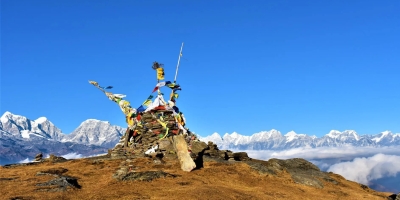
Pikey Peak Trek is one of the best and easy trekking destinations in Solukhumbu Region for Everest View. Pikey peak is a one of the tallest" Hills" in the Shouth part of Khumbu Valley for amazing view of snow mountain. The name Pikey is derived from the name of a Sherpa Clan deity. During the month of July the locals hold different celebrations to worship their clan god. This peak offers a majestic view of the Everest Himalayan Range and Numbur Chuli. The trail passes through beautiful settlements and you can visit the ancient Buddhist Monastery of Thupten Chholing and enjoy the unique Sherpa culture. During the festival season in August cleansing rituals at the sacred lakes are performed with several important Shamans. The Pikey Danda is most popular for its sunrise and sunset views and one can enjoy the glorious sight of the peaks beyond the Kathmandu Vally. Everest, Makalu and Annapurna. The access to Pike Peak bout way possible by plane and drive . There are different starting point and ending point, like from Kathmandu to Dhap by bus or jeep and from Kathmandu to Jiri by bus or flight to Phaplu by plane. Amazing Nepal Journey Treks and expedition organize with very successfully.

Langtang is very famous and nearby an north part of Kathmandu valley and it lies just south of Tibetan border. The Langtang valley is surrounded by high snow mountains of great appeal. It has become famous ever since the British mountaineer Bill Tilman described it as the most beautiful valley in the world. The highest peak in this area is Shisapangma or Gosaithan 8027m in Tibet. Langtang is full of diversity and it is attracting many tourists. The Langtang valley is also known as the treasure house of Alpine plants. The whole valley is covered with flowers during the summer. This high and isolated region is inhabited by Tamang’s whose religious practices, language and cultural phenomena are much more similar to Tibetan. The treks start from deferent point like Dunche, Syabru Besi, Sundarisal via Gosikund depend on trekkers time and stamina. Amazing Nepal Journey Treks & Expedition is promoting since 1998 all routs such a beautiful trip. Its short and best treks possible to do within cheap price in the world.

The Mardi Himal Trek is one of Nepal’s most rewarding short treks, offering spectacular views of the Annapurna mountain range while remaining relatively uncrowded and peaceful. Nestled just east of the popular Annapurna Base Camp Trek, this route allows trekkers to experience the majestic Himalayas in a quieter, more serene environment. The trail begins at Dhampus Phedi, a short drive from Pokhara, and winds through charming Gurung villages, dense rhododendron forests, and alpine meadows before reaching the rugged highlands near Mardi Himal Base Camp. This trek is ideal for travelers who want an off-the-beaten-path experience without venturing too far from major towns.The trail itself is a perfect mix of nature and adventure, with panoramic views of Mardi Himal (5,587m), Machapuchhre (Fishtail Mountain), Annapurna South, and Hiunchuli unfolding gradually as the altitude increases. The forested paths, particularly during spring, are filled with blooming rhododendrons and wildlife, while the higher elevations offer dramatic landscapes and endless skies. From High Camp (3,580m), trekkers can ascend to Mardi Himal Base Camp (approx. 4,500m) in about 3–4 hours, where the views are simply breathtaking. Amazing Nepal Journey Treks has been guiding clients through this magical region for over two decades, ensuring that even in its simplicity, the trek feels well-organized, safe, and profoundly inspiring.Best Time for Mardi Himal TrekThe best seasons to trek Mardi Himal are spring (March to May) and autumn (September to November). During these months, the weather is generally stable, and the skies remain clear, offering exceptional mountain views throughout the journey. Spring is especially beautiful with forests of blooming rhododendron, magnolia, and other wildflowers painting the trails with vibrant colors. The fresh greenery after winter and the pleasant temperatures make it an ideal time for both novice and experienced trekkers.In autumn, the air is crisp and dry after the monsoon rains, providing crystal-clear visibility of the mountains and fewer weather disruptions. Temperatures are moderate, and the trail conditions are at their best. While winter trekking (December to February) is possible, the cold can be intense at higher elevations and snowfall may make the upper trails inaccessible. Monsoon season (June to August) is typically avoided due to slippery trails, leeches, and reduced visibility. Amazing Nepal Journey Treks monitors trail and weather conditions year-round and helps clients choose the best time based on their preferences and safety considerations.Mardi Himal Trekking DifficultyThe Mardi Himal Trek is considered a moderate trek, making it suitable for most people with a reasonable level of fitness. It’s perfect for beginners seeking their first Himalayan adventure, as well as for experienced trekkers looking for a quieter route. The trail includes gradual ascents and some steep sections, especially as you approach High Camp and Mardi Himal Base Camp, but it does not involve technical climbing or extremely high altitudes like some other Himalayan treks. Most days involve 4 to 6 hours of trekking, making it a manageable yet rewarding adventure.The elevation gain is steady, which helps with acclimatization, though trekkers should still be mindful of altitude-related symptoms once above 3,000 meters. Teahouses are available along the route offering food and basic lodging, and the trail is well-marked and increasingly well-serviced. With Amazing Nepal Journey Treks, you'll benefit from knowledgeable local guides, proper itinerary planning, and reliable logistics. This ensures a comfortable and safe journey even for those with limited trekking experience. It’s a great way to immerse yourself in the Annapurna region’s beauty without the crowds or the demands of higher, more strenuous trails.Why Choose Amazing Nepal Journey for Mardi Himal Trek?With over 25 years of experience, Amazing Nepal Journey Treks & Expedition has earned a reputation for delivering high-quality trekking experiences with a personal touch. We specialize in providing safe, memorable, and culturally rich Himalayan adventures for trekkers of all backgrounds. Our team consists of local experts who know every corner of the Annapurna region, including the lesser-known Mardi Himal trail. We offer fully customizable itineraries, small group experiences, and personalized service that large companies simply can’t match.What truly sets us apart is our commitment to responsible tourism. We work with local communities, support eco-friendly practices, and ensure fair treatment for guides and porters. Our clients receive full support before, during, and after the trek—from logistics and permits to transportation and lodging—so they can focus on enjoying the scenery and connecting with the mountains. Whether you’re seeking adventure, peace, or cultural discovery, Amazing Nepal Journey Treks makes your Mardi Himal experience not just a trek, but a lifelong memory. Join us to explore Nepal in a way that’s authentic, safe, and deeply fulfilling.
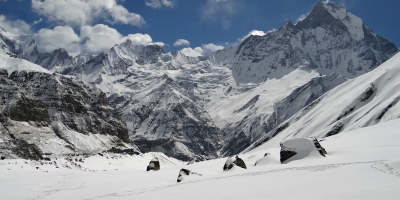
The Annapurna Base Camp (ABC) Trek via Ghorepani is a remarkable blend of awe-inspiring mountain vistas, vibrant local culture, and pristine natural beauty. Ascending to an elevation of 4,130 meters (13,546 feet), the trek offers some of the most spectacular views in the Annapurna region. The route winds through traditional Gurung and Magar villages, thick rhododendron and bamboo forests, terraced fields, and tranquil mountain landscapes. Ghorepani itself is famed for its sunrise views at Poon Hill, where trekkers are rewarded with panoramic scenes of Annapurna I, Dhaulagiri, Machhapuchhre (Fishtail), and the Butterfly Peak range. This trek allows travelers to experience authentic rural Nepalese life amidst the dramatic backdrop of towering Himalayan peaks.Starting from the bustling town of Pokhara, the trek moves through charming villages like Nayapul, Ulleri, and Tadapani, gradually climbing through lush forests to the high alpine region. One of the highlights is a visit to the natural hot springs at Jhinu Danda, where weary trekkers can relax and soak in the warm, mineral-rich waters, believed by locals to have healing properties. The final ascent to Annapurna Base Camp takes trekkers to the heart of the Annapurna Massif, where panoramic mountain views and the serene atmosphere provide an unforgettable mountain holiday experience. With over two decades of expertise, Amazing Nepal Journey Treks & Expedition ensures this classic trek is organized with meticulous attention to safety, comfort, and cultural engagement.Best Time for The Annapurna Base Camp Trek via GhorepaniThe optimal seasons for trekking the Annapurna Base Camp via Ghorepani are spring (March to May) and autumn (September to November). These months offer clear skies, mild temperatures, and excellent visibility, allowing trekkers to enjoy the breathtaking views of the Annapurna and Dhaulagiri ranges without the hindrance of heavy rainfall or cloud cover. Spring is particularly enchanting as the rhododendron forests bloom in vivid reds and pinks, adding color and vibrancy to the landscape. Autumn, on the other hand, features crisp air and stable weather conditions, making it the most popular trekking season.Winter trekking (December to February) is feasible but requires warm gear due to chilly nights and possible snow at higher elevations. The monsoon season (June to August) brings heavy rains, slippery trails, and limited mountain visibility, which can detract from the trekking experience. However, certain parts of the trail, especially lower regions, remain accessible year-round. Amazing Nepal Journey Treks & Expedition carefully plans each trek according to seasonal variations and client preferences, advising the best time to ensure a safe and memorable journey to Annapurna Base Camp.The Annapurna Base Camp Trek via Ghorepani – Trekking DifficultyThe Annapurna Base Camp Trek via Ghorepani is classified as a moderate trek, suitable for trekkers with a reasonable level of fitness and enthusiasm for high-altitude hiking. The trail involves steady ascents and descents, with some steep sections, especially around Ulleri and the final approach to Annapurna Base Camp. Trekkers typically walk 5 to 7 hours daily, with rest days or acclimatization stops in villages like Ghorepani or Chhomrong. The altitude can be challenging, especially as the trek approaches 4,130 meters, so proper acclimatization and pacing are essential to avoid altitude sickness.The terrain is generally well-marked and maintained, with teahouses and lodges available along the route for accommodation and meals. The presence of experienced guides, porters, and strong logistical support from Amazing Nepal Journey makes the trek manageable for most adventurers who have prepared physically and mentally. The trail’s combination of cultural immersion, natural beauty, and physical challenge ensures that every step taken is richly rewarding.Why Choose Amazing Nepal Journey for The Annapurna Base Camp Trek via Ghorepani?With more than 25 years of experience, Amazing Nepal Journey Treks & Expedition has become a leading provider of trekking adventures in Nepal, specializing in the Annapurna region. Our team is dedicated to delivering authentic experiences with a strong emphasis on safety, environmental responsibility, and cultural respect. We customize itineraries to suit the needs, interests, and fitness levels of all trekkers, ensuring a comfortable and fulfilling journey from start to finish.Our comprehensive services include airport transfers, domestic flights, permits, expert local guides, and porters, along with comfortable teahouse accommodations. We pride ourselves on building strong relationships with the communities we operate in, contributing positively to local livelihoods and sustainable tourism. Whether you’re a first-time trekker or an experienced mountaineer, choosing Amazing Nepal Journey guarantees not only a successful trek but also lifelong memories of Nepal’s majestic Himalayas and warm hospitality.

The Manaslu Circuit Trek is one of the most stunning and culturally immersive treks in Nepal, offering a combination of pristine natural beauty, remote adventure, and authentic cultural encounters. Opened to trekkers in 1992, this route encircles Mount Manaslu (8,156m)—the eighth highest mountain in the world—and lies along the border between Nepal and Tibet. Often referred to as a quieter and more raw alternative to the Annapurna Circuit, Manaslu remains a restricted trekking area, preserving its exclusivity and charm. The trail blends Hindu and Buddhist traditions, taking trekkers through a beautiful transition from the subtropical lowlands to high-altitude mountain terrain.The circuit begins with a scenic drive from Kathmandu to Soti Khola, then follows the Budhi Gandaki River valley through lush forests, steep ridges, suspension bridges, and remote villages. Trekkers gradually ascend through culturally rich areas inhabited by Gurung and Tibetan-influenced people, arriving at scenic villages like Namrung, Samagaon, and Samdo. The crown jewel of the trek is crossing the dramatic Larkya La Pass (5,100m), which presents breathtaking views of Himalchuli, Cheo Himal, Kang Guru, and Manaslu itself. The trail then descends into the lush forests of the Annapurna region, eventually connecting to Dharapani. At Amazing Nepal Journey Treks, we have been organizing treks in the Manaslu region since its opening and provide a safe, enriching experience for our clients who seek both adventure and cultural depth in one incredible journey.Best Time for Manaslu TrekThe best time to trek the Manaslu Circuit is during spring (March to May) and autumn (September to November). These months offer the most stable and clear weather conditions, making the high-altitude crossing over Larkya La Pass safer and more enjoyable. In spring, trekkers are treated to blooming rhododendron forests and clear views of snow-covered peaks, while autumn offers crisp air, excellent visibility, and golden-hued landscapes after the monsoon season.While winter (December to February) presents dramatic, snow-covered landscapes, the Larkya Pass can become inaccessible due to heavy snow, and temperatures can drop well below freezing. Trekking during the monsoon (June to August) is not recommended due to landslides, slippery trails, and limited mountain views caused by cloud cover. Amazing Nepal Journey Treks monitors seasonal conditions and tailors each trek to suit client preferences while prioritizing safety. Whether you’re looking for a spring bloom or autumn’s clarity, we ensure your Manaslu trek is timed perfectly for the best mountain views and comfortable trekking conditions.Manaslu Trekking DifficultyThe Manaslu Circuit Trek is considered a moderately challenging to strenuous trek, recommended for trekkers with a good level of physical fitness and some prior high-altitude trekking experience. The trail involves long days of walking—typically 6 to 8 hours per day—on varied terrain, including steep ascents and descents, rocky paths, and narrow ridges. The most demanding part of the trek is crossing the Larkya La Pass (5,100m), which requires early morning starts, cold temperatures, and careful acclimatization.Although demanding, the trek is not technical and doesn’t require mountaineering skills or equipment. With proper preparation and a well-structured itinerary that includes acclimatization days in Samagaon and Samdo, most healthy trekkers can complete the circuit successfully. At Amazing Nepal Journey, we design our itineraries to include gradual altitude gains and rest days, ensuring that you are well-prepared for the physical demands of the trek. Our expert guides and support team monitor your health closely and provide encouragement and guidance at every stage of the journey, making the Manaslu trek both achievable and unforgettable.Why Choose Amazing Nepal Journey for the Manaslu Circuit Trek?Amazing Nepal Journey Treks & Expedition has been at the forefront of organizing authentic Himalayan trekking adventures since 1998. With decades of hands-on experience and deep local knowledge, we specialize in providing a seamless and secure trekking experience in the Manaslu region, a remote and less-commercialized trail. As a government-licensed operator, we are authorized to arrange restricted area permits, which are required to access Manaslu. We handle all logistics—including permits, transport, accommodation, guides, and porters—so you can focus fully on the journey.What sets us apart is our personalized service and commitment to responsible travel. We partner with local communities, hire experienced guides and porters from the region, and ensure ethical trekking practices that benefit the environment and the people. Our small group sizes ensure a personal connection with your guide and an immersive experience with local culture. With Amazing Nepal Journey, you are not just another traveler—you are a valued guest, and your satisfaction, safety, and enjoyment are our top priorities. Join us for the Manaslu Circuit Trek and discover the untouched magic of Nepal’s hidden trails with a trusted and passionate local team.

Tsum valley is one of the most popular which takes into the majestic views of Himalayas. The trek to Tsum Valley takes us to the outstanding surroundings of Ganesh Himal, Sringi Himal, and Boudha Himal ranges. The people, the Tsumbas belong to Tibetan origin with their own ancient form of dialect, art, culture, and religion. The Tsum Valley lies on the northern part of Manaslu Valley and used to be a restricted area until 2008. The region is still less exposed in comparison to other touristy areas, with relatively virgin and less beaten paths in comparison to the more popular regions. The Tsum people have their own way of family life, which may be quite surprising for many outsidersThe trek start and end point is Arughat or Amazing Nepal Journey organizing to circuit Larke pass too. The first half of the treks ascends the Budhi Gandaki Valley on good paths through a mix of dense forest, terraced fields and hill villages. As we leave the main Manaslu Trail for the Tsum valley, suddenly we get a feeling of entering truly into the hidden valley. Pass the lower Buri Gandaki regions of Liding, Machhakhola, Jagat and Philim. We also visit the ancient Gombas of the region such as: Rachen Gompa,Mu Gompa, Dephyudonma Gompa. Amazing Nepal Journey Treks & Expedition is organizing such beautiful adventure trip in Nepal since one decade.
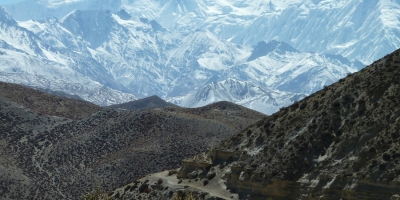
Mustang Kingdom is one of the best destinations for modern travelers.There are Lower and Upper Mustang trek, which offers a spectacular trekking into the remote Trans-Himalayan mountain area with Tibetan influence culture. The high desert region of the Tibetan influence, Kaligandaki, from the Tibetan border south to Kagbeni is generally referred to as Upper Mustang. Explore the thousand years of old monastery, caves, local tribes and scenic beauties of the different landscapes. Make an adventure starting from world's deepest gorge Kaligandaki Region into world's highest regions of Lo-Mangthang Valley that passes through an almost tree-less barren landscape, a steep rocky trail up and down hill and panoramic views of Nilgiri, Annapurna, Dhaulagiri and several other peaks. The trek passes through high peaks, passes, glaciers, and alpine valleys. The thousands years of isolation has kept the culture, lifestyle and heritage remain unchanged for centuries and to this date. The houses in Mustang are mostly made from stone and sun baked mud bricks. The city wall and the four storey palace in Lo-Manthang are some of the beautiful architectures of Mustang region. Another attraction in the Mustang region is the Tiji Festival influenced by Tibetan Buddhism, which is timed to coincide with the end of the dry season (late winter/spring). The Mustagi people have their own way of family life, which is quite surprising for many outsiders. All the brothers in the family are married to a single girl, what you may call a practice of polyandry.The Transhimalayan Mustang Region is also known as the Last Forbidden Kingdom, since the region was restricted for outsiders until Nepal Government announced the opening of the restricted areas in October 1991. The Mustangis or the people of Mustang call themselves Lobas, and they have their own King or Tribe-leader, JigmePalbarBista. After Nepal was declared a republic in 2007, the Nepal Government took back the official recognition of the Bista as the Mustangi King. However, the people there still respect him as their King or tribe-leader. Bista also grants audience the visitor upon request. There is also strict control in obtaining a special permit from the department of immigration to protect their tradition from outside influence as well as to protect their environment. The Upper Mustang trek starts from Jomsom to Kagbeni, the entry point of upper Mustang Region. Follow the banks of Kaligandaki River upstream to get to Lo-Mangthang, the capital of the upper Mustang.Amazing Nepal Journey Treks & Expedition is organizing such beautiful adventure trip in Nepal since 1998 up to now with 100% achievement with fully satisfaction of the all clients.

Solu:The trekking starting from southern part and ending in northern of Khumbu valley or Everest Region.Solu means southern part andKhumbu means north part of Khumbu valley so Khumbu Valley is combination of two parts “ Solu + Khumbu” .Southern part is very less touristic area now but very nice landscape and famous agricultural productive land for all Khumburegion. Before Luklaairport build all trekkers began their trekking start and from Jiri and Phaplu to Everest region.We have pass through very interesting multi-cultural village and diversities of flora and fauna so will get a chance all complimentary trip.After Juving we have staring to walk very classical trail access to Khumbu valley called Jiri to Everest trekking trail.The Jiri to Everest base camp trek follows; the traditional route taken by the early Everest expeditions and still serves as the main artery to the road less Everest region, known as the home of the Sherpas, SoluKhumbu. Mt. Everest, Sagarmatha or Chomolungma is unquestionably the tallest peak in the world - a legendary pride of the Nepalese people. It is not only the prominent peak among thousands of other mountain peaks but also a most enthralling mountain for both climbing expeditions and trekkers.Our trek passing through different ethnic group like Sherpa, Rai, Magaretc the villages we share many of their hearths and enjoy their generous hospitality. An inestimable number of tourists in Nepal prove the extent of the popularity of this region. The final stretch of this trek is quite arduous but the challenges are softened by traditional delicate tea houses, small settlements of hardy mountain people and monasteries with the back drop of the towering Himalayas, to make it one of the most delightful walks in Nepal.RapchaRapcha is situated in south part of Solukhumbu( Everest region) withinBasa Village Community in Sagarmatha Zone in Nepal. Rapcha is very beautiful village on the lap of Mt. Everest but still unknown due to south part of Khumbu is still not reach the best information to tourist. There is really interesting diversities of agricultural phenomena further more interesting that diversities of ethnic people who are call KiratKhalingRai and Mager people as well Brahmin cultural things are one of the best for tourist in Nepal.Kirat KhalingRai is one of the ethnic groups in Nepal their main originalbirth place and habitation within Solukhumbu and the Rapcha is main place from the beginning of history. KiratKhalingpeople living throughout the world however if their main cultural place remaining up to now Rapcha.They are still not in the any post of government and power so they are marginalized indigenous people so their life is still traditional way. They are religiously point of view “Animism” so they believe upon the natural God like water god, Sun God, Moon God, and their ancestors.Khumbu:A trek to Khumbu valley and Gokyo Treks offers an unique walking, trekking or hiking vacation in the Himalaya,Listed UNESCO Natural world heritage sites, Home of Sherpa Peoples and Stunning Mountain Views, the Khumbu "Sagarmatha" region boasts some of the most extraordinary high mountain scenery on earth!In Generally the trekking start from Lukla ,After flying in to Lukla, however some trekkers start from Phaplu due to some different interesting landscape , people, cultural phenomena and mountains really interesting in southern part and more idealize and smartness for altitude sickness avoid who start the trekking from Phaplu, the exciting trekking to Everest Khumbu valley takes us via the Sherpa capital of Namche Bazaar to the Gokyo Valley. Here, we ascend Gokyo lake and GokyoRi(5360m)mtr which is one of the finest vantage points for Mount Everest (8848m.).Gokyo Valley TrekkingTrekking around Gokyo Valley is considered a traditional trek that offers magnificent views of the mountain peaks and the Ngozumpa Glacier- the largest in the Nepal Himalayas. The image of this region is associated with the soaring views of the most popular mountains in Nepal, at an altitude of 8000m such as Cho Oyu, Everest, Lhotse and Makalu and other some above six to seven thousand mountains which are clearly visible from GokyoRi above Gokyo Lake. One of the most remarkable features is the view of the tremendous ice ridge between Cho Oyu and Gyachunglocated in Khumbu region.Amazing Nepal Journey Treks & Expedition is organizing such beautiful adventure trip in Nepal since 1998 up to now with 100% achievement with fully satisfaction of the all clients. Along the trek we will pass Buddhist monasteries with the views of Everest and other snow towering mountains getting closer by the day. We will have rest days in the villages of Namche bazaar that will allow us to explore the region and to acclimatize, which is very important. After trekking to GokyoRi (5483 meters), we return at a leisurely pace back to Namche and Lukla for our flight back to Kathmandu.
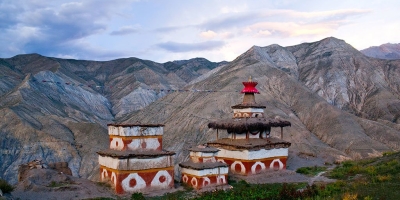
Dolpa district is situated in the Trans-Himalayan region of north-west Nepal. Dolpa is also spelt as Dolpo and remains as an isolated and one of the remotest areas of Nepal which has a great biodiversity and cultural richness in Nepal. The Dolpo to Jomsom off-the-beaten trek is designed for the trekkers who prefer to accept more challenging trail that involves many high passes and is possible to do only in certain time of the year. Upper Dolpo is part of the Tibetan Plateau and culturally rich with Bön villages and GOMPA or monasteries. “BON” is the main and old Tibetan religion that pre-dates Tibetan Buddhism. Shey Gompa is one of the most important spiritual sites on the way to Upper Dolpo to be visited. This trek will require a reasonable fitness and some previous trekking experience in the Himalayas. Upper Dolpo is good walking country however there are several steeper trails with exposure such as around SheyPhoksundo Lake. Although there are no technical passes on this trek, some toughest passes are recorded so far. The major attractions of Dolpo region is the wild and pristine landscape which is unlike to most other parts of the Nepal Himalayas having the fascinating villages, scenery and peace that offers opportunities to visit ancient villages, high passes, beautiful lake and isolated Buddhist monasteries. A great Tibetan influence can be experienced here and the villagers of Tibetan stock are skilled traders taking their yak caravans between Tibet and Nepal in Autuman season yet.One of the highest inhabited realms on the planet, Dolpo is also still a stronghold of the pre-Buddhist, shamanistic Bon-po religion as well as Tibetan Buddhism. It is a tough, mountainous region of fortified villages, 'dzongs', turquoise lakes, sacred mountains and high passes, susceptible to heavy snows which isolate it from the rest of Nepal.Amazing Nepal Journey Treks & Expedition since a long time successfully organizing this trip in Nepal.
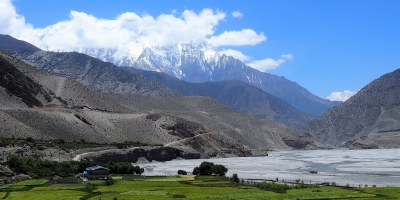
Upper Mustang trek, which offers a spectacular trekking into the remote Trans-Himalayan mountain area with Tibetan influence culture. The high desert region of the Tibetan influence, Kaligandaki, from the Tibetan border south to Kagbeni is generally referred to as Upper Mustang. Explore the thousand years of old monastery, caves, local tribes and scenic beauties of the different landscapes. Make an adventure starting from world's deepest gorge Kaligandaki Region into world's highest regions of Lo-Mangthang Valley that passes through an almost tree-less barren landscape, a steep rocky trail up and down hill and panoramic views of Nilgiri, Annapurna, Dhaulagiri and several other peaks. The trek passes through high peaks, passes, glaciers, and alpine valleys. The thousands years of isolation has kept the culture, lifestyle and heritage remain unchanged for centuries and to this date. The houses in Mustang are mostly made from stone and sun baked mud bricks. The city wall and the four storey palace in Lo-Manthang are some of the beautiful architectures of Mustang region. Another attraction in the Mustang region is the Tiji Festival influenced by Tibetan Buddhism, which is timed to coincide with the end of the dry season (late winter/spring). The Mustagi people have their own way of family life, which is quite surprising for many outsiders. All the brothers in the family are married to a single girl, what you may call a practice of polyandry.The Transhimalayan Mustang Region is also known as the Last Forbidden Kingdom, since the region was restricted for outsiders until Nepal Government announced the opening of the restricted areas in October 1991. The Mustangis or the people of Mustang call themselves Lobas, and they have their ownKing or Tribe-leader, JigmePalbarBista. After Nepal was declared a republic in 2007, the Nepal Government took back the official recognition of the Bista as the Mustangi King. However, the people there still respect him as their King or tribe-leader. Bista also grants audience the visitor upon request. There is also strict control in obtaining a special permit from the department of immigration to protect their tradition from outside influence as well as to protect their environment. The Upper Mustang trek starts from Jomsom to Kagbeni, the entry point of upper Mustang Region. Follow the banks of Kaligandaki River upstream to get to Lo-Mangthang, the capital of the upper Mustang.The trek through the Nar & Phu valleys combines high peaks and passes, glaciers, remote villages, narrow canyons, lovely forests, amazing rock formations, yaks, gompas and unique ethnically Tibetan cultures. Closed to trekkers until late 2002, very few outsiders have explored these virtually untouched villages or climbed the many 7000 meter peaks surrounding them.Starting at Besisahar/ Mustang — the traditional starting point of the Annapurna Circuit — the trek quickly diverges from routes with more foot-traffic and into the remote Nar & Phu valleys. Passing colourful Tibetan chortens and prayer stones into deep canyons and gorges, you will get the chance to hang out with villagers in Phu while they go about their daily activities, as well as spend a night in the Nar Phedi monastery. These are ideal ways to learn about life deep in the mountains of Nepal.
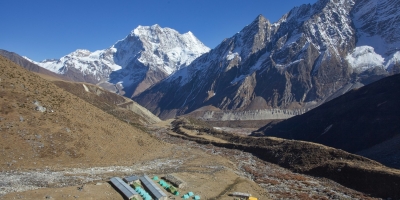
Limi Valley is a restricted trekking zone in Nepal located in the far western region of Nepal. Since the valley lies in the trans-Himalayan region, it receives no rainfall during monsoon season and is perfect for trekking during summer, spring and autumn. However in winter the temperature drops below zero and is often not recommended.As it is a restricted zone, trekkers are required to obtain trekking permits offered by the Department of Tourism. Also, trekking groups will have to hire government licensed trekking guide and trekking company. The trekking route is also a popular route for tourists who would like to visit Mansarovar or Mt. Kailash for Tibet .The region features unique Tibetan culture and customs practiced by Bhotia people who still retains close relation with their Tibetan counterparts. The trekking starts from Simikot, headquarters of Humla district. Crossing over Nara La Pass (4530m) before reaching Hilsa will be a challenge filled with adventure. Hilsa is a border point along Tibet and Nepal and the last point of our trek. You will trek back the same route passing through enchanting Limi Valley and traversing Nyalu La Pass at 4940m, which is the highest point of the trek.Along the route you will be able to catch splendid views of the Himalayan peaks such as Mt. Api (7132m), Mt. Saipal (7031m) and Kanjiroba (6883m) on Nepal side and Mt. Tise or Mt. Kailash and Mt. Gurla Mandata on the Tibet side! Wild animals such as Blue Sheep, Musk Deer, Snow Leopard are some of the signature species of the region.The mode of trekking in this trail is mainly camping though somewhere basic lodges are also available. Travelers will have to fly or drive from Kathmandu to Nepalgunj and then take a flight to reach Simikot.

Mera Peak Expedition via Phaplu is the most reliable and adventurous trek that leads to the summit of Mera Peak through different routes starting from Phaplu, a lower part of the Solu Khumbu region. This route from Phaplu will allow you to skip the Lukla or any other mountain flight. So, there is no risk of flight cancellation or delay. Also, the trek starts from lower altitudes at Khari Khola after driving to Phaplu. So, it also allows for better acclimatization to altitude up to the highlands.In this 19-day itinerary, you’ll follow the long trail to the peak (6,461m), one of the 600 There are a couple of routes to visit Mera Peak. The usual route starts with Lukla and passes through several settlements like Chutanga and Thuli Kharka; then, crossing Zatrwa La Pass (4,600 m), you’ll join the Kothe.However, the route to Mera Peak Expedition via Phaplu begins from Khari Khola and passes through Panggom, Ramailo Danda, and Chattra Khola to reach Kothe. Starting a trek from a lower land such as Phaplu, Mera Peak Climbing via Phaplu offers you enough time to acclimatize adequately before scaling the summit. This route will not only help you acclimatize better, but the trail from Phaplu provides beautiful scenery and is much quieter than the trail starting from Lukla.From Kothe, you’ll follow the standard route to Thaknak and Khare. At Khare, you’ll get pre-climbing training which will help you to ascend the summit more confidently. After that, you’ll hike to Mera Base Camp and Mera High Camp. Afterward, you’ll climb the Mera peak and retrace on the same trail till you reach Kothe. En route undoubtedly, you’ll enjoy the outstanding views of the Everest region.From the top of the peak, you’ll get the best mountain scenery with five eight-thousands, including Mt. Everest (8,848m), Lhotse (8,516m), Makalu (8,485m), and Cho Oyu (8,201m), as well as other Himalayan peaks. After summiting, you’ll have a relaxing trek to Thamdanda from where you will drive back to Khari Khola and then Kathmandu. So, while returning to Kathmandu, you’ll take an overland tour instead of taking a flight. So, while returning also there will be no headache of flight irregularities. With the final departure flight, your Mera Peak Expedition via Phaplu ends.
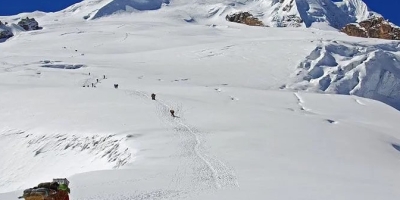
Pokhalde Peak is simple and easy trekking peak for climbing which elevates to the North of the Kongma La above the Khumbu glacier, opposite of Lobuche with relatively low altitude. This peak offers interesting and adventurous trekking experiences to the climbers. From the summit of the peak, one can outlook the panoramic views of mountains which definitely gives a unique experience. The peak is approachable via two routes: Bibre / Chhukung and Dughla. The routes have several modes to move toward this peak. In Dughla route, there are several ways like North Ridge, North East Face, North West Face, North West Face and South Face. For Bibre route, trails follows Everest trekking trail upto Tsuro Og and Yarsa trek.First ascended in 1953, Pokalde Ascent fulfills your amateur mountaineering desires, taking you above the normal experience of mountain treks and below the technically equipped, skill-and-effort demanding climbing expeditions. The high camp for the peak is established at the valley below the Kongma La Pass (5,535m), which has a turquoise glacial lake in the middle. For the final ascent, you can reach the pass and follow the ridge (the route of the first ascent). Amazing View such as Mt. Makalau, Lhotse, Nuptse, Pumo Ri, Ama Dablam and so on. Amazing Nepal Journey is organizing to make successful climb to Pokhalde Peak and Khoma La Trekking since a long time .
Dhambus Peak is situated in the Dhaualagiri region the northern side of the wildest valley of Nepal (hidden valley) and along with Kaligandaki River flow its bottom. It is an interesting peak for climbers in the North-East of the big Dhaulagiri massif. It is an easy trekking peak to ascent for climbers. The overwhelming altitude differences between the Annapurna and Dhaulagiri ranges make Dhampus Peak a very exposed spot to observe the scenery from. Having Tukuche Peak (6920m) and Dhaulagiri (8167m) spectacularly near you enjoy the feeling of being part of the extreme altitudes of the Himalayas. This peak provides you more than thirty mountains views like Dhaulagiri I (8163m), Sita Chuchura (6611m), Nilgiri (6940m), Tukche Peak (6920m), Tilicho peak (7134m), Thorong Peak (6484m), Yakawa Kan (6482m), Puth Hiunchuli (7246m), Mukut Himal (6639m), Tangu Peak (6197m), Hongde peak (6556m), Tsarste (6347m) and more snow capped mountains and as well as Dhaulagiri glacier and deepest gorge of the world. Amaing Landscap view appearing from the top Mistang region and Dolpo region too. Amazing Nepal Journey is every season organizing the successful trip in Nepal.
Larke Peak (6010 m/19,713ft) is very nice and a newly opened peak climbing lies in the Manaslu region of Gorkha, Nepal. Gorkha is a small independent state from where the unification of modern Nepal began, also it is the starting point of the trek. In 1992, Manaslu region has been opened to western visitors there; which offer an unsurpassed beauty, a combination of rich culture heritage, and biological diversity. Larke peak lies in mid-northern Tibet Border of Nepal are a challenging alpine experience in the Himalayas. The Larke peak has been issued to climb since 2002 and you need a special permit for Larke Peak Climbing and Manasalu Trekking, and to enter the mythical universe of living Tibetan traditions.Manaslu means “The spirit-mountain” in the regional language, referring to the benevolent and strong deity, which dwells within. Trekking to Manaslu and Larkya peak climbing is one of the most delightful adventures. The trek drive to Soltikhola by Jeep from Kathmandu follows from Budi Gandaki River valley and ending in Dharpani then drive to Beshisahar - Kathmandu. During the trip so many diversity of culture such as Gurung, Magar, and Tibetan Buddhist culture follow up to Samdo, the last settlement before Larke Peak and Larke La pass. Larke peak is pretty tricky and hard to find a top to bottom hence the climber requires a knowledgeable guide. The routes consist magnificent panoramic view-points to admire the lofty mountain summits like Langtang, Ganesh Himal, Buddha Himal, Annapurna and Siring etc. The trail continues northward passing through many villages of the Tibetan origin. These villages offer an opportunity to explore their customs and cultures, Monasteries prayer flags, a Prayer wheel, and Prayer walls. Amazing Nepal Journey is operating the Larke Peak Expedition since a long time with 95% successfully.After Larke peak climbing the trekking route goes through Manaslu and joint famous Annapurna circuit area. If you want to continue the trek you can also continue your trek to the famous trek of Annapurna Circuit Treks in Nepal. Then you trek down to Bimthang, then ending the treks in Dharapani then takes jeep to Besisahar. Finally, you can drive a local bus or private vehicle to Kathmandu.
Parchamo Peak (6273m) lies south of the Tesi Lapcha Pass and, when seen from the pass, the mountain is really attractive. It is a straightforward snow peak first climbed in 1955. The Rolwaling Valley is the main access to Parchamo even though from Khumbu valley also possible it. Tashi Lapcha Pass Trek and Parchamo Expedition begins with a drive to Gonggar/ Chhetchhet via Charikot from Kathmandu where we pass villages such as Simigaon, Bedding, and Na Gaon with an amazing view of Mount Gaurishankar( Holy Mountain) (7134m). In Na Gaon, we explore the Yalung Glacier and climb on the training peak Yalung Ri(5630m). Leaving Na Gaon, we climb uphill to Tsho Rolpa Lake (4540m), the largest glacial Lake in Himalaya. Then, waking on Trakarding Glaciers, the trail reaches Tashi Lapcha Pass (5755m), which separates the Rolwaling region from the Khumbu region and the Gaurishankar Conservation Area from the Sagarmatha National Park. Parchamo climbing rout is from the North side of the peak and it's not very technical climbing peak but its very deep snow and wind makes difficult climb and we follow the ridge crevasses near by the summit. The panoramic views are so beautiful appearing from the summit.After the Summit to Parchamo the trail joins the trekking trails of the Everest Region which is ever bustling with tourists from inside and outside the country. the trail heads down to the bustling Sherpa town of Namche Bazaar via Thame and leads to Lukla, from where a flight back to Kathmandu is taken. Rolwaling -Tashi Lapcha Pass - Parchamo Peak Climb is an amazing opportunity to observe the different facets of the Himalayan lifestyle as it goes from a remote to a rather urban route of the Himalayas with Amazing Nepal Journey.
Tent peak (Tharpu Chuli ) is easy peak climbing trip in Annapurna region. Tent peak climbing is known as Tharpu chuli peak climbing located near by Annapurna base camp . Tent peak 5695m climbing offer trekking in Annapurna base camp and best Himalayan views of Annapurna region including Annapurna I, Annapurna South, Annapurna III, Machhapuchhare (Fish tail), Hiunchuli, Singu Chuli and Gangapurna. Tharpu chuli peak climbing take to you heart of the Annapurna trekking trail . Tent peak climbing required good physical fitness and required minimum two weeks holidays.Tharpu chuli peak climbing begins from Phedi after one hour drive from Pokhara. Amazing Nepal Journey Treks’s climbing guide led through Dhampus Deuarali Tolkha Jhinudanda Chomorung Dovan bamboo Machhapuchhare base camp and finally reach at Annapurna base camp (4130m). From Annapurna base camp trail then cross the glacier then continue ascend till Tent peak base camp and next day High camp put the tent then next early morning our climbing guide take to you Tharpu chuli peak summit( 5695m). The climbing rout easy rocky part in the begging, then gently ascent the last part is really vertical with fix rope . Appearing excellent views of whole Annapurna region from Tent peak summit then trail descend till Chmorung village. The you have three alternative way descent to Pokhara via Gandruk, Ghorepani and via Landruk by Jeep drive to Pokhara directly .

Mt. Makalu(8463 M) is the fourth tallest in Nepal and fifth highest Peak in the World. Mt. Makalu resides in the eastern Himalayas range just 20Km southeast of the giant Mt. Everest in the border of Nepal and China.Mt. Makalu expedition is one of the best and really remote with Ultimately Adventure who loves mountains. Amazingly climb to Makalu with full of joy. It was in 1955, when the expedition led by French team reached to the top of Mt. Makalu for the first time. Only five of the first sixteen attempts were successful. Makalu bears a pyramid shape. South East and the North West Ridges being the most prominent compared to other. The base camp is normally set at around 5,600m, and then four camps follow before reaching the top. The first camp is at 6,100m, camp 2 is at 6800m, the third camp is at 7200m and the last camp is at 7600m- 7900m.The South East Ridge and the Northwest Ridge are the main climbing routes on Mt. Makalu. The 8485m peak usually takes around 48 days to climb. Most climbers are able to climb Makalu in both the spring and autumn seasons. It is located at the coordinates of 27°53'21'' N and 87°05'27'' E. The approach to Makalu is beautiful and elegant, the Barun Valley provides stunning contrasts where high waterfalls cascade into deep gorges, craggy rocks rise from lush green forests, and colorful flowers bloom beneath white snow peaks. Within this wide range of altitudes and climates, the Makalu-Barun area contains some of the richest and most diverse flora and fauna of Nepal. Diverse ethnic communities of Rai and Sherpa have inhibited in the valley.The climbing itself is appropriate for both the experienced climber and the novice climber making their first 8,000 meter peak ascent. The climbing consists of easy glaciers low on the mountain, steep ice and snow climbing to the Makalu La and above Camp IV a final rock ridge to the summit. Makalu is a steep and consistent climb, and in the spring season has excellent snow coverage and low hazards like icefalls, rock falling and avalanche. Amazing Nepal Journey Treks and Expedition utilizes oxygen above 7,000 meters and climbing guide support with fixed ropes throughout the climb route and set up the tent etc.Makalu Advanced Base Camp (5600M):Makalu Advanced base camp is located on a rocky moraine with amazing views of the Himalaya. Expedition climbers spend most of their time at base camp, so naturally on any long expedition, base camp becomes a home away from home. We establish our camp at a walking distance between different groups and with a strategic view of the Makalu massif. Amazing Nepal Journey Treks & Expedition provides a personal tent which becomes your private retreat, a dining tent that is sharing in the group, a shower tent and toilet tent too. When you arrive at base camp it will already be fully established with hot beverages and snacks available immediately. Waiting for you there will be your base camp staff and high altitude climbing Sherpa. Prior to your climbing period you will have a Puja ceremony at the base camp for good luck and safe climbing passage for everyone involved in the expedition.Makalu Camp 1 (6,100m),4hrs:Once you have reviewed basic and advanced training by your climbing guide, you will be ready for your attempt to climb to camp I which is at a height of 6200m. In the first section of glacier you will encounter rock slabs and moraine. Once on the glacier you will be on mixed terrain and crevasses with blue ice. The first section of climbing on the moraine takes about an hour after that you reach the crampon point at the mouth of the glacier. For average climbers it takes about 3-4 hours. Camp I is divided into two sections, lower camp I and upper camp I. So camp 1 is fixed between 6100-6400m.Makalu Camp 2 (6800m) 3hrs:The climbing from camp I to camp II is considered the moderate technical section on Mt. Makalu. This section is ice and snow part. The first section is slogging over snow for around an hour, and then you encounter several steep sections of ice, there are small sections of ice fall. These sections can be crossed with the support of fixed ropes, a few big steps and some steep snow climbing. Camp 2 is situated above the snowy terrace wit Amazing views.Makalu Camp 3 (7200m) 4-5hrs:The distance from camp II to camp III is the longest part of the route, it extends arount 600m. It does not require any ladder crossings, but there are a few crevasses that are roughly a half meter long that need to be jumped. The main ropes are fixed by a climbing Guide. This section for most climbers feels easier, but still it is not to be taken lightly. The climbing is on sustained slopes and there is exposure to cold and wind. From the III camp 40% of climbers plan to do their summit to Mt. Makalu. However, Amazing Nepal Journey always fixes camp IV before the summit so that climber can get chance a half nights rest. This section takes about 4 hours for normal climbers and 5 hours for slower.Makalu Camp 4 (7900m):Climbing from camp III to camp IV looks like a short day, however feels so difficult due to altitude . The oxygen levels are very low at this altitude so it is expected that.. In this part you have to climb for 3 hours on steep snow that is on a 50º-55º slope. This section is little dangerous in the autumn season because the snow slope is covering a layer of ice which make the section avalanche prone. Amazing Nepal Journey make easier and day for Summit.Makalu Summit day (8485m)-15 hrs: This day is very important for main goal to summit the peak. If all goes well they reach the summit between 8-10am. Below the main summit is a false summit, the main summit is reached via an exposed ridge. It takes about 5 hours to return to Camp 4 from the summit and another 2 hours to get to camp three for overnight stay. The climbing is not technical in the early part as you ascend through several basins with short snow headwalls. The climb passes the false summit and finishes on an exposed ridge to the true summit for a spectacular view of the Amazing Mountains view. Amazing Nepal Journey' Guide will make fix ropes, break trail and make every effort to assist the group to reach the summit of the 5th highest mountain in the world.
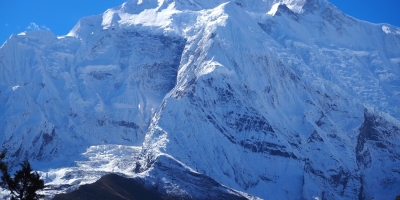
Pisang Peakis located in the northern part of Nepal. It lies in between Annapurna I and Manaslu. Pisang Peak (6091m) is the most popular climbing Peak among the trekking peaks in Annapurna region as it is famous for the easy climbing peak. Pisang Peak rises from yak pastures above the village of Pisang in a uniform slope to the final summit pyramid which is an undistinguished snow and ice slope. In 1955, a German expedition was made the first ascent of Pisang peak and since it has been going very popular nowadays. Pisang Peak climbing route from Pisang village heading up directly Pisang peak base camp, High Camp and Summit.The first part of the Pisang peak meadow up hill until camp 1 , from high camp really rock climb, then ice and snow last part, the middle part is quite rick due to rock fall so always full climbing equipment set require for safety. Real summit of the peak is follow the ridge with snow and ice with rope. The view is so amazing from the top , appearing whole rang of the Annapurna, Tilicho, Himlung, Manasalu, Kangaru, Churen , Himlung Himal, Upper Mustang and the dolo region as well. Pisang peak provides its climbers an interesting journey passing along varied ecosystems, diverse cultures, a reasonably high level of physical fitness and health is still strongly recommended. Amazing Nepal Journey Treks & Expedition is organizing such beautiful adventure trip in Nepal since two decades up to now with 100% achievement with fully satisfaction of the all clients.
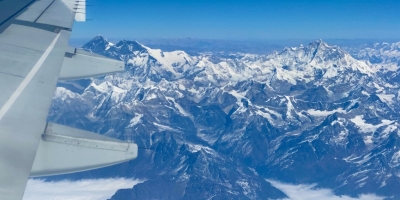
The Helicopter Day Tour to Everest Base Camp is a luxurious and time-efficient way to experience the grandeur of the world's highest mountain, Mount Everest (8,848.86m), all in just one incredible day. Operated by Amazing Nepal Journey Treks & Expedition, this adventure is perfect for travelers who want to enjoy the thrill and beauty of Everest without days of trekking. It combines Himalayan vistas, aerial sightseeing, and short landings at some of the most iconic places in the Khumbu region.Your day starts early with a hotel transfer to Kathmandu Domestic Airport, followed by a scenic flight to Lukla, the famous gateway to Everest. After a quick fuel stop, the helicopter continues over Namche Bazaar, the Sherpa capital, and flies directly to Everest Base Camp. As you soar above Khumbu Glacier and between the towering peaks of Lhotse, Nuptse, and Everest, you'll be treated to unmatched views of the world's most dramatic mountain terrain.The helicopter then lands at Kala Patthar (5,545m)—the best viewpoint of Everest—for around 5 minutes, giving you time for once-in-a-lifetime photos. Afterward, you'll fly to Syangboche where you'll enjoy breakfast at a hotel with panoramic views, before returning to Lukla for refueling and finally flying back to Kathmandu. This is a tour of elegance, adrenaline, and unforgettable scenery—made simple, safe, and seamless by the experts at Amazing Nepal Journey.Hotel to National airport in KathmanduKathmandu to LuklaLukla to Everest Base Camp (fly over)Everest Base Camp to Kala Patthar ( 5 minutes )Kala Patthar to Syangboche breakfast in Syangboche( 25 minutes)Syangboche to LuklaLukla to KathmanduHelicopter Landings – Base Camp, Kala Patthar, Syangboche, and LuklaThe helicopter day tour to Everest Base Camp involves multiple scenic landings, giving you a dynamic and immersive Himalayan experience. The first landing is at Lukla Airport (2,860m), where the helicopter refuels. Known for its short and sloped runway, this high-altitude airport offers an exciting glimpse into what trekkers and climbers experience as they begin their journey to Everest.From Lukla, the flight heads to Everest Base Camp (5,364m). While there is typically no landing at the base camp itself due to glacial instability, you'll have the chance to fly low over the camp, observing colorful tents and climbers during peak seasons (spring and fall). The next and most important stop is Kala Patthar (5,545m), the iconic viewpoint for close-up photos of Everest. Due to high altitude, helicopters only stay here for 5 minutes, but it’s enough to capture jaw-dropping shots of the Everest massif.After Kala Patthar, the flight descends to Syangboche (3,780m), where you'll enjoy a relaxing breakfast at the famous Hotel Everest View, overlooking Everest and Ama Dablam. Finally, a short refueling stop is made in Lukla before returning to Kathmandu. These carefully chosen stops ensure that you experience the thrill of high-altitude landings, scenic views, and local hospitality—all in one unforgettable day.Best Time for Helicopter Day Tour to Everest Base CampThe best time for a helicopter day tour to Everest Base Camp is during the spring (March–May) and autumn (September–November) seasons. These months offer the most stable weather, clear skies, and excellent mountain visibility, ensuring your helicopter flight goes smoothly and that you get the best panoramic views of Everest, Lhotse, Nuptse, Ama Dablam, and the Khumbu Icefall.During spring, the air is fresh, the mountains still carry winter snow, and the landscapes are dotted with blooming rhododendrons. Autumn provides equally impressive scenery, with crisp skies following the summer monsoon and less chance of cloud cover. These two windows are ideal not just for sightseeing but also for flight safety and comfortable landings at high altitudes.While winter (December–February) can also be suitable due to low tourist traffic and clear air, temperatures are very cold, especially at Kala Patthar. Monsoon season (June–August) is generally avoided for helicopter flights due to unpredictable weather, reduced visibility, and frequent delays. At Amazing Nepal Journey, we closely monitor real-time weather reports and provide flexible scheduling to give you the safest and most spectacular experience possible. Early morning flights (around 6:30–7:00 AM) are recommended for the best lighting and stable flying conditions.Helicopter Day Tour to Everest Base Camp – Difficulty LevelThe Everest Helicopter Day Tour is designed to be accessible to everyone, regardless of trekking experience or physical fitness. This is what makes it such a popular choice for people with limited time, older travelers, or those who cannot commit to the physically demanding Everest Base Camp Trek. Since the tour includes hotel transfers, flight assistance, and professional ground handling, you don’t need any technical knowledge or mountain travel experience to participate.The main challenge on this tour is the altitude. Landing at Kala Patthar (5,545m) exposes you briefly to a high-elevation environment, where oxygen levels are low. However, the short landing duration of 5 minutes minimizes the risk of acute mountain sickness (AMS). Passengers are advised to stay calm, move slowly, and hydrate before the flight. The helicopter is pressurized during flight, and oxygen support is available upon request.Overall, this helicopter trip is rated as easy in terms of physical effort but high in reward. With Amazing Nepal Journey, you’ll receive clear safety briefings, professional care, and attention to detail throughout the journey. If you’ve always dreamed of seeing Everest but couldn’t manage the trek, this is the perfect way to experience its majesty.Why Choose Amazing Nepal Journey for Helicopter Tour to Everest Base Camp?Amazing Nepal Journey Treks & Expedition has been delivering high-quality Himalayan adventures for over 25 years, and our Helicopter Day Tour to Everest Base Camp reflects that experience, expertise, and care. We prioritize safety, comfort, and satisfaction, offering full logistical support from your hotel in Kathmandu to your final return from Everest.What sets us apart is our commitment to personalized service. We only partner with reliable helicopter operators, and our pilots are seasoned professionals who specialize in high-altitude aviation. From ground handling in Kathmandu and Lukla to coordination at Kala Patthar and Syangboche, our team ensures a seamless, stress-free journey.We also offer custom departure times, private and group bookings, and expert consultation on weather windows and flight planning. Our prices are transparent, and we don’t compromise on quality or safety. Whether you're a solo adventurer, a couple celebrating a special occasion, or a group of friends on a dream trip, we make sure your helicopter journey is thrilling, safe, and memorable.Choose Amazing Nepal Journey—where your Everest dream becomes reality, effortlessly and elegantly.

The Helicopter Tour to Annapurna Base Camp (ABC) from Pokhara is the fastest, most convenient, and luxurious way to witness the grandeur of the Annapurna Himalayas without the time or physical demands of a traditional trek. Organized by Amazing Nepal Journey Treks & Expedition, this aerial adventure gives you an incredible Himalayan experience in just under 2 hours, perfect for those with limited time or those looking for a once-in-a-lifetime panoramic experience.Taking off from Pokhara, a beautiful lakeside city already surrounded by mountains, your journey begins with stunning aerial views of the Pokhara Valley, Phewa Lake, and nearby terraced farmlands. As the flight gains altitude, the true Himalayan giants reveal themselves. Within minutes, you’ll be flying alongside some of the most iconic peaks in Nepal—Machhapuchhre (Mt. Fishtail), Annapurna I, Annapurna South, Hiunchuli, and even distant views of Dhaulagiri and Manaslu. After about 25 minutes, you land directly at Annapurna Base Camp (4,130m), surrounded by a magnificent 360-degree panorama of the Annapurna Sanctuary.At ABC, you’ll have 15–20 minutes to enjoy the scenery, breathe the high mountain air, and sip tea or coffee at one of the local lodges. Then you board the helicopter for your return to Pokhara, descending through the clouds and valleys. This incredible tour allows you to experience in two hours what typically takes a week or more on foot, without compromising on the stunning views and immersive feeling of being in the heart of the Himalayas.Helicopter Landing at Annapurna Base CampLanding at Annapurna Base Camp by helicopter is an unforgettable moment—something only a few lucky travelers experience. As you descend into the natural amphitheater surrounded by towering peaks over 7,000 and 8,000 meters high, the views become increasingly surreal. The rotors slow, the snow crunches beneath the skids, and you find yourself standing at 4,130 meters in the heart of the Annapurna Sanctuary.The landing zone at ABC offers a safe and spacious area for short-term visits. The helicopter remains on the ground for about 15–20 minutes, which is enough time to take in the remarkable surroundings, capture amazing photos, and enjoy a warm beverage at the tea lodge nearby. This brief stop is also important to minimize the risk of altitude sickness, as the human body needs more time to acclimatize properly to such high elevations. The fresh mountain air, peaceful silence, and mighty peaks around you create a once-in-a-lifetime feeling of awe and serenity.This is not just a sightseeing tour—it’s a deeply moving experience, a rare chance to be so close to iconic Himalayan peaks like Annapurna I (8,091m) and Machhapuchhre (6,993m) without days of strenuous hiking. At Amazing Nepal Journey, we make sure every moment on the ground is safe, comfortable, and unforgettable. Our experienced pilots and ground staff ensure smooth logistics and provide insight into the region’s culture, geography, and significance.Best Time for Helicopter Tour to Annapurna Base CampThe best times to embark on a Helicopter Tour to Annapurna Base Camp are during spring (March to May) and autumn (September to November). These seasons offer stable weather conditions, clear blue skies, and exceptional visibility for panoramic mountain views. In spring, the lower regions are dotted with blooming rhododendrons, and the skies are usually clear in the early morning—ideal for scenic helicopter flights. Autumn follows the monsoon, leaving the air crisp and clean, enhancing long-distance visibility across the Himalayan range.Early mornings are generally the best time of day for the helicopter flight, as wind speeds are lower and visibility is best. Flights may still operate in winter (December to February) if the weather is stable, and snow-covered peaks make for a particularly dramatic view. However, flights in monsoon season (June to August) are less recommended due to frequent cloud cover, rain, and the risk of flight delays or cancellations.Amazing Nepal Journey monitors real-time weather forecasts, seasonal patterns, and flight windows to ensure every guest has the safest and most scenic flight experience possible. With flexible scheduling and expert guidance, we help you choose the perfect time for your dream journey to the heart of the Himalayas.Helicopter Tour to Annapurna Base Camp – DifficultyOne of the greatest advantages of the Annapurna Base Camp Helicopter Tour is its accessibility. It’s not physically demanding, making it suitable for people of all ages and fitness levels—including families with children, seniors, or travelers with limited time. There is no trekking or hiking required, as the helicopter takes you directly from Pokhara to ABC and back within two hours.However, altitude remains a factor. ABC sits at 4,130 meters (13,550 ft), and while you're only there for 15–20 minutes, it’s essential to take precautions. Spending a short time at high altitude helps prevent acute mountain sickness (AMS), and our pilots are trained to monitor for any signs of discomfort. We also advise passengers to stay hydrated, avoid sudden movements, and enjoy the experience calmly.Flying with Amazing Nepal Journey Treks & Expedition ensures that you're in safe hands. Our helicopters are well-maintained, and our experienced pilots are trained to handle both high-altitude landings and emergency procedures. With us, your ABC heli tour is more than a luxury—it’s a carefully managed, smooth, and secure mountain experience.Why Choose Amazing Nepal Journey for Helicopter Tour to Annapurna Base Camp?When it comes to unforgettable Himalayan experiences, Amazing Nepal Journey Treks & Expedition is the name you can trust. With over 25 years of expertise in mountain tourism, we offer professionally organized helicopter tours that blend adventure, comfort, and safety. Our Annapurna Base Camp Heli Tour is operated in partnership with licensed aviation companies and experienced pilots who specialize in high-altitude flying.What sets us apart is our attention to detail and personalized service. We assist you with everything—from flight scheduling and hotel transfers in Pokhara, to providing safety briefings and guiding you through the landing process at Annapurna Base Camp. We understand how valuable your time is, which is why we ensure a hassle-free, efficient, and memorable adventure.We also take pride in offering fair pricing with no hidden costs, and our staff is available 24/7 for customer support. Whether you're a solo traveler, a couple on a honeymoon, or a group of friends or family, we tailor the tour to meet your needs. With Amazing Nepal Journey, your helicopter trip to ABC isn’t just a flight—it’s a luxury Himalayan experience that stays with you for a lifetime.
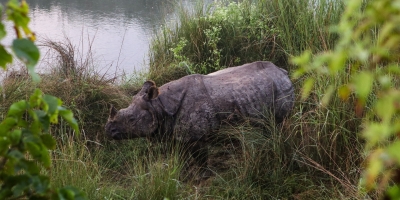
Chitwan National park Tour is best known for its culture and wildlife activities. Chitwan means "heart of the jungle", because of its dense forests and wild animals. Chitwan national park is located in central south of Nepal, just 165 km far from Kathmandu and 150 km from Pokhara, which offers you many jungle as well as cultural activities. Such as Elephant back safari, canoeing trip, jungle walk, visit to ethnic local people house, culture dance perform by local tribe people, visit to sunset point, jeep drive and so on.The people who have at least 2 nights and 3 days time to visit Chitwan national park, We Amazing Nepal Journey Treks & Expedition can offer them quiet relax and luxuries program, which will allow them to know about Chitwan national park, jungle activities and local people, their daily life. In 2 nights and 3 days package you can experience most of the adventurous program in Chitwan, such as elephant back safari, canoe trip, jungle walk, elephant breeding center visit, visit to local village, visit to sunset point and culture dance program.

Kahmandu is capital of Nepal has 218 square miles (360 square kilometers) of land with three historic, artistic and cultural towns namely Kathmandu, Patan and Bhaktapur together form known as ‘Kathmandu Valley’. The word Kathmandu is derived from ‘Kasthmandap’ (literally “Wood-Covered Shelter”) in Sanskrit, a pagoda-style temple .Measuring 24 km east-west and 19 km north-south, the Kathmandu valley has are seven UNESCO world heritage sites in the valley. Acronym of Kathmandu is ‘KTM’. Kathmandu valley is the hub of Nepal’s political, commercial and traditional culture and arts. Kathmandu valley is an exotic and fascinating showcase of a very rich culture, art, and tradition. Kathmandu, the capital of Nepal is the place for rest, relaxation and easy-day sightseeing of historic and artistic temples and monuments, and mountain views.The Kathmandu Valley consists of three historic cities: Kathmandu, Patan and Bhaktapur. The cities of the Kathmandu valley are filled with medieval temples and palaces. The Kathmandu Valley was known as the Nepal Valley during Malla Period. After the unification of Kathmandu in 1825, Prithivi Narayan Shah made Kathmandu the capital of unified kingdom.The history of the Valley begins with the Buddhist saint Manjushree who slashed a passage through the surrounding hills to drain out the primordial waters and make it inhabitable. Over the centuries, a refined urban civilization emerged, built on a unique synthesis of Hinduism and Buddhism.Dynasties came and went. Trade and the arts flourished. Its deeply religious Newar inhabitants built fabulous cities and artistic temples that attracted devout pilgrims and modern tourist .Kathmandu is situated at an altitude of 1,300m.KATHMANDU Population (2011 Census)Kathmandu Distric: 1, 740,977Lalitpur District: 466,784Bhaktapur Distric:303,027Kathmandu agglomeration 2,510,788Kathmandu Durbar Square. This complex of palaces, courtyards and temples like Hanumandhoka Palace, Kumari Ghar (Abode of the Living Goddess), Taleju temple, built between the 12th and 18th centuries, used to be the seat of the ancient Malla Kings of Kathmandu. An intriguing piece here is the 17h -century stone inscription set into the wall of the palace with writings in 15 languages. The Durbar Square, protected as a UNESCO World Heritage Site, is the social, religious and urban focal point of the city. Even to date, all the major state and social ceremonies, including the solemnization of coronations are performed in one of the courtyards in this complex. There are also museums inside the palace building. Your ticket to the Square entitles you to visit all the museums.Note: After earthquake in 2015, mostly such a beautiful things destroyed and now some of them processing for reconstruction.Swayambhu Stupa watches over the Valley from the top of a hillock on its western side just three kilometers west of the city center. The stupa is one of the holiest Buddhist sites in Nepal and its establishment is linked to the creation of the Kathmandu Valley out of a primordial lake. Swayambhu is also known as Samhengu and is listed as a World Heritage Site. It is also one of the oldest and glorious Buddhist shrines in the world which is said to be two thousand years. The four sides of the stupa is painted with the eyes of Lord Buddha and the temple is also known as the watchful eyes of Buddha. Entrance fee required to all tourist.Note: Its also effected the earthquake of 2015.Lunch break around 12.00 for one hrs. Evening back to your Hotel and short brief for next day programs and your are free evening.Bouddhanath Stupa lies about 6 km east of downtown Kathmandu and is the largest stupa in the Valley and one of the largest in the world. It looms 36 meters high and presents one of the most fascinating specimens of stupa design with hundreds of prayer wheels and 108 small images of Buddha all around. Just like the Swayambhunath, the stupa here is too has four sides with the watchful eyes of Lord Buddha. All the Buddhist throng to this stupa to take part in the sacred rituals during the Buddhist festivals.Bouddhanath, a World Heritage Site is also known as Khasti. There are more than 45 Buddhist monasteries in the area. Many have schools that teach young monks like those pictured here. The entry fee required to all tourist .Note: Completely rebuild after the earthquake of 2015.Pashupatinath Temple. One of the most sacred Hindu shrines in the world, Pashupatinath lies 5 km east from the city center. The richly-ornamented pagoda houses the sacred linga, or phallic symbol, of Lord Shiva as well as the noteworthy gold plated roofs and silver coated doors. This is the abode of God Shiva and is the holiest of all the Shiva shrines.Religious pilgrims and sadhus, like the one pictured here, travel all the way from the remote areas of India to visit this sacred sight, especially during Shivaratri (the night of Shiva) that falls between February/March. Even though these devotees have denounced worldly possessions, each carries a Sadhu ID (identifications card) to freely cross over the border between India and Nepal.Chronicles indicate Pashupatinath’s existence prior to 400 AD. Devotees can be seen taking ritual dips in the holy Bagmati river flowing beside the temple, also a World Heritage Site. The crematorium is just outside the temple and it is a dream of almost every Hindu to be cremated by the side of Pashupati Aryaghat after their death. Entry fee required .Bhaktapur Durbar Square. As you walk in, you cannot but be overcome by a feeling of inner harmony. Such is the art and architecture and the special layout here. The Palace of 55 Windows built during the period of King Bhupatindra Malla in 1754 situated to the left as you enter through the city gate, inspires admiration. The National Art Gallery is also housed inside. The palace entrance, the Golden Gate known as Sunko Dhoka in Nepali is a masterpiece in repousse art. In front of the palace building is a medley of temples of various designs. Amongst the three Durbar Squares in the Valley, the Durbar Square in Bhaktapur is the best preserved one. There is an entrance fee of Rs. 30 for SAARC nationals and Rs. 500 for other foreign visitors.Taumadhi Square lies to the east of Durbar Square reached by a narrow brick-paved lane. The towering five-roofed Nyatapol temple presides over the square. The monument gracefully soars into the sky atop a five-story plinth. The stairway leading up to the temple is flanked by stone figures of deities and mythical beasts, each 10 times more powerful than the one immediately below.Dattatreya Square takes its name from the Dattatreya temple dedicated to a three-headed combination of the Hindu deities Brahma, Bishnu and Shiva. If you want to experience the feel of the traditional urban layout of Bhaktapur, Dattatreya Square is it. Set in a maze of streets lined with richly ornamented houses, the square is famed for its many ornate Hindu monasteries known as Math. The National Woodworking Museum is also housed here and the Brass and Bronze Museum is across the street. The oldest structure in Bhaktapur was raised during the reign of the last Malla King, Yaksha Malla who ruled the Valley before it was divided into three Kingdoms amongst his three heirs.Potter’s Square. A two-minute walk south of Durbar Square brings you to Bolachhen, also known as Potter’s Square because of the many potters seen here moulding wet clay into different kinds of earthen ware. It has a display of fresh pottery left out to dry in the open square. This place can be approached from Taumadhi Square. The elephant-headed Lord Ganesh is the patron of potters, thus the Jeth Ganesh temple in the square.Siddha Pukhu, a pond dating back to the Lichhavi period, is better known as Ta-Pukhu, meaning big pond. Though situated right at the bus stop, it provides a serene atmosphere with its sashaying fish and the stone images of different Hindu and Buddhist Gods.Changu Narayan Temple is situated on a ridge overlooking the Valley, about 12 km to the east of the city. It is dedicated to the Hindu God Bishnu – the Preserver. One of the finest and oldest specimens of pagoda architecture, the temple is embellished with exquisite wood and stone carvings and is said to be the oldest pagoda style temple in Nepal built sometime back in 323 A.D. The sacred complex is a World Heritage Site and offers a panoramic view of the surrounding at 125 meters.Surya Binayak is one of Kathmandu’s most popular pilgrimage spots, 12 kilometers east of the center. It has been positioned in such a way to catch the first rays of the sun in the morning. Situated in a thick forest to the south of Bhaktapur, it is a 20-minute walk from the trolley bus terminal. The temple, dedicated to the Hindu deity Ganesh (the Elephant headed God) is crowded with devotees especially on Tuesdays and Saturdays. It is also one of the favorite picnic spots offering elegant views of Bhaktapur and other attractive landscapes.Panauti is a farming town situated 8 km east of Kathmandu on the way to Bhaktapur. Exquisite temples and other religious shrines dot its streets. It is known for its artistic masks and earthen pots, often seen spread out on the streets to dry in the sun. It can be called a traditional pottery locality with almost 80% of the population still involved in pottery. Handspun cotton cloth is another Thimi specialty.Suggested Half-Day ItinerariesSight-seeing can be done on foot in the city core areas; for outlying spots, hire a car or take the bus. Amazing Nepal Journey in Kathmandu offer a variety of half-day and full-day guided tours. The following combinations of tourist sites make for a pleasant half-day of sight-seeing:Patan Durbar Square, like its counterpart in Kathmandu, is an enchanting mélange of palace buildings, artistic courtyards and graceful pagoda temples. Listed as a World Heritage Site, the former royal palace complex is the center of Patan’s religious and social life, and houses a museum containing an array of bronze statues and religious objects. There is an entrance fee of Rs. 200 per foreign visitor. One remarkable monument here is a 17th century temple dedicated to the Hindu God Krishna – Krishna Mandir built entirely of stone with rare stone carvings on its walls depicting the epic wars from Ramayana and Mahabharata. Iba Bahi is situated about a two-minute walk south of Durbar Square. It is one of the oldest Buddhist monasteries in Kathmandu Valley and reflects the sophisticated architecture of the Malla period. A two-step platform leads to the courtyard with a hall called Dalan. There is a shrine dedicated to Shakyamuni right across the entrance.Kwa Bahal, also known as the Golden Temple, is a Buddhist monastery courtyard dating to the 12th century. It is a five-minute walk west and north from the northern end of Durbar Square. The monastery building is embellished with exceptionally fine wood-carvings and repousse work. Artistic images are scattered around the courtyard, and devotees can be seen offering worship at the many shrines here.Mahabouddha can be reached by walking east from the southern end of Durbar Square and then turning right at the sunken water taps. This Buddhist monument is an excellent example of terra cotta art form which points to the skill of Patan’s ancient craftsmen with a variety of building styles. The 14th century monument’s obelisk-like design is also unusual in a city of pagoda roofs.Oku Bahal is situated a few steps past Mahabouddha and is one of the best known Buddhist places of worship in Patan. The stone-paved courtyard is enclosed by a two-story building with gilded roofs. The wood-carvings on the roof struts are especially attractive. The place is peppered with sacred images and other small shrines.The Central Zoo in Jawalakhel is a pleasant diversion after a tour of the cultural sights. The only zoo in Nepal, was first established in 1932 by a Rana Prime Minister as a private zoo and later opened to public in 1956. It houses about 106 species of birds and over 665 different animals and has 14 of the 38 endangered animals of Nepal. There is also a pond where you can go boating. The zoo is open daily except Mondays from 10 am to 5 pm.Tibetan Refugee Camp was set up in 1960 under the initiative of International Red Cross and the Swiss Development Corporation (SDC), known as Swiss Association for Technical Assistance (SATA) then, in cooperation with His Majesty’s Government of Nepal. Its main objective is to enable the Tibetan refugees to do something productive and support themselves. The carpet industry of Nepal is almost run by the Tibetan refugee families and the carpet factories have been a great source of employment for them to become self reliant economically. Apart from the carpet industry, Tibetan refugees are also engaged into handicrafts and there are many handicraft centers providing work opportunities to the families of the refugees with its profits going for the education, sanitation, healthcare of the Tibetans in the Refugee Camps including the physically handicapped and senior Tibetans.

Pokhara is one of the best second biggest city of Nepal, in term of natural beauties. There are no such enough words to describe, better to be there once in life time.. City of lakes is the synonym of Pokhara with major Fewa Lake & Begnas Lake on the lap of Annaurna and Manasalu Himalayas range . A couple of caves, sunrise and sunset viewpoint for snow cap tremendous mountain located at ridges of Pokhara. Apart from Kathmandu Pokhara Tour is one of the most famous tours in Nepal. Probably the best way to spend your holidays in Nepal with a couple of night stays in Pokhara Nepal due clean, hygienic continental food, beauty of nature , multi cultural phenomena etc. Such a reason not only for foreigner Pokhara is equally famous for Nepali domestic tourist. Whenever there comes a topic for weekend or tour everybody spells what about Pokhara. Normally two to three-night stay in Pokhara is more than enough to enjoy the beauty of nature.Amazing Nepal Journey Treks & Expedition (P) Ltd. organize such a amazing tour to Pokhara for enthusiastic clients. We provide two different option of transport to pokhara, i.e. either by flight or by private car & jeep depending on the choice . Depending on the customer preference Amazing Nepal Journey organize accommodation at the resort,economic hotel, three stars, four start & five-star hotel in Pokhara within B/B plan.What Activities to do in Pokharadrive / flight to get pokharaLaksideDavid FallsGupteswor Cave & TempleMountaineering MuseumSeti GorgeMahendra CaveBat CaveBindhayabasini TempleBarahi Temple middle of the lakeSarangkot View Point for sun set and sun rise ,for mountainsPeace Pagoda for landscapeOld Market PlacesSo this is the major places to be explored during Pokhara Tour, apart from that someone who loves extra adventure there are many things which can be done additionally done during a tour in Pokhara Nepal, list of adventure activities which are available in Pokhara are as followsParaglidingZip FlyerSky Diving (Only during November)Ultralights flightBoating in Fewa LakeCyclingHikingWe are professional tour operator in Nepal offering Pokhara Tour, on the basis of two night three days and three night four days. Hereby we will like to purpose one general itinerary for Pokhara Tour, just in case you need some customization idea for your time, span and budgets, as well as a preference .Please let's us know: [email protected]
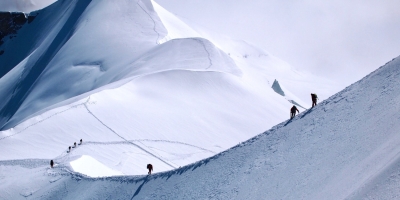
Chulu East Peak(6584m)is very famous trekking climbing peak in Annapurna region and situated in a small valley and lay north of Manang. In fact, there are three Chulu Peaks- East , West and east far . Among them,Chulu East Peak Climbing (6584m) is more elevated one. The Chulu East Peak is an exciting peak mountaineering option for those trekkers who would love to go to experience adventure in the Annapurna Region. While mountaineering the peak, we will be rewarded by splendid views of peaks like Dhaulagiri, Annapurna, Nilgiri, Manasalu, Gangapurna, Thorong Peak and other massive peaks. Also, climbing the Chulu East Peak requires a good physical condition and a high level of energy. Chulu East peak is one of the parts of the Manang Himal, which is quite specifically included in the bigger Damodar Himal. In the north-to-south way we can observe the pouring of rivers- Nar Khola and Phu Khola. To the south the track is bordered by the Marsyangdi Khola and the Mesokanta La.Chulu Far East (6059m.) tour begins from Beshi Sahar before after driving for 5-6 hours from Kathmandu and from Beshi Sahar the way goes up slowly to Manang valley, one of the highest valleys in the world located at an elevation of 5000m.However, now you have deferent option to reach Chulu due the road until Manang (3351m),Amazing Nepal Journey Treks & Expedition recommend Drive to Chame from Kathmandu by Jeep then the trail from Pisang via Ghyaru, Nagawal all the way through the path until we enter Yak Kharka (4000m.). From here the track is vertical up to the base camp of Chulu East. And then we follow the route climbing to the summit of Chulu East which is intresting, icy and very much vertical. From the top of Chulu East we will witness the enormous views of Annapurna I, II, III, IV, Manaslu, Gangapurna, Chulu West, Pisang Peak, the north part of Himlung Valley. exploring Gyaru and Pisang village and visiting Muktinath temple. Go for climbing the Chulu peak taking support from Amazing Nepal Journey make a daydream of peak climbing experience at the regions of Annapurna come true. Spring and autumn are perfect seasons to go for climbing Chulu East Peak.
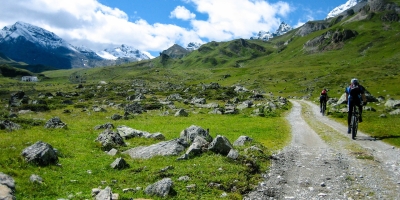
Dolpa is situated in the Trans-Himalayan region of north-west Nepal. Dolpa is also spelt as Dolpo and remains as an isolated and one of the remotest areas of Nepal which has a great biodiversity and cultural richness in Nepal. The Dolpo to Jomsom off-the-beaten trek is designed for the trekkers who prefer to accept more challenging trail that involves many high passes and is possible to do only in certain time of the year. Upper Dolpo is part of the Tibetan Plateau and culturally rich with Bön villages and GOMPA or monasteries. “BON” is the main and old Tibetan religion that pre-dates Tibetan Buddhism. SheyGompa is one of the most important spiritual sites on the way to Upper Dolpo to be visited. This trek will require a reasonable fitness and some previous trekking experience in the Himalayas. Upper Dolpo is good walking country however there are several steeper trails with exposure such as around SheyPhoksundo Lake. Although there are no technical passes on this trek, some toughest passes are recorded so far. The major attractions of Dolpo region is the wild and pristine landscape which is unlike to most other parts of the Nepal Himalayas having the fascinating villages, scenery and peace that offers opportunities to visit ancient villages, high passes, beautiful lake and isolated Buddhist monasteries. A great Tibetan influence can be experienced here and the villagers of Tibetan stock are skilled traders taking their yak caravans between Tibet and Nepal in Autuman season yet.One of the highest inhabited realms on the planet, Dolpo is also still a stronghold of the pre-Buddhist, shamanistic Bon-po religion as well as Tibetan Buddhism. It is a tough, mountainous region of fortified villages, 'dzongs', turquoise lakes, sacred mountains and high passes, susceptible to heavy snows which isolate it from the rest of Nepal.Mustang is one of the best landscape in Nepal , it is sister o of the Upper Dolpo however Mustang is more modernization then Upper Dolpo. Therefor e , Upper Dolpo is still more traditional way of live, culture , religion practice etc. We will not enter really Upper Mustang part however we can see all Upper Mustang landscape during the trip. After SangdaBhanjyang we have enter the Mustang part within Jomsom it is Lower Mustang.Our trek begins with a spectacular flight along the Himalayan range to Juphal. We head up the Suligad River gorge to Phoksumdo Lake and cross our first 5000 meter pass leading to sacred SheyGompa and the 'Crystal Mountain'.. The trails connecting these remote villages and high passes are some of the most culturally interesting and spectacular routes in Dolpo, and the inhabitants still trade with Tibet along the old salt routes.Amazing Nepal Journey Treks & Expedition is organizing such beautiful adventure trip in Nepal since a long time up to now with 100% achievement with fully satisfaction of the all clients.
Trisuli River is very famous for Rafting in Nepal. Originating from the Langtang Himal, a trip on the Trisuli River enjoys scenic valleys, terraced rice fields, and impressive gorges with exciting and fun, but not overly challenging whitewater. With pool and drop rapids, there is plenty of time in between the excitement to enjoy swimming, cliff jumping and simply soaking up the beautiful scenery. Trekking , Climbing adventure outdoor activities however on of the best out door sport is Rafting in Nepal. Therefore , why not once a time during the stay in Nepal. Conveniently running from just outside Kathmandu towards Chitwan and Pokhara, the Trisuli is one of Nepal’s most popular rivers, providing an exhilarating and refreshing alternative to the tourist bus towards some of Nepal’s most popular adventure travel destinations.

Shisha Pangma is very famous peak in the world regarding the climbing above the eighth thousand mountain due to one of the easiest 8000 M mountains to climb to its Central Summit (8013m), though the main summit (8027m) is more difficult and has not been climbed after 2014. Shiss Pangma is Located in Tibet . The peak is characterized by its long, steep, craggy southern face rising over 2000m, making it an imposing sight to all would be climbers. The Nepalese name for the peak is Gosaitan, which denotes “The Holy Place". It's name literally translates to "The mountain overlooking the grassy plains".Shisha Pangma was the last of the 8000m peaks to be climbed. The first ascent is credited to Hsu Ching and his ten-man Chinese climbing team in 1964. Shisha Pangma was finally opened to foreign teams in 1980. The first U.S. ascent took place in September 1983, via the mountains Northeast Face, by Mike Browning, Chris Pizzo and Glenn Porzak. Amazing Nepal Journey organizing for the Shisha Pangma Expedition since a long time.

Cho Oyu (8201m) is the 6th highest mountain in the world lying at the border of China( Tibet) and Nepal west to the Mt. Everest (8848m). Cho Oyu literally translates to Turquoise Goddess. The first attempt on Cho Oyu ascent which turned out to be successful happened in 1954 by Austrian expedition conquered it via the North-west ridge. Amazing Nepal Journey offers from Tibet site with fully successful expedition.Autumn is the best time of the year for Cho Oyu Expedition or any mountain expedition for that matter in the Himalayas. There are moderate technical sections and the objective dangers are close to non-existent. Its relatively easy access makes it an attractive climb for someone with limited time, as it can be attempted in roughly 6 weeks round trip. Base Camp is accessible by jeep and it is possible to reach Kathmandu from Base Camp.Because of it's ease of access, ABC is often crowded with a large number of expeditions.It was the third such peak climbed, and the first climbed by light expedition and in Autumn. The mountain was first climbed on October 19, 1954 via the north-west ridge by Herbert Tichy, Joseph Jöchler and Sherpa Pasang Dawa Lama of an Austrian expedition. Cho Oyu is sixth 8000 meters peak to be climbed, after Annapurna in June 1950, Mount Everest, Nanga Parbat and K2.
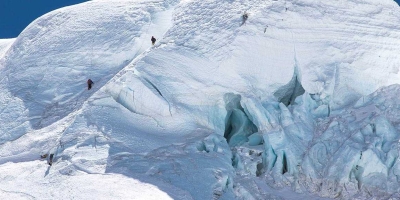
Chulu Far East (6059m.) Peak is very famous trekking climbing peak in Annapurna region and situated in a small valley and lay north of Manang. In fact, there are three Chulu Peaks- East , West and east far . Among them, Chulu West (6419m.) is more elevated one. The Chulu West Peak is an exciting peak mountaineering option for those trekkers who would love to go to experience adventure in the Annapurna Region. While mountaineering the peak, we will be rewarded by splendid views of peaks like Dhaulagiri, Annapurna, Nilgiri, Manasalu, Gangapurna, Thorong Peak and other massive peaks. Also, climbing the Chulu West Peak requires a good physical condition and a high level of energy. Chulu West peak is one of the parts of the Manang Himal, which is quite specifically included in the bigger Damodar Himal. In the north-to-south way we can observe the pouring of rivers- Nar Khola and Phu Khola. To the south the track is bordered by the Marsyangdi Khola and the Mesokanta La.Chulu Far East (6059m.) tour begins from Beshi Sahar before after driving for 5-6 hours from Kathmandu and from Beshi Sahar the way goes up slowly to Manang valley, one of the highest valleys in the world located at an elevation of 5000m.However, now you have deferent option to reach Chulu due the road until Manang (3351m),Amazing Nepal Journey Treks & Expedition recommend the trail from Pisang via Ghyaru, Nagawal all the way through the path until we enter Yak Kharka (4000m.). From here the track is vertical up to the base camp of Chulu East. And then we follow the route climbing to the summit of Chulu Far East which is pebbly, icy and very much vertical. From the top of Chulu Far East we will witness the enormous views of Annapurna I, II, III, IV, Manaslu, Gangapurna, Chulu West, Pisang Peak, the north part of Himlung Valley. exploring Gyaru and Pisang village and visiting Muktinath temple. Go for climbing the Chulu peak taking support from Amazing Nepal Journey make a daydream of peak climbing experience at the regions of Annapurna come true. Spring and autumn are perfect seasons to go for climbing Chulu West Peak.
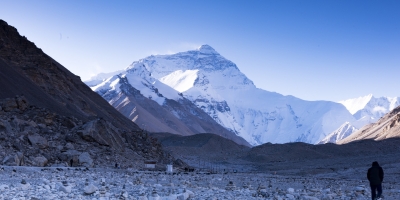
Kathmandu to Lhasa Tour via Everest Base Camp is a journey to experience the beauty of Tibetan landscape and to understand the rich culture of its people. This 13-day adventure starts from Kathmandu followed by Keron, Dingri, Shegar then the base camp of the world's highest peak, Mt. Everest followed by visits to Shigatse, Gyantse and finally to Lhasa. During our Kathmandu to Lhasa Tour via Everest Base Camp, we also explore the mystical Yamdrok Tso Lake, conquer a few high passes, and visit popular Tibetan monasteries like Sakya, Tashilhunpo, Shalu, Sera and Rongbuk, the world's highest monastery, all the while being surrounded by the magnetic allure of the Mountains.
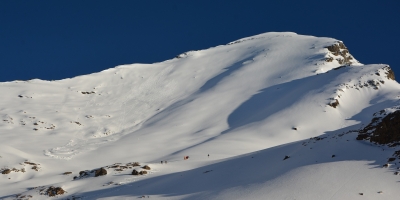
Stok Kangri, 6,153m, a stunning mountain of the mysterious Ladakh region of Northern India. The trek to its summit is achievable by someone with little trekking experience but huge enthusiasm. It’s a fantastic entry level 6,000m peak as the ascent is not considered technical, especially as the majority of the mountain is snow-free in July – early September.Ladakh is a land of many contrasts. It’s one of the highest, driest inhabited regions on Earth, a semi-desert where Buddhism meets Islam, India meets Tibet and where the Himalayas meet the Karakorum. Dotted with small villages and ancient monasteries, the high mountain panoramas blend into eternal blue skies and vibrant festivals spring up with cheerful regularity. Arriving from Delhi into Leh (at 3,524m) we spend a few days acclimatizing, exploring the town and local monasteries. Our trek begins at Choksi where one extended family farm the small, verdant valley. From here the trek is a wonderful ascent through wild Indian countryside, rural villages and up into spectacular mountain scenery of plunging rivers, steep gorges and high passes surrounded by majestic snow-capped peaks.Summit is optional, coming back is mandatory, is our goal. We give safety first priority than anything else. We also believe customer retention more than increasing customer count. Therefore, instead of mass filling the batches, we keep a limited count of 20-25 members in a batch. If there are more trekkers then we break them into groups with whole new staff for every group. Limiting the number of trekkers in one batch makes it easy to concentrate on every trekker’s well being.
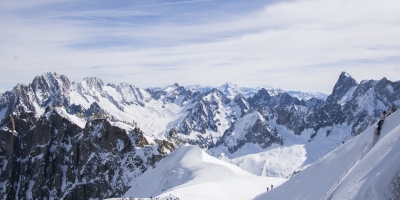
Chulu West Peak is very famous trekking climbing peak in Annapurna region and situated in a small valley and lay north of Manang. In fact, there are three Chulu Peaks- East , West and east far . Among them, Chulu West (6419m.) is more elevated one. The Chulu West Peak is an exciting peak mountaineering option for those trekkers who would love to go to experience adventure in the Annapurna Region. While mountaineering the peak, we will be rewarded by splendid views of peaks like Dhaulagiri, Annapurna, Nilgiri, Manasalu, Gangapurna, Thorong Peak and other massive peaks. Also, climbing the Chulu West Peak requires a good physical condition and a high level of energy. Chulu West peak is one of the parts of the Manang Himal, which is quite specifically included in the bigger Damodar Himal. In the north-to-south way we can observe the pouring of rivers- Nar Khola and Phu Khola. To the south the track is bordered by the Marsyangdi Khola and the Mesokanta La.Chulu west peak tour begins from Beshi Sahar before after driving for 5-6 hours from Kathmandu and from Beshi Sahar the way goes up slowly to Manang valley, one of the highest valleys in the world located at an elevation of 5000m. However now you deferent option to reach Chulu due the road until Manang (3351m) ,from Manang valley the path moves north to the Chulu West Base camp very few days so not enough acclimatization .Amazing Nepal Journey Treks & Expedition recommend the start the trekking from Chame (2713m) , from Kathmandu to Chame drive by Jeep then to start waking for the trip. The major highlights of the trek are passing through the Marsyangdi valley which will mesmerize you with the views of Manaslu, Gangapurna, Annapurna II, III, IV and Tilicho peak; exploring Gyaru and Pisang village and visiting Muktinath temple. Go for climbing the Chulu West Peak (6419m.) taking support from Amazing Nepal Journey make a daydream of peak climbing experience at the regions of Annapurna come true. Spring and autumn are perfect seasons to go for climbing Chulu West Peak.

Baruntse Expedition (7129m/23,389ft) is located in the heart of the Himalaya, the Khumbu. It is in very close vicinity to Mount Everest and Mount Makalu.It is located away from the standard trekking paths so climbers can experience a sense of being in a remote area without investing considerable amount of time and effort. The Baruntse expedition becomes increasingly popular with climbers wishing to escape from the peak climbing on the overcrowded Ama Dablam and Himlung . Baruntse expedition is a month long adventure and an extraordinarily aesthetic objective for peak climbing in Nepal. The summit of Baruntse is located at: 27°52'19'' N / 86°58'55'' E. Baruntse first became famous when a New Zealand expedition including Colin Todd and Geoff Harrow summited the peak on May 30, 1954 via the Southeast Ridge. This has now become the normal route for most Baruntse expeditionsThere are thre ways of trekking to the Expedition . One is from Lukla via Mera La Pass (5800m) and Hunku glacier with the possibility of climbing Mera peak as a part of adventure. The other is from Tumlingtar along the Makalu access trek and West Barun glacier and if you don’t want fly by Jeep via Salleri and Kharikhola possible now. The first option includes a high pass crossover and walk out via Mera La Pass to Lukla, a full spectrum peak climbing adventure in Nepal. On Baruntse you will encounter 50deg climbing slopes. The peak offers incredible views of Mt.Everest, Mt. Makalu and the surrounding Khumbu region peaks. The best chances of a successful summit are in the spring but the mountain is also climbable in the autumn.Climbing 7000m requires slightly more acclimatization effort than peak climbing 5000m or even 6000m peaks. The remote location of Baruntse has an advantage for climbers in that it aids acclimatization while trekking either of the two approach routes. From the base camp (5350m)Baruntse requires two intermediate camps to execute the summit and to aid acclimatization.Amazing Nepal Journey began to operator the precious Baruntse Expedition for technical mountain lovers. This mountain can be a good preparation climb for any 8000m expedition that you are dreaming up. Some prerequisites to this climb are experience on snow and ice, basic knowledge of using ice ax and crampons and one or two 6000m trekking peaks. Our high quality and well managed package for the Baruntse Expedition is set up for the mountain lovers who want to realize their dream of climbing High Mountains in Nepal.
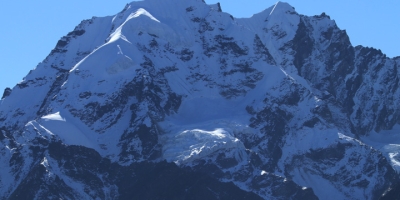
Naya Kanga Peak Climbing also known as Ganja-La Chuli, is magnificently situated in the Langtang region in Nepal. Langtang is one of the popular trekking destination in Nepal situated north from Kathmandu is easily accessible by road transportation to Duncheor Syabrubesi. Langtang National park was designated as the first Himalayan National park in 1970. The area extends from 32 KM north of Kathmandu. The highest peak in the area is Langtang Lirung (7200m) in the whole region. Its accessibility makes it an ideal choice of short visit to the Himalayas, allowing the climbers to experience some best mountaineering activities all in short period within 2 weeks. Amazing Nepal Journey always organizing only Langatng Trekking too for Tibetan pure culture still exiting here. The normal route to climb Naya Kanga Peak is via the snowy north-east ridge. The trip starts with driving from Kathmandu to the north and arrives at small town of Syabrubesi. Then we walk through the dense forests of Bamboo, Oaks and pines following the narrow valley along Langtang Khola to the north-east. Once we get to Goratabela (2900m), the Langtang valley get wider and one can see Massive Langtang range rising above the skyline. Then heading up to Langtang village which is the biggest settlement of the area influenced by the pure Tibetan culture. Once we reach the Kyangjin Gompa; the last settlement where is many lodges are run all year round. From there we make day hike up to Kyangjin Ri (4700m) or Tsherko Ri (4980m) for the spectacular Himalayan views of the area and acclimatization. Then we cross the Langtang Khola south of Kyangjin Gompa and trek to Naya Kanga Base camp. We set up high camp and start the climbing from there. From the summit it can view the spectacular scenery of the mountains such as Langtang Lirung, Dorje Lhakpa, Gang Chhenpo, Ganesh himal ranges, Manaslu Ranges to Annapurna ranges, mighty Sishapangma (8013m) in Tibet as well the great views of the valley on the south including Kathmandu. We will be trek same route back to Syabrubesi and drive to Kathmandu.
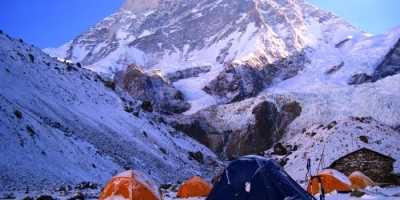
Mt. Makalu is the fourth tallest mountain in Nepal and fifth highest Peak in the world with its height 8,463m. Mt. Makalu resides in the eastern Himalayas range just 19Km southeast of the giant Mt. Everest in the border of Nepal and China The Makalu based on the Barun Valley, diverse species of flora and fauna with rich cultures of ethnic communities like Sherpa and Kirat. Although, this area is so beautiful Landscape, every trekkers who every step here will take a memorable reminiscence with them for their lifetime. Along the way really interesting agricultural land. It was in 1955, when the expedition led by French team reached to the top of Mt. Makalu for the first time. Sir Edmund Hilary took the photograph of Mt. Makalu in 1951 while he was on a route survey of Mt. Everest. Since the first climb to the top, several successful attempts had been made to the top of the peak. Makalu bears a pyramid shape. South East and the North West Ridges being the most prominent compared to other. Among these two, the North Western ridge route is used by most of the mountaineers to reach the top of the peak. Mt. Makalu Expedition in Nepal is full of adventures as well as dangers too. The Russian team scaled the west route, which is considered the most dangerous route, in 1997. They reach the top on 21st May 1997 following the most challenging route. It's very technical climbing snow mountain and quite challengeable route.The base camp is generally set up around 5,600m. The first camp is at 6,100m, camp 2 is at 6600m, the third camp is at 7200m and the last camp is at 7600m.
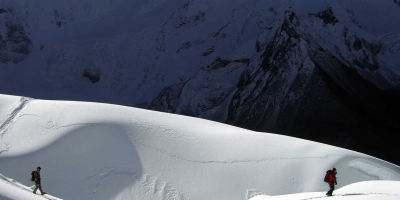
Lobuche East Peak Climbing is an attractive summit, offering a variety of existing routes and wide scope for new lines. Lobuche east (6119 m) and Lobuche west (6145 m). Although they are connected by a continuous ridge there is a sharp gap and a considerable distance between them. Lobuche Peak climbing is an attractive summit with existing routes and new opportunities. Lobuje east peak is moderate of the trekking peaks that commercial groups attempt. The true summit of Lobuche East proved an elusive goal. A Swiss first climbed the rocky outliners, but the subsequent attempt fell short of the actual Summit, soaring above a profound notch at the far end of west/south — East Ridge, was finally climbed in 1984. The East face, accessible from Lobuche, has attracted different teams. Jeff Lowe has added a difficult route up an icy collar, while Todd Bible and Catherine Freer climbed the rocky East Ridge. Labuche Peak expedition starts from Lukla the ‘Gateway for trek and climbs in the Everest area’. The major attractions on our way to the base camp are the famous Sherpa town called Namche Bazaar, the Tengboche monastery (the cultural / religious center for the Sherpa people of Everest region), Pangboche (oldest and permanently settled highest amongst all Sherpa villages), Dingboche (probably highest place in the world for barley cultivation). It is our pleasure to trek up to Kalapathar before commencing the climb for a close view of Mt. Everest. Our base camp is established at the periphery of a hidden lake in a rocky hollow at the base of the glaciated South West Face near Point 5,551m. No doubt, the spectacular views of Amadablam and Tawache are clearly viewed from here. We gain our climb steep terrain leading beneath the main glacier on the South West Face of Lobuche and attain access to the South Ridge. We establish our camp higher on the ridge. We continue further on the South Ridge and then follow the summit ridge; north-west from the high camp. We have a great view of Mt. Everest, Makalu, Lhotse, EBC, Pumori , Baruntse, Mera, Island peak , Ama Dablam, Thamserku etc Himalayan panorama that include all important peaks in the Khumbu Valley from the summit. Gradually, we descend from the summit to the High to the Highamp and same day Thukla overnight and next day head down to Lukla to catch our flight to Kathmandu. Amazing Nepal Journey Treks & Expedition is organizing such beautiful adventure trip in Nepal since two decades up to now with 100% achievement with fully satisfaction of the all clients.
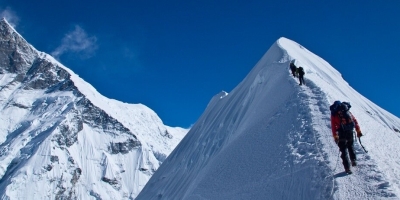
Island Peak is a great first Himalayan Peak in the region of Everest. The route to the summit includes a steep slope and a narrow ridge. Full set of climbing gears are necessary for 100% safety , and it is useful to have guide who knows the best part of the ridge to climb. The term "trekking peak" 33 mountains given this title by Nepal Mountaineering Association in Himalaya, Island Peak Climbing is a spectacular extension to a fabulous adventure into the Everest region. At 6160 meters, Island Peak is also known as Imja Tse . No technical mountaineering experience is necessary to climb Island Peak, simply a high level of fitness the desire to push your limits. Island peak summit is interesting and attractive with a highly glaciated west face rising from the Lhotse Glacier. The mountain itself is the extension of the South Ridge of Lhotse Shar separated by a small Col. The ridge rising to the south from this point leads to the summit of Island Peak. The extension of this ridge descending south-west is the part of the normal route of ascent and leads to the South Summit. Imja Tse not only provides an enjoyable climb but also provides some of the different spectacular scenery of Himalayas in the Khumbu Region including the Mt. Everest 8848m, Mt. Nuptse 7,855m, Lhotse 8,516m, Lhotse Middle Peak 8,410m and Lhotse Shar 8,383m make a semicircle in the north. The views of Makalu 8,475m in the east, Baruntse 7,720m, and Mt. Amadablam 6,856m in the south add more charm for climbing Island Peak. The normal route for Island Peak Climbing is South East Flank & South-West Ridge normally; the Island Peak base camp is set at 5,087m between Imja Tse and the lateral moraine of the Imja Glacier. Embark on a wonderful adventure with Island Peak climbing and trekking that takes you into the heartland of the Khumbu and Everest Base Camp 5,357m. Island Peak 6,160m is one of the main climbing peaks in Everest Region with an impressive and highly glaciated West Face that rises from the Lhotse Glacier.. The magnificent views from the summit, however, are certainly a fitting reward for your efforts. Before climbing Island Peak, we trek up the Dudh Kosi valley from Lukla, passing through Namche and Tengboche on our way to Kala Pattar and Everest Base Camp. After being rested and feeling physically fit and acclimatized, we then head up the beautiful Imja Khola valley towards Island Peak. Besides trekking adventure, we also get to witness pristine Sherpa villages and ever-so-serene monasteries. With ponderous memories of the trekking earlier done, we retrace our route back through Namche to Lukla, and from there on we fly back to Kathmandu or new destination. Amazing Nepal Journey Treks & Expedition is organizing such beautiful adventure trip in Nepal since two decades up to now with 100% achievement with fully satisfaction of the all clients.
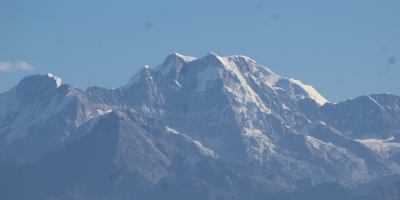
Mera Peak (6,654 m) is the highest permitted trekking peak of Nepal. It stands to the south of Everest and dominates the watershed between the heavily wooded valleys of the Hinku. J.O.M. Roberts and Sen Tenzing made the first successful ascent of Mera Peak on 20 May 1953. The route they used is still the standard route. There are many other routes to the peak, but none of them are easy. Some of them require crossing very high and difficult passes. This leads to a true mountaineering experience. In the end, all efforts and hard work is paid off with spectacular scenery as Mera provides one of the finest view points in Nepal. Mera Peak offers a panoramic view of Chamlang, Kangchenjunga, Makalu, and Baruntse in the east and the peaks of Cho-Oyu, AmaDablam and Kangtega to the west. Everest can be viewed to the north over the massive unclimbed south face of Lhotse and the Nuptse/Lhotse ridge. Under favorable conditions, it is possible to climb the peak and descend back on the same day to Khare.Well, Mera peak is easy climbing but not really due to long walking on the snow and ice some occasion, its offer the best view same time big wind play vital role for cold and extra tiredness for climber. In generally, technically point of view approximately 15 meter near the top is technical rest of totally waking in the case of Mera center but for south is not so. On the way to high camp and summit pay attention with crevasse. So you should have a good experience guide for safe the trip. Think once time with very clearly never compromise for a good guide, life is important and safety is first forever and never go .“ We always offer our best for our clients” its our principle.Since 1998, Amazing Nepal Journey Treks & Expedition organizing highly successful and save full climbing to Mera peak so all customers are getting great achievement and happiness.
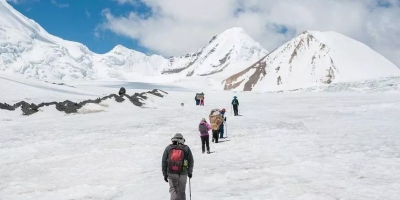
Upper Mustang trek, which offers a spectacular trekking into the remote Trans-Himalayan mountain area with Tibetan influence culture. The high desert region of the Tibetan influence, Kaligandaki, from the Tibetan border south to Kagbeni is generally referred to as Upper Mustang. Explore the thousand years of old monastery, caves, local tribes and scenic beauties of the different landscapes. Make an adventure starting from world's deepest gorge Kaligandaki Region into world's highest regions of Lo-Mangthang Valley that passes through an almost tree-less barren landscape, a steep rocky trail up and down hill and panoramic views of Nilgiri, Annapurna, Dhaulagiri and several other peaks. The trek passes through high peaks, passes, glaciers, and alpine valleys. The thousands years of isolation has kept the culture, lifestyle and heritage remain unchanged for centuries and to this date. The houses in Mustang are mostly made from stone and sun baked mud bricks. The city wall and the four storey palace in Lo-Manthang are some of the beautiful architectures of Mustang region. Another attraction in the Mustang region is the Tiji Festival influenced by Tibetan Buddhism, which is timed to coincide with the end of the dry season (late winter/spring). The Mustagi people have their own way of family life, which is quite surprising for many outsiders. All the brothers in the family are married to a single girl, what you may call a practice of polyandry.The Transhimalayan Mustang Region is also known as the Last Forbidden Kingdom, since the region was restricted for outsiders until Nepal Government announced the opening of the restricted areas in October 1991. The Mustangis or the people of Mustang call themselves Lobas, and they have their ownKing or Tribe-leader, JigmePalbarBista. After Nepal was declared a republic in 2007, the Nepal Government took back the official recognition of the Bista as the Mustangi King. However, the people there still respect him as their King or tribe-leader. Bista also grants audience the visitor upon request. There is also strict control in obtaining a special permit from the department of immigration to protect their tradition from outside influence as well as to protect their environment. The Upper Mustang trek starts from Jomsom to Kagbeni, the entry point of upper Mustang Region. Follow the banks of Kaligandaki River upstream to get to Lo-Mangthang, the capital of the upper Mustang.The trek through the Nar & Phu valleys combines high peaks and passes, glaciers, remote villages, narrow canyons, lovely forests, amazing rock formations, yaks, gompas and unique ethnically Tibetan cultures. Closed to trekkers until late 2002, very few outsiders have explored these virtually untouched villages or climbed the many 7000 meter peaks surrounding them.Starting at Besisahar/ Mustang — the traditional starting point of the Annapurna Circuit — the trek quickly diverges from routes with more foot-traffic and into the remote Nar & Phu valleys. Passing colourful Tibetan chortens and prayer stones into deep canyons and gorges, you will get the chance to hang out with villagers in Phu while they go about their daily activities, as well as spend a night in the Nar Phedi monastery. These are ideal ways to learn about life deep in the mountains of Nepal.
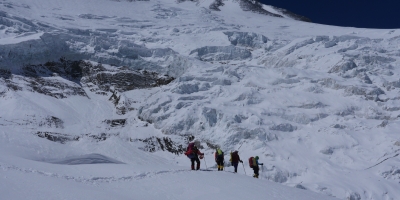
Mt. Dhaulagiri is the sixth highest peaks in Nepal and the seventh highest peak of the world with its height 8,167m above from the sea level. This mountain lies in the northwestern of Nepal. “Dhaulagiri” is derived from the Sanskrit word, “Dhawala and Giri” which means “White and Mountain” or White snow mountain. Mt. The Annapurna I, which is 34Km east of Dhaulagiri I, in between these two giants a gorge is formed, known as Kaligandaki Gorge, This gorge is deepest gorge in the world and Kaligandaki River flows in this gorge. One of the best mountain for high skill climber in the world.Dhaulagiri is reflected as one of the most fascinating peaks to climb. Mt. Dhaulagiri has 5 ridges and south and west faces, Majority of the scaling have been following the first route, which is known as “Normal Route”. Northeast route is considered as the normal route; However, Mt. Dhaulagiri has been scaled from every direction. It was the team of Swiss /Austrian Mountaineers led by Kurt Diemberger who first reached to the top of Mt. Dhaulagiri on 13th May 1960. As all of Dhaulagiri routes are challenging, only veterans seems to have interest in this mountain. The carvan route is from Kathmandu - Beni- Darbang- Sallaghari - Italina Camp- finally rreach to the reall Bascamp fo Dhaulagiri.Alternative trekking route , Kathmandu -Pokhara- Marapha- Hiden Valley.The base camp is normally set at around 4,750m, and then three camps follow before reaching the top. The first camp is at 5,850m, camp 2 is at 6400m, and the last camp is at 7400m.

Ama Dablam Expedition is one of the most spectacular mountain climbing adventures in Nepal. The isolated Mt. Ama Dablam (6812m/22349ft.) is one of the most impressive mountains in the world. Located just to the south of Everest in Khumbu valley, it is distinguished by its vertical walls to the south and north as well as the sharp exposed ridges from all directions. Ama is considered the Motherhood of the Himalaya. Ama Dablam means "Mother's necklace" the long ridges on each side is like the arms of a mother carrying her child. The hanging glacier is thought of as the Dablam, which traditionally is worn by Sherpa woman as a double-pendant containing pictures of the Gods. A pearl of beauty in itself that commands its surroundings and captures your attention by its presence outstanding image of ice wall. This expedition is a serious undertaking and is a strong prerequisite to Everest. In terms of technicality Ama Dablam is considered harder than Everest. It demands a high skill level in rock climbing and ice climbing; sufficient experience at high elevation and technical competency. Ama Dablams summit is located at 27°51'42'' N longitude and 86°51'40'' E latitude. The climbing legend of Ama Dablam was first climbed on 13 March 1961 by Mike Gill (NZ), Barry Bishop (USA), Mike Ward (UK) and Wally Romanes (NZ) via the Southwest Ridge. They were well-acclimatized to altitude, having wintered over at 5800 meters near the base of the peak as part of the Silver Hut Scientific Expedition of 1960-61, led by Sir Edmund Hillary.Ama Dablam is the third most popular Himalayan peak for permitted expeditions in Nepal. The most popular route by far is the original first ascend route along the Southwest Ridge. The climb is typically done with three camps along the ridge with camp 3 just below and to the right of the hanging glacier (mushroom ridge ). A climbing permit and a liaison officer are required when attempting Ama Dablam. You need to have a strong base of rock and ice climbing experience to climb this mountain. Most of the route on Ama Dablam is fixed, so climbers will need to be competent at ascending and descending fixed ropes and passing via anchors. There is one pitch on the route that is just about dead vertical, so practice ascending a vertical fixed rope before the expedition. Climbing season is April- May and September - December to Ama Dablam.The standard climbing route is via the Southwest ridge with typical arrangements of 3 high camps: Camp 1 (5600m), Camp 2 (5900m) and Camp 3 (6200m) with Base Camp at 4500m. Camp 3 is located on the shoulder of the ridge just below and to the left of the last steep snow climb to the summit.. Most climbers summit from camp 2(yellow tower and do not establish a camp 3, who are very strong climber and on the tope around 100m space remain. Amazing Nepal Journey always dedicating such a great adventure expedition in Himalayn world.
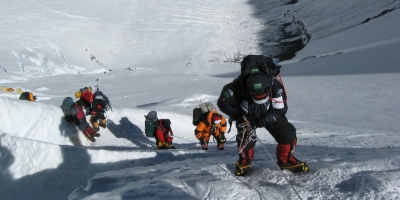
Mt. Everest is ultimate destination for Mountaineers with full of Adventures. Mt. Everest, known as the Sagarmatha in Nepali and also called Chhomolungma in Tibetan Language is with an altitude of 8848m. The southern face lies in Nepal whereas the northern face is in Tibet. Peak XV was renamed after Sir George Everest as Mount Everest, name given in his honour, who was lead surveyor in 1856. Sir George was Welsh Surveyor, he was surveyor general of India for thirteen years from 1830. The Everest has fascinated the mountaineers all around the globe since 1920s when Tibet opened the climbing in early 1920s. In 1922 British Expedition team led by Charles Bruce tried to scale the summit of Mount Everest for the first time. It was Edward Norton in his second attempt along with British Expedition team set the height of 8572m. The mountaineers George Mallory and Andrew Irvine disappeared on the third attempt. Mallory's body was found in 1999. There were several attempts made to Everest before the successful attempt made by Edmund Hillary and Tenzing Norgay on 29 May 1953 via the South route. It is now reported that around 1000 ascent attempts are made every year. On Everest different route for climbing such as North Site and South Site. There are will take the southern route to the summit. This trip suits for those who has previous experiences of few 7000m peaks or even more. The real trek apparently starts from the Base Camp and to reach the base camp takes you around 7 days on foot from Lukla, if follow the classical route but different trail reach to EBCCamp 1 (6,065m) where we will see Khumbu glacier. From Khumbu Glacier, it around 450m on a gradual slope to Camp II (6,750m) and around 610m to Camp III (7,100m). Camp III is located at the head of Lhotse. From this point onwards, you will be needing oxygen cylinders. You will reach the Camp IV (7,910m) after just crossing 8000m elevations. This point is also known as the Death Zone.Mount Everest Expedition is undoubtedly a lifetime opportunity. Nevertheless, these expeditions encounter many hindrances such as high altitude, severe weather conditions and avalanches. One must be well trained before actually trying it. You need to get your body ready for the 8848m foot climb to Everest's summit. Depending on your current level of fitness, you need to train for several months before you start your ascent. A climber must build his/her cardiovascular strength along with muscular strength, oxygen level drops by 60-70 percent from sea level. Also make sure you can carry big bag packs to top as you will be carrying cylinder of oxygen and large bag packs along with you. One must acclimatize with weather conditions and be prepared for rock falls, avalanches. Learning rescue techniques would be an added advantage
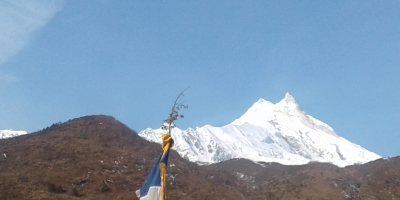
Mt. Manaslu Expedition is eighth highest peak of the world which is elevated at the height of 8,163m (26,781 ft) above the sea level is located in the ridges of Mansiri Himal in Nepal. Regarded as the “mountain of spirit”, Mt. Manaslu is identified as Mt. Kutung in Tibet. This peak lies about 64km east of Mount Annapurna.Japanese team north face expedition climbed Mount Mannaslu (8163m) was first climbed in 1953. The meaning of this mountain is derived from Sanskrit language meaning ‘Intellect’ or ‘Soul’ similar to the meaning of the holy Lake Mansarovar near Mount Kailash in Tibet. Just as the British considered Everest their mountain, Japanese regard Manaslu as ‘Japanese Mountain’ because Japanese people were the first to conquer its top. In 1950, HW Tillman and Jimmy Roberts photographed Manaslu during a trek but the first real survey of the peak was made by a Japanese expedition in 1952.The ascending is technical than that of other peaks like Cho Oyu and Shisha Pangma. Base camp of Manaslu lies at a height of 4700m. Long crests of mountain offer possibility to be scaled from every direction to conclude to the top that is sharply above its neighboring scenes. Among six routes, route starting from south is hard hitting while the northeast face route being the most common.Spring season is good climbing to Mt. Manasalu even though Autumn is the best climbing time for Mt. Manaslu. After the rainy and summer season, the temperature starts decreasing. Snow in the mountain area starts depositing. The weather is warm and not too cold. The high mountain rocky peaks start getting thicker snows. Due to the starting of snow deposit rope fixing is easier. The temperate of Mt. Manaslu in the day time will be found mild for climbing. As per our experience climbing in autumn is easier and the success rate of summit is high in the autumn. The routes are lush green, walking areas are flourish with many natural flowers. Due to the gradually decreasing of temperate, the snow depositing in the mountain just starts. In the begging the routes are clearly visible and no kharpases are filling lightly with snow. Fixing the climbing ropes, ladders and camps are more easily in autumn. Amazing Nepal Journey Treks & Expedition organizing Manasalu Successful expedition forever.

Himlung Himal (7,126m/23,345ft) is a 7000m peak that is located in the western region of Nepal.Situated just above of Budhist Phu Village .Himlung lies in the Naar-Phu region in the northeast of Annapurna and northwest of Manaslu Himalaya. Naar-Phu region was officially opened in 1992 for foreign expeditions and trekkers. This region is still a restricted area, for this reason all climbers are required to get a special restricted permit and climbing permit, and Annapurna Conservation Permit to enter the valley. The peak gained more popularity when Mr. Akio Koizumi from Japan reached the summit of Himlung Himal on 3 October 1992. This region sees fewer expeditions than any other mountains in other regions such as the Khumbu. In terms of popularity, the climbing in Naar-Phu is not comparable with the Khumbu. The valley rivals in beauty to the more popular Khumbu, offering magnificent views of Manaslu, Annapurna, Fishtail and Gangapurna. The second ascent of the peak was made ten years after the first ascent by a French expedition team in 2002. According to the summiteers experience this 7000m peak is one of the safest and largely uncomplicated projects in the Himalaya. The ascent of Himlung Himal via the normal route poses no technical problems. The route leads through snow and ice without any rock climbing passages. The climbing season is in the September, October and spring.During the Himlung Himal expedition Amazing Nepal Journey will always focus on our client’s success, ensuring safety, comfort and an enjoyable experience. Our strategy has been designed by an exercise physiologist and experienced climbing Sherpa guides who have high altitude training. We try our best to be as efficient as possible with our itineraries, ensuring that there is not a lot of wasted time. We consider the fact that our clients might have only a short time off of work, rest assured that your time and money will be well spent with Amazing Nepal Journey treks & Expedition . This 7000m peak is technically moderate and a good preparation for upcoming expeditions like Manaslu, Cho-Oyu, Everest etc.The walk-in along Phu River is a unique experience even for Nepal, the pristine beauty is really a sight to see. Being that the villages in this valley are so close to Tibet they are heavily influenced by Tibetan culture. The journey begins with a scenic drive continue 6 hours to reach Koto (2600m/8,530ft) from Beshishar by local jeep.You will have one acclimatization day at this historical village. Feel free to explore this village or rest. From Koto it is a 5 days trek to the Himlung Himal base camp (4850m/15,912ft).The trail turns toward the East and passes through Dharmasala, Meta, Kyang and Phugaon, which is the largest ancient Buddhist settlement in the region. The base camp is in a subalpine zone with alpine grass and other greenery; it is very comfortable and accommodating. There are approximately 5-7 climbing teams each spring and autumn season. Expedition staffs of the Amazing Nepal Journey Treks ad & Expedition are well prepared Base Camp set for successful summit to Himlung Himal.
Mt. Tilicho Peak is towers at the height of 7,134m. Mountaineers rate this as a technical climb, and not so easy. There are two ways to reach up to Base Camp. Tilicho Peak expedition starts up with a drive Khudi followed by several days trekking to the Tilicho Base Camp via Manang and Khansar Village as well as another way is a short mountain flight from Pokhara brought us to the dry and dusty hill town of Jomsom as well as start from Beni Bazaar to Jomsom OR FLIGHT to jomsom from pokara. From here we proceed east and north to cross the high and very difficult Mesokanto Pass at an altitude of 5300m. At the top of the pass we managed to locate some marine fossils (shells) which testify to the fact that the Himalayas was once beneath the sea. We choose the first idea as this allows enough time for acclimatization and less difficulties for taking all the logistics. The views on the routes are breath taking; anything that can surpass your imagination. What you see is Tilicho Peak and the azure and peaceful Tilicho Lake below. It is a glacial lake and unfriendly to marine life. People say they often find marine fossils (shells) that probably support the fact that the Himalayas were once beneath the sea.We set up the base camp near the lake some of days will be rest celebrating the Puja by ourselves. Tilicho stands as a daunting task above the camp which is on a moraine. From the base camp (around 4400m.) we set out for our final goal – Tilicho 7,134m. Tilicho (7,135m) as seen from near the Base Camp.Base Camp to Camp (i) - Climbing route is straight steep 70º/90ºCamp (i) to Camp (ii) - Climbing route is strait steep 90º with ice vertical.Camp (ii) to Camp (iii) - Climbing route is steep to get summit 40º/60º or Max. 70º

Tibet is the land of amazing culture and the beauty of nature . Its dreamland of holiness due to Mount Kailash so to reach there different possibilities one of them overland tour via Kerung boarder is the best way to reach the sacred mount Kailash in Tibet . About 125 km north from Kathmandu, the caital of Nepal , Kerung is a beautiful town with pleasant climates throughout the year is also known as the valley of happiness. This is an exclusive town in Tibet.The roads from Kathmandu to Kerung are quite bumpy and often landslides encounter. As a backup, a helicopter ride from Kathmandu to Kerung (half an hour journey) is very popular among the pilgrims. Kailash overland tour via Kerung starts from Kathmandu and follows the scenic and exciting Pasang Lhamu Highway that connects Nepal Kerung and Tibet Jilong via langtang Valley Shyaprubeshi Village. We drive early morning from Kathmandu to Timure, Rasuwa Ghadi, after completing immigration formalities we drive to Kerung. Or as an option, we can stop in Saybrubesi in Nepal for acclimatization and short drive proposes before heading to Kerung. We can acclimatize two nights in Kerung ,it will depend upon the situation and then continue the trip to Mt. Kailash and Lake Manasarovar! Mount Kailash is a sacred peak in the Kailash Range, which forms part of the Trans-Himalaya in Tibet China. It lies near the source of some of the longest rivers in Asia: the Indus River, the Sutlej River, the Brahmaputra River, and the Karnali River. Kailash is considered a sacred Mountain in four religions: Bön, Buddhism, Hinduism, and Jainism. The mountain lies near Lake Manasarovar and Lake Rakshastal in Tibet. Trekking around this mountain is 53km (2 nights 3 days) has to be done on foot, pony or yak, starting from a height of around (4,600 m) past the Tarboche (flagpole) to cross the Drolma pass (5,500 m), after crossing the pass we drive back to Kathmandu. Amazing Neal Journey organizing the trip with happily ending day.

The Mardi Himal and Khopra Danda Trekking is a unique combination of two breathtaking trekking routes in the Annapurna region of Nepal. This two-week journey is a perfect blend of raw Himalayan adventure, remote village exploration, and extraordinary mountain vistas. Beginning with the enchanting Mardi Himal Trek, trekkers journey through lush rhododendron forests and peaceful high ridges before reaching the stunning Mardi Himal Base Camp at 4,500m, which offers an unparalleled close-up view of Machapuchhre (Fishtail), Annapurna South, and Hiunchuli.After completing the Mardi section, the route descends into the traditional Gurung village of Ghandruk, one of the cultural highlights of the trek. From here, the second phase of the trek begins—the scenic and less-trodden path to Khopra Danda, which offers panoramic views of Dhaulagiri (8,167m) and access to the sacred Khayar Lake, nestled at a high altitude. The trek continues through quaint villages such as Swanta and Ghorepani, ending with a sunrise hike to Poon Hill, one of Nepal’s most iconic viewpoints. Throughout the journey, trekkers experience a diversity of ecosystems, local cultures, and peaceful trails, far from the crowded tourist routes. With years of expertise, Amazing Nepal Journey Treks & Expedition ensures this trek is not only well-organized but also a deeply enriching and safe Himalayan adventure.Best Time for Mardi Himal and Khopra Danda TrekkingThe ideal time to undertake the Mardi Himal and Khopra Danda Trek is during the spring (March to May) and autumn (September to November) seasons. These periods offer the most reliable weather and clear skies, making them perfect for mountain photography and enjoying nature at its finest. In spring, the trail from Forest Camp to High Camp bursts into color with blooming rhododendrons, magnolias, and alpine flowers, creating an almost magical atmosphere. This is also a great time for birdwatching and experiencing vibrant local life in the villages.Autumn is equally rewarding, especially after the monsoon rains have cleared the air, leaving behind incredibly sharp views of the Annapurna and Dhaulagiri massifs. The days are pleasantly warm for trekking, while the evenings are cool but not too harsh, even at Khopra Danda or Mardi High Camp. Winter trekking (December to February) is possible, though cold temperatures and occasional snow can make the Khayar Lake and Larkya Pass challenging. Monsoon (June to August) is best avoided due to slippery trails, leeches, and limited mountain views.At Amazing Nepal Journey Treks, we provide expert guidance to help you choose the best trekking window based on your schedule, interests, and physical preparedness. Our team monitors seasonal changes and trail conditions closely to ensure a smooth and safe journey regardless of when you travel.Mardi Himal and Khopra Danda Trekking DifficultyThe Mardi Himal and Khopra Danda Trek is rated as a moderate trek in terms of difficulty. While it does not involve technical climbing or high-altitude mountaineering, it does require a good level of physical fitness and stamina. The daily trekking duration ranges from 5 to 9 hours, with a mix of gentle forest trails, steep ascents, and rugged high-altitude paths. The most physically demanding days include the Mardi Base Camp hike (4,500m) and the day hike to Khayar Lake, both of which involve significant elevation gain and descent in one day.Altitude is a consideration, especially on days at High Camp, Khopra Ridge, and during the hike to Khayar Lake. However, the itinerary designed by Amazing Nepal Journey Treks includes adequate acclimatization and rest, allowing the body to adapt gradually. Comfortable teahouse accommodations, local food, and scenic breaks along the route also help reduce fatigue and support recovery. This trek is suitable for first-time trekkers with good preparation and for seasoned hikers looking for quieter trails and remote beauty.Our experienced guides are trained in altitude awareness and first aid, and our small group approach ensures that every trekker receives personal attention and encouragement throughout the journey. With the right mindset and support, most reasonably fit individuals can successfully complete this rewarding adventure.Why Choose Amazing Nepal Journey for Mardi Himal and Khopra Danda Trekking?With over 25 years of expertise, Amazing Nepal Journey Treks & Expedition is a trusted and experienced trekking company offering personalized, authentic Himalayan adventures. We specialize in less-crowded and culturally rich routes like Mardi Himal and Khopra Danda, giving trekkers a more meaningful and intimate experience of Nepal’s natural beauty and local life. From airport pickup in Kathmandu to farewell drop-off, our team handles every aspect of your journey—permits, transport, accommodation, meals, and expert guiding—ensuring a worry-free trekking experience.We prioritize small group sizes, local guides, and responsible tourism, ensuring that your trip not only benefits you but also supports the communities you visit. Our guides are fluent in English, trained in first aid, and deeply familiar with the landscapes and culture of the Annapurna region. Unlike large operators, we offer flexibility in the itinerary, cater to special dietary needs, and accommodate your pace and preferences throughout the trek.Choosing Amazing Nepal Journey Treks means choosing a company that genuinely cares about your safety, satisfaction, and experience. Whether you're trekking solo, with friends, or as a family, our team ensures that your Mardi Himal and Khopra Danda Trek is a once-in-a-lifetime journey filled with awe-inspiring views, cultural depth, and unforgettable memories.
Island Peak(6165m)Island Peak , or Imja Tse, is the most popular trekking peak in Nepal. It lies in the Mahalangur Himal range in the Khumbu region. From Dingboche, the mountain appears as an island rising from the depths of the surrounding icy desert, hence its name, Inselberg, coined by Eric Shipton. It was renamed Imja Tse in 1983, but is still commonly referred to as Island Peak.The first ascent was made in 1956 by a Swiss mountaineering team as training for their ascents of Mount Everest and Lhotse. The mountain's southwestern subsidiary peak was first reached in 1953 by Charles Evans, Alf Gregory, Charles Wylie, and Tenzing Norgay.The summit is interesting and attractive, with a heavily glaciated west face rising from the Lhotse Glacier. The mountain itself is an extension of the south ridge of Lhotse Shar and is separated from it only by a small col. The ridge ascends southward from this col and leads to the summit of Island Peak. The continuation of this southwest-descending ridge is part of the normal ascent route and leads to the south summit.Imja Tse offers not only a pleasant climb but also some of the most spectacular landscapes in the Himalayas, particularly in the Khumbu region. From its summit, you can see the towering peaks of Lhotse (8,501 m), Nuptse (7,879 m), Lhotse Middle Peak (8,410 m), and Lhotse Shar (8,383 m), which form a semicircle to the north. The views of Makalu (8,475 m) to the east, and Ama Dablam (6,812 m) and Baruntse (7,129 m) to the south will remain etched in your memory forever. Southeast flank and southwest ridge: Island Peak Base Camp is located on Paresho Gyab at 5080 m, between Imja Tse and the lateral moraine of the Imja Glacier. It should be noted that the site may be exposed to avalanches in the event of heavy snowfall. From base camp, a well-acclimated trekker can, under good conditions, make the summit ascent and return to base camp in a single day. However, most climbers prefer a high camp, Attack Camp, at 5600 m, which facilitates a safer ascent. From base camp, the route leads southeast to the base of Imja Tse and then ascends steep, grassy slopes and small rocky steps. You climb an open gully that leads between two ridges to the high camp on the ridge below to the left. To the right is a small hanging glacier (5280 m). From high camp, you climb the left ridge via a wide, open gully. After crossing the ridge, a steep, approximately 100-meter-long snow and ice ramp leads up to the summit. The ascent near the summit is somewhat more difficult due to the steepness.North Ridge: North of the main summit, the ridge continues to a col at 5700 m. The route first ascends the ridge crest, then reaches the right bank of the Imja Glacier and later the moraines on the right bank of the Lhotse Sar Glacier. From there, it continues northwest over snow-covered slopes to this col. A high camp is established at the col during the initial ascent. From the col, the scenic snow ridge is followed southwards, leading up to the summit pyramid. It is a long ridge that can be difficult to traverse in soft snow conditions. The final ascent to the summit is slightly more challenging than the standard route. Lobuche East(6119m):Lobuche East is a popular climbing peak destination and is still considered a trekking peak in Nepal (a climbing peak of category "B"), although the summit includes steep ice and snow sections in its final section. Most climbers do not ascend the actual east summit, but rather the so-called "false summit" to the south. Its difficulty is comparable to Island Peak, and a permit is required for the ascent. The base camp is located on the southwest flank at an altitude of 4950 m.Lobuche East Peak is an attractive summit offering a variety of ascent routes, some already climbed and others still possible. Viewed from close up at Pheriche, the dark triangle of its rocky east face rises above the moraines of the Khumbu Glacier to an icy silhouette. This view reveals the south ridge, where the east face intersects with the glaciated ascent route. This route continues northwest from the top of the east face, over several small peaks, to the summit ridge leading to the East Peak. Lobuche East Peak presents no climbing difficulties; however, the summit area contains steep sections of ice and snow, requiring scrambling along the ridge and crossing some crevasses.The first recorded ascent of Lobuche East was made by Laurence Nielson and Sherpa Ang Gyalzen on April 25, 1984. Since then, there have been numerous ascents of the summit by climbers from all over the world. After descending into a distinct notch and ascending steep snow and ice fields, you reach the prominent true East Summit. This actual summit is rarely climbed and is often mistakenly considered Lobuche West. Most climbers only ascend the summit ridge as far as the lower snow peak before the depression, the "false" East Summit, located southeast of the true summit.
Makalu Base Camp Trek is an awe-inspiring journey that takes you to the foot of the fifth-highest mountain in the world, Mount Makalu. Located in the eastern part of Nepal, this trek offers a unique combination of cultural and natural beauty, making it an ideal adventure for nature lovers and adventure enthusiasts alike.One of the highlights of the Makalu Base Camp Trek Itinerary is the chance to visit the Makalu Barun National Park. Established in 1992, the park covers an area of 2,330 square km and is home to a rich diversity of flora and fauna, including rare and endangered species like the red panda and the snow leopard there but rarely found now. In addition to wildlife, the park also boasts a spectacular landscape of glaciers, waterfalls, and pristine forests. Aside from the spectacular views, the Makalu Base Camp Trek also offers a rich cultural experience. You will pass through several traditional Sherpa villages, providing an opportunity to learn about the unique culture and traditions of the Sherpa people.The Makalu Base Camp Trek is a challenging trek that requires a good level of physical fitness. The trail can be difficult at times, especially at high elevations, but the reward of reaching the base camp is worth the effort. The trek is best done in the spring (April-May) and autumn (September-November) when the weather is mild and the skies are clear. Despite its remote location, the Makalu Base Camp Trek is well-equipped with lodges and tea houses that offer basic accommodation and food services. This makes the trek accessible for people of all ages and levels of fitness, making it a great option for both first-time trekkers and experienced adventurers.From Tumlingtar, the trail gradually ascends through the lush forests of rhododendron and bamboo, passing by the small villages of Chichila and Num. The trail then crosses several suspension bridges over the Arun River, providing spectacular views of the river and the surrounding valleys. Along the Makalu Base Camp Trek Route, trekkers will get an opportunity to interact with the local communities, learn about their customs and traditions, and gain a deeper understanding of the region’s unique culture.As you progress further up the Trail, the landscape changes dramatically, transforming into a barren and rocky terrain. Makalu Base Camp Trekking Trail then passes through the Shipton La Pass and Keke La Pass, which offers panoramic views of the peaks in the Makalu region. The final stretch of the journey via Yangri Kharka, Langmale Kharka, and Shershong will take you to the Makalu Base Camp, located at an elevation of 4,870 meters above sea level. Here, trekkers can stand at the foot of the massive mountain and marvel at its grandeur. Makalu Base Camp Trek then descends into the Barun Valley, a remote and pristine valley surrounded by high peaks following the same route you take to the summit. or Another possibilities to go back to Num via different way depend on weather condition . You will descend from Sedua, where you will ride a jeep to Tumlingtar. From Tumlingtar, you will board a domestic flight to Kathmandu or drive to Kathmandu by Jeep or Bus.which will officially conclude your Makalu Base Camp Trek Itinerary successfully.


 (18)
(18)  100% recommend (0)
 (0)
(0)